
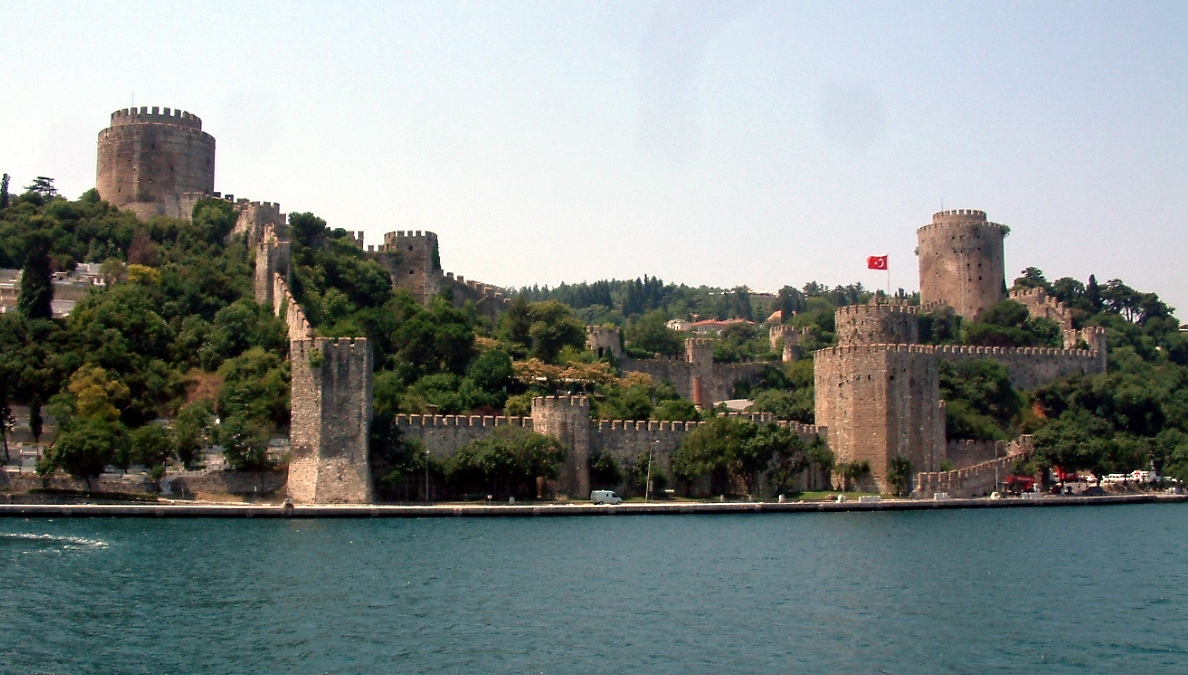
Photo: flowcomm · CC BY 2.0 · Wikimedia Commons
Anadoluhisarı is a fortress in Istanbul, Turkey. Built in the 1390s under Sultan Bayezid the First. The free Lokali audio guide runs 6 minutes.
✓ Published October 2026 · how we write these guides
Visitor facts
| Lokali audio guide | 6 min · free |
|---|---|
| Type | Museum |
| Location | Istanbul, Türkiye |
| Coordinates | 41.0821, 29.0670 |
| Languages | 50+, in the Lokali app |
The story
Listen first. Water moves fast here. The Bosphorus pushes past the rocks with a low, steady rush. Ferries cut across it, and their engines hum as they pass. Under your feet the ground slopes down toward the shore. In front of you rise rough grey walls of rubble stone, patched and weathered, with a squat tower behind them. You are standing beside Anadoluhisarı, the Anatolian Fortress, on the Asian side of Istanbul.
This is one of the oldest Ottoman buildings in the city. It is generally dated to the 1390s, in the reign of Sultan Bayezid the First. At that time, Constantinople was still the capital of the Byzantine Empire. The Ottomans did not yet hold the city. They held land on both sides of it, and they wanted control of the water that ran past its walls. This modest fortress was an early step in that plan.
Why build here? Look across the water. This stretch is one of the narrowest points on the whole Bosphorus. The two continents come close together, and the current runs hard between them. A garrison on this shore could watch every ship moving between the Black Sea and the Sea of Marmara. In a time before long-range artillery, that was a very useful position.
Now look to the side of the fortress. A small stream meets the Bosphorus here. This is the Göksu, which means something like the Sky Water. The fortress sits on the point of land between the stream and the strait. Water protects it on two sides. The builders used the landscape as part of the defence, and you can still see the logic of it as you walk around the walls.
The heart of the fortress is the central tower, the keep. It is not tall or elegant. It is a practical block of stone, built for watching and for holding out. Around it, outer walls and smaller towers form a ring. Some of the masonry is rough and irregular, with stones of many sizes set in mortar. In places you can see where later repairs used different material. Every patch is a small record of another century of use.
Here is the first surprise for many visitors. The more famous fortress is the one directly across the water, on the European shore. That is Rumelihisarı, the Rumelian Fortress. Mehmed the Second built it in 1452, at great speed, one year before he conquered Constantinople. So the fortress beside you is roughly half a century older. It came first, and its larger cousin answered it later.
When Mehmed the Second built Rumelihisarı, he also strengthened this older fortress. Historians credit him with adding outer walls here. With guns on both shores, the two fortresses could close the strait together. Ships trying to reach Constantinople from the Black Sea now had to pass between them. The European fortress earned a grim nickname, Boğazkesen, which means the throat cutter. The word for throat in Turkish is also the word for strait.
After the conquest of 1453, the military purpose faded. The city was now Ottoman, and the strait was no longer a front line. The fortress stayed, but its role changed slowly. Over time it was used for other purposes, and a village grew up around it. Houses pressed close to the walls. The fortress became less a weapon and more a neighbour, part of the daily life of this shore.
Take a moment to look at that neighbourhood. Anadoluhisarı is also the name of the quarter around you. Along the waterfront you may see wooden mansions called yalı. A yalı is a traditional Ottoman waterside house, often built so close to the water that boats could tie up at the door. Some have been carefully restored, with painted timber and wide windows facing the strait. They tell you how wealthy Istanbul families once lived along the Bosphorus.
Here is the second surprise. In the late Ottoman period, the meadows along the Göksu and the nearby Küçüksu stream became a favourite place for outings. European travellers called this area the Sweet Waters of Asia. Families came by boat to picnic on the grass, row on the stream, and watch each other. Paintings and travel accounts from the nineteenth century show colourful caiques, which are slender Ottoman rowing boats, gathered on the water.
Just a short walk along the shore stands the Küçüksu Pavilion. It is a nineteenth century Ottoman pavilion in an ornate European style, with carved white stone facing the water. It makes a striking contrast with the fortress. On one side you have a plain stone tower built for war. On the other you have a decorative summer retreat built for pleasure. Between them lie several centuries of change on this one stretch of shore.
Look up and to the north as well. The Fatih Sultan Mehmet Bridge crosses the Bosphorus not far from here. Its long deck carries heavy traffic between Europe and Asia every day. The bridge is named after the same sultan who built Rumelihisarı. So in one view you can see three ages of the crossing. There is the old fortress, its younger partner across the water, and the modern bridge above them both.
Before you go, stand still for a minute near the walls. Feel the rough stone under your hand if you can reach it. Watch a ferry or a tanker move through the narrows, and imagine a watchman on the tower doing the same thing six centuries ago. The ships are larger now, and the sound is different. But the water still runs fast here, and the fortress still faces it. As you walk away along the shore, turn back once and see how small the tower looks against the strait it was built to guard.
Key facts
What to look for
Practical tips
Common questions
Is there a free audio guide to Anadoluhisarı?
Yes — the Lokali app narrates Anadoluhisarı free of charge in 50+ languages. The guide runs about 6 minutes, covers the history, what to look for on site and practical tips, and works offline once downloaded.
Where is Anadoluhisarı?
Anadoluhisarı is in Istanbul, Türkiye, at 41.0821, 29.0670. Tap the map link on this page for directions from where you are.
What is Anadoluhisarı known for?
Built in the 1390s under Sultan Bayezid the First. Among the oldest surviving Ottoman buildings in Istanbul.
What should you look for at Anadoluhisarı?
The squat central keep rising behind the outer walls. Mismatched stones marking repairs from different centuries. The Göksu stream meeting the Bosphorus beside the fortress.
What should you know before visiting Anadoluhisarı?
Combine your visit with a walk to Küçüksu Pavilion. Take a Bosphorus ferry to see the walls from the water.
When is the best time to visit Anadoluhisarı?
Visit late afternoon for softer light on the stone.
On the map
Opens directions to Anadoluhisarı from your location.
More to see in Istanbul


Hear Anadoluhisarı in your language
The full story, narrated, in 50+ languages. Download it before you go and it plays offline, at your own pace, with no ticket and no tour group.