
Great Palace Mosaic Museum
41.0044° N · 28.9767° E · Museum
Photo: Byzantine mosaic artists from the 5th century · Public domain · Wikimedia Commons
Great Palace Mosaic Museum is a museum. It is in Istanbul, Türkiye. Floor once covered a Byzantine imperial palace courtyard. The free Lokali audio guide runs 6 minutes.
✓ Published October 2026 · how we write these guides
Visitor facts
| Lokali audio guide | 6 min · free |
|---|---|
| Type | Museum |
| Location | Istanbul, Türkiye |
| Coordinates | 41.0044, 28.9767 |
| Languages | 50+, in the Lokali app |
The story
Listen for a moment. The sound of the street drops away as you come in from the Arasta Bazaar. Carpet sellers call out behind you, a tea glass clinks somewhere, and then there is a cooler, quieter air. In front of you lies a floor. It is not a painting or a statue, but a floor. People walked across it about fifteen hundred years ago, inside the palace of the emperors of Constantinople.
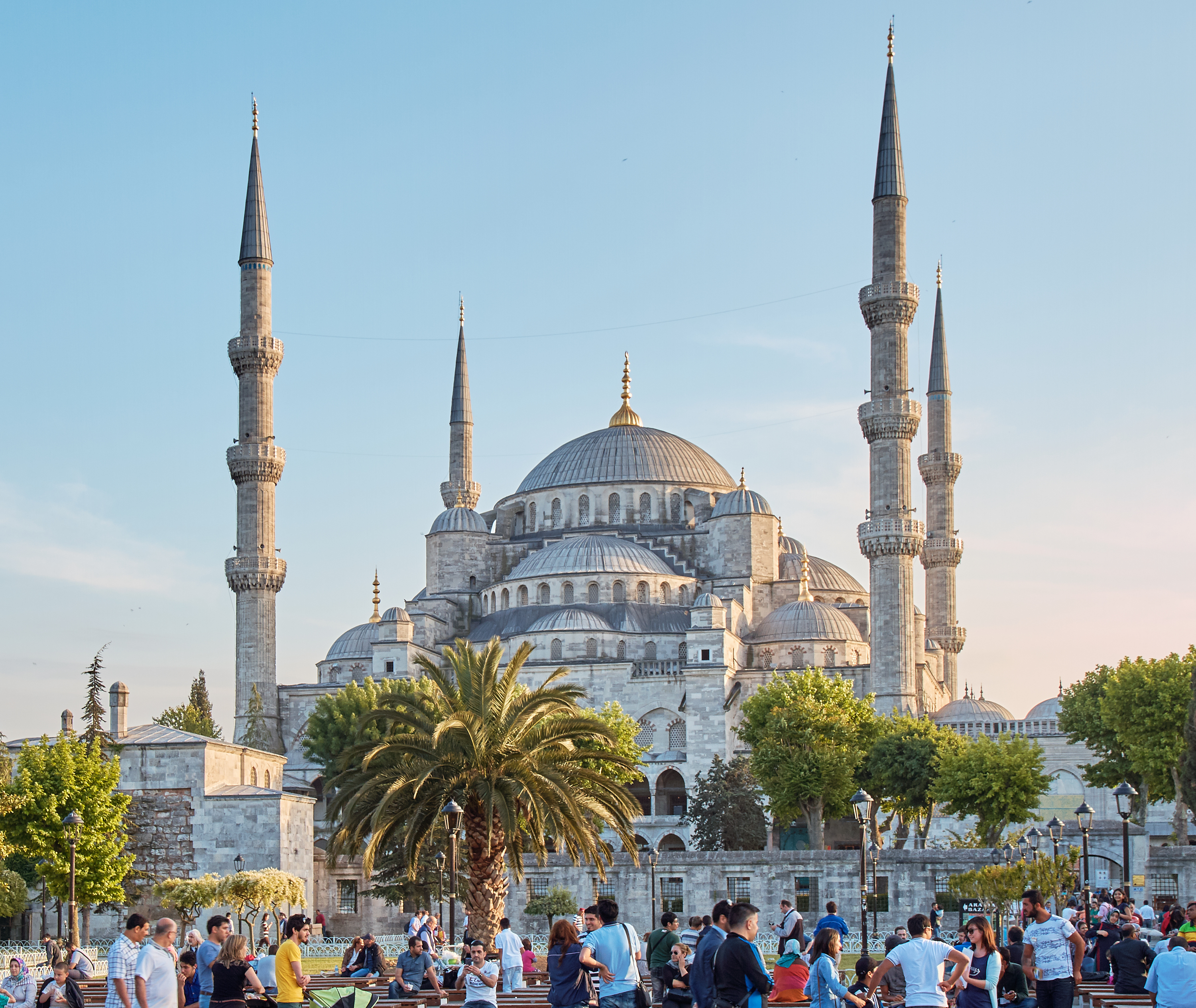
You are standing in the Fatih district of Istanbul, in the old heart of the city. Just above you rises the Blue Mosque, with Hagia Sophia a short walk away. This museum is small and easy to miss. That is part of its charm. Most visitors pass the entrance without knowing what lies below the shops. Beneath this bazaar are the remains of one of the largest palace complexes of the medieval world.
The Great Palace was the home of the Byzantine emperors for centuries. Byzantium is the name historians give to the eastern Roman Empire, which ruled from this city long after Rome itself had fallen. The palace was not one building. It was a sprawling world of halls, courtyards, chapels, gardens and terraces. It stepped down the hillside toward the Sea of Marmara. Today almost all of it is gone, and only scattered pieces survive under the modern streets.
This mosaic is one of those pieces. It once covered the floor of a large peristyle courtyard. A peristyle is an open court surrounded by a covered walkway of columns. Imagine people walking slowly around its edge, out of the sun, with this floor beside them. Scholars usually date the mosaic to the sixth century. That is the age of Justinian, the emperor who built Hagia Sophia. The exact date is still debated.
How did it come to light? In the 1930s, a team of archaeologists from the University of Saint Andrews in Scotland began to dig here. They uncovered sections of this floor under layers of later building. More work followed in the 1950s. Much later, in the 1980s and 1990s, Austrian specialists worked with Turkish authorities to clean and conserve the mosaic. They also protected it inside the building where you stand now.
Now look closely at the floor itself. It is made of tesserae, which are tiny cubes of stone, glass and baked clay. Each one is smaller than a fingernail. Craftsmen set them one by one into a bed of mortar. Bend down, if you can, and look at the white background. The white cubes are not laid in straight rows. They follow a curved pattern, like the scales of a fish. Most visitors never notice it, but it gives the background a soft shimmer.
Against that pale ground, the scenes float freely. There is no single story and no frame around each picture. Instead, figures and animals appear one after another, as if you were walking through a country estate. A hunter faces a wild animal. Shepherds rest. Children play. Horses graze. The artists did not tie these moments together with a plot. They simply filled the courtyard with life.
Some scenes are calm and gentle. Look for the figure milking a goat, or the children riding on a camel. Look for a mother animal feeding her young, and the birds and fruit trees. These pastoral images show the countryside as a peaceful place. For the people of the palace, inside a crowded imperial city, this was a kind of daydream underfoot.
Other scenes are fierce. Here the mood changes completely. Watch for an elephant locked in a struggle with a lion. Watch for hunters with spears, and for the griffin. The griffin is a mythical creature with the body of a lion and the head and wings of an eagle. In one scene it attacks another animal. These images are full of movement — muscles tense, jaws open, bodies twist. The craftsmen used shading in the tiny cubes to make the animals look solid and heavy.
Around the main field runs a wide border of swirling acanthus leaves. Acanthus is a Mediterranean plant with deep, curling leaves, and Greek and Roman artists used it constantly as decoration. Inside this border, look for a large bearded face. Its hair and beard seem to turn into foliage. Scholars have suggested different identities for this face, and there is no single agreed answer. Whoever he is, he is one of the most memorable details in the room.
Why does a palace floor matter so much? Very little art survives from the Byzantine palaces. Wars, fires, earthquakes and centuries of rebuilding destroyed almost everything. Much of what people imagine about the imperial court comes from texts, not objects. This floor is a rare piece of the real thing. It shows the taste and skill of the court, and it shows how strongly the older Roman tradition of floor mosaics continued here in the east.
As you walk around, notice the gaps. Large areas of the floor are missing, and some sections are shown in separate panels on the walls. Later buildings were placed over the courtyard, and parts of the floor were cut or broken. The damage is part of the story. It shows how the city grew in layers. Each new generation built on top of the last, often without knowing what lay beneath.
Before you leave, stand still near the centre of the room. Let your eyes move from a hunter to a grazing horse, from a tree to a twisting lion. Somewhere above you, the bazaar is busy again, and the mosque stands over the old palace grounds. When you step back into the street, look down at the stones under your feet... and remember that this city still keeps whole worlds beneath its pavements.
Key facts
What to look for
Practical tips
Common questions
Is there a free audio guide to Great Palace Mosaic Museum?
Yes — the Lokali app narrates Great Palace Mosaic Museum free of charge in 50+ languages. The guide runs about 6 minutes, covers the history, what to look for on site and practical tips, and works offline once downloaded.
Where is Great Palace Mosaic Museum?
Great Palace Mosaic Museum is in Istanbul, Türkiye, at 41.0044, 28.9767. Tap the map link on this page for directions from where you are.
What is Great Palace Mosaic Museum known for?
Floor once covered a Byzantine imperial palace courtyard. Mosaic usually dated to the sixth century.
What should you look for at Great Palace Mosaic Museum?
Fish-scale pattern in the white background cubes. Elephant fighting a lion in a fierce struggle. Griffin with eagle head and lion body.
What should you know before visiting Great Palace Mosaic Museum?
Enter through the Arasta Bazaar behind the Blue Mosque. Allow about forty-five minutes to see every panel.
When is the best time to visit Great Palace Mosaic Museum?
Visit early to enjoy the quiet galleries.
On the map
Opens directions to Great Palace Mosaic Museum from your location.
More to see in Istanbul


Hear Great Palace Mosaic Museum in your language
The full story, narrated, in 50+ languages. Download it before you go and it plays offline, at your own pace, with no ticket and no tour group.