
Photo: Ninara · CC BY 2.0 · Wikimedia Commons
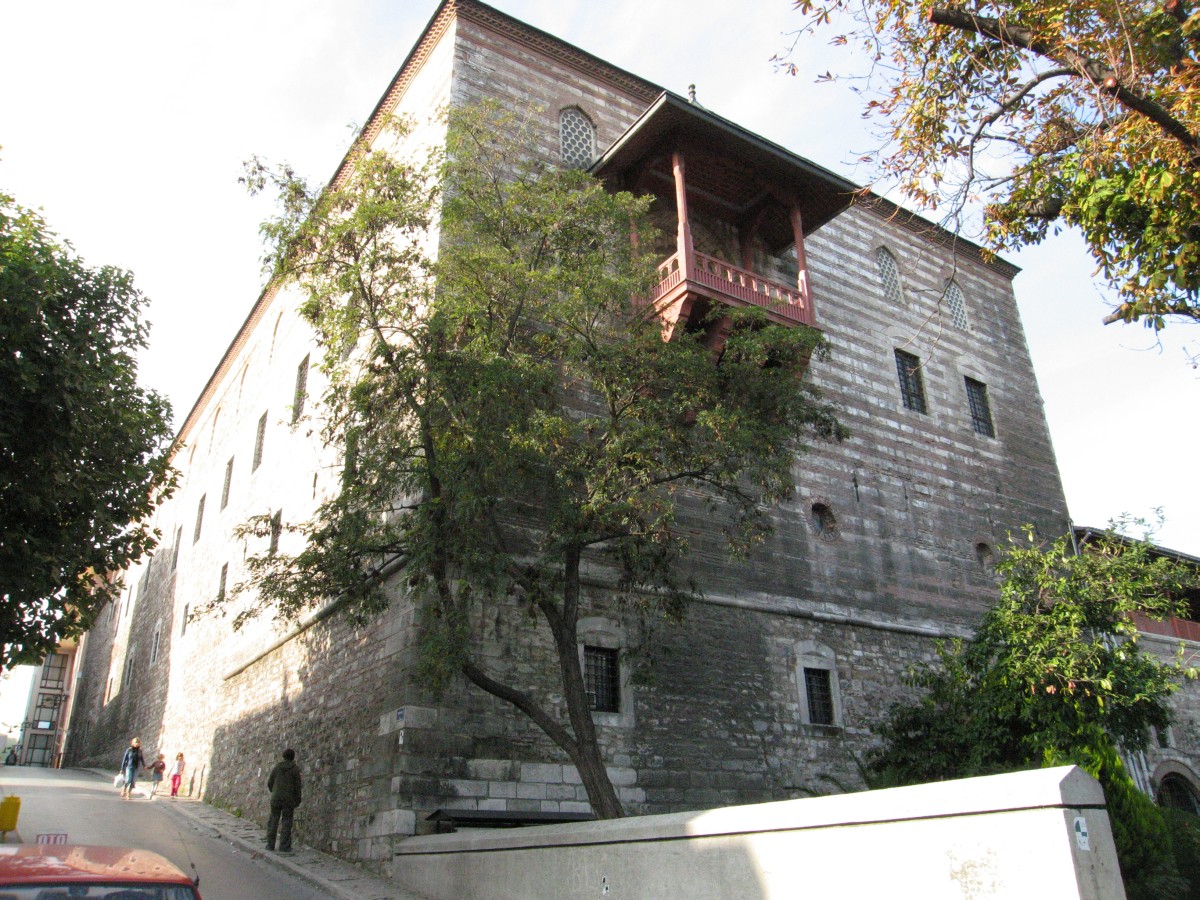
Walled Obelisk is a roman monument in Constantinople (Istanbul, Turkey). Built from cut masonry blocks, not one carved stone. The free Lokali audio guide runs 7 minutes.
✓ Published October 2026 · how we write these guides
Visitor facts
| Lokali audio guide | 7 min · free |
|---|---|
| Type | Monument |
| Location | Istanbul, Türkiye |
| Coordinates | 41.0054, 28.9748 |
| Languages | 50+, in the Lokali app |
The story
Start with your hand, if you can reach. The stone here is rough and uneven, like a garden wall rather than a monument. Blocks of different sizes sit stacked on one another, held by old mortar. Around you, the square carries the sound of footsteps, gulls, and the call to prayer from the mosques nearby. Above you, a tall grey column rises against the Istanbul sky. It looks plain, almost unfinished. That plainness is the first clue to its story.
This is the Walled Obelisk, sometimes called the Masonry Obelisk. In Turkish, people know it as Örme Dikilitaş, which means the knitted or woven obelisk. The name fits. Instead of one solid piece of carved stone, it is built from many cut blocks fitted together. By most accounts it stands around thirty-two metres tall. It sits at the southern end of a long, narrow square in Sultanahmet, the old heart of the city.
That long square is not an accident of town planning. It follows the outline of the Hippodrome of Constantinople, the great chariot-racing stadium of the Byzantine capital. The Byzantine Empire was the eastern continuation of the Roman Empire, and it ruled from this city for more than a thousand years. Crowds of tens of thousands once filled stands along this space. Racing teams had loyal fans, and those fans sometimes rioted. The Hippodrome was where the emperor met his people.
Down the middle of the racetrack ran a central barrier, which the Romans called the spina. Chariots raced around it, turning sharply at each end. Emperors decorated this barrier with statues, columns, and trophies brought from across their lands. The Walled Obelisk is one of three monuments that still stand on that old line. Look north along the square and you will see the other two. They form a quiet row, like the last pieces left on a chessboard.
The nearest neighbour is the Serpent Column, a twisted bronze shaft brought from the sanctuary of Apollo at Delphi in Greece. Beyond it stands the Obelisk of Theodosius, a true Egyptian obelisk carved in pink granite, covered in hieroglyphs. Compare the two obelisks for a moment. The Egyptian one is smooth, polished, and made from a single stone. This one is rough and assembled. Here is one surprise most visitors miss: the Walled Obelisk was probably built to echo that Egyptian original, as a local answer to it.
Nobody knows for certain when the first version of this column went up. Its original builder is not recorded with confidence. What we do know comes from its base. Walk around to the pedestal and look for a carved Greek inscription. The verse credits the Byzantine emperor Constantine the Seventh, who ruled in the tenth century, with restoring the monument. The column was already old and damaged in his day. He repaired it, and he wanted people to know.
The inscription does more than record a repair. It praises the obelisk in grand language and compares it to the Colossus of Rhodes, the giant bronze statue counted among the Seven Wonders of the ancient world. That is a bold comparison for a pile of stones. But in the emperor's time, the column did not look like a pile of stones at all. And that leads to the second surprise.
The obelisk was once covered in plates of gilded bronze. Imagine it gleaming in the afternoon sun, a golden needle at the end of the racetrack, visible to every spectator in the stands. When chariots rounded the turn, they raced past a column of shining metal. The rough stone you see today was never meant to be seen. It was the skeleton under the skin.
The skin disappeared in 1204. That year, soldiers of the Fourth Crusade, a Western European military expedition that was supposed to sail to the Holy Land, turned against Constantinople instead. They captured and sacked the city. Churches, palaces, and public monuments were looted. The bronze plates on this obelisk were stripped away and melted down for their metal. What remained was the bare core, which has stood here ever since.
Look closely at the surface of the stone. You can see small holes scattered across the blocks, in rows and patterns. These are the fixing points where the metal plates were once attached. They are the clearest physical evidence of the obelisk's lost golden coat. Once you notice them, you cannot stop seeing them. The column is covered in tiny scars, each one marking a place where something precious was pulled away.
The story did not end with the Byzantines. After the Ottoman conquest in 1453, the old Hippodrome remained a public square, used for parades, festivals, and celebrations. Locals say that young Janissaries, the elite soldiers of the Ottoman sultans, would climb this rough column as a show of courage and skill. The uneven stones would have given hands and feet something to grip. It is a popular tale, and easy to picture as you look up at the height.
Notice also where the base sits. It stands lower than the modern pavement, inside a sunken area with railings around it. Over many centuries, the level of the city rose with rubble, new buildings, and fresh layers of earth. The ground the chariot drivers knew lies several metres below your feet. When you look down at the pedestal, you are looking into the Byzantine city, not standing on it.
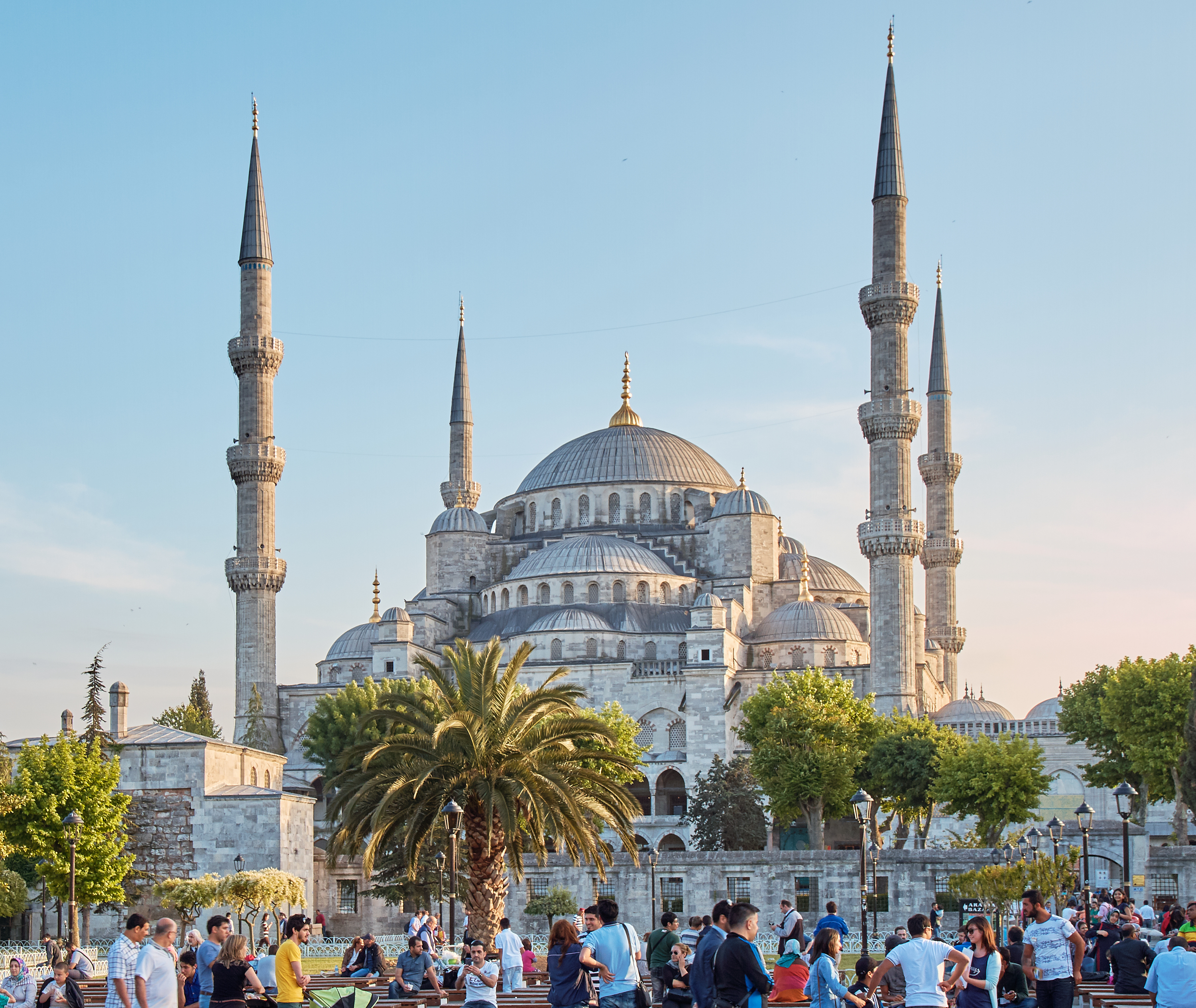
Before you go, take a step back and see the whole scene together. The Blue Mosque rises on one side, with its domes and slender minarets. Hagia Sophia is close by. Plane trees shade the benches, and simit sellers push their carts of sesame bread rings. Tourists and families cross the square where emperors once watched races. The Walled Obelisk stands at the edge of it all, grey and patient, a little scarred and a little crooked.
As you walk away along the old line of the racetrack, look back once more. Try to picture it covered in gold, catching the evening light above a roaring crowd. Then see it as it is now, quiet and bare. Both pictures are true. The stones under your hand are the same stones an emperor repaired more than a thousand years ago, and they are still standing.
Key facts
What to look for
Practical tips
Common questions
Is there a free audio guide to Walled Obelisk?
Yes — the Lokali app narrates Walled Obelisk free of charge in 50+ languages. The guide runs about 7 minutes, covers the history, what to look for on site and practical tips, and works offline once downloaded.
Where is Walled Obelisk?
Walled Obelisk is in Istanbul, Türkiye, at 41.0054, 28.9748. Tap the map link on this page for directions from where you are.
What is Walled Obelisk known for?
Built from cut masonry blocks, not one carved stone. Stands at the southern end of the old Hippodrome.
What should you look for at Walled Obelisk?
Rows of small holes where bronze plates were fixed. Carved Greek verse on the pedestal. Sunken base below the modern pavement level.
What should you know before visiting Walled Obelisk?
Walk the square's length to see all three monuments. Circle the base to find the Greek inscription.
When is the best time to visit Walled Obelisk?
Visit in late afternoon for softer light on stone.
On the map
Opens directions to Walled Obelisk from your location.
More to see in Istanbul


Hear Walled Obelisk in your language
The full story, narrated, in 50+ languages. Download it before you go and it plays offline, at your own pace, with no ticket and no tour group.