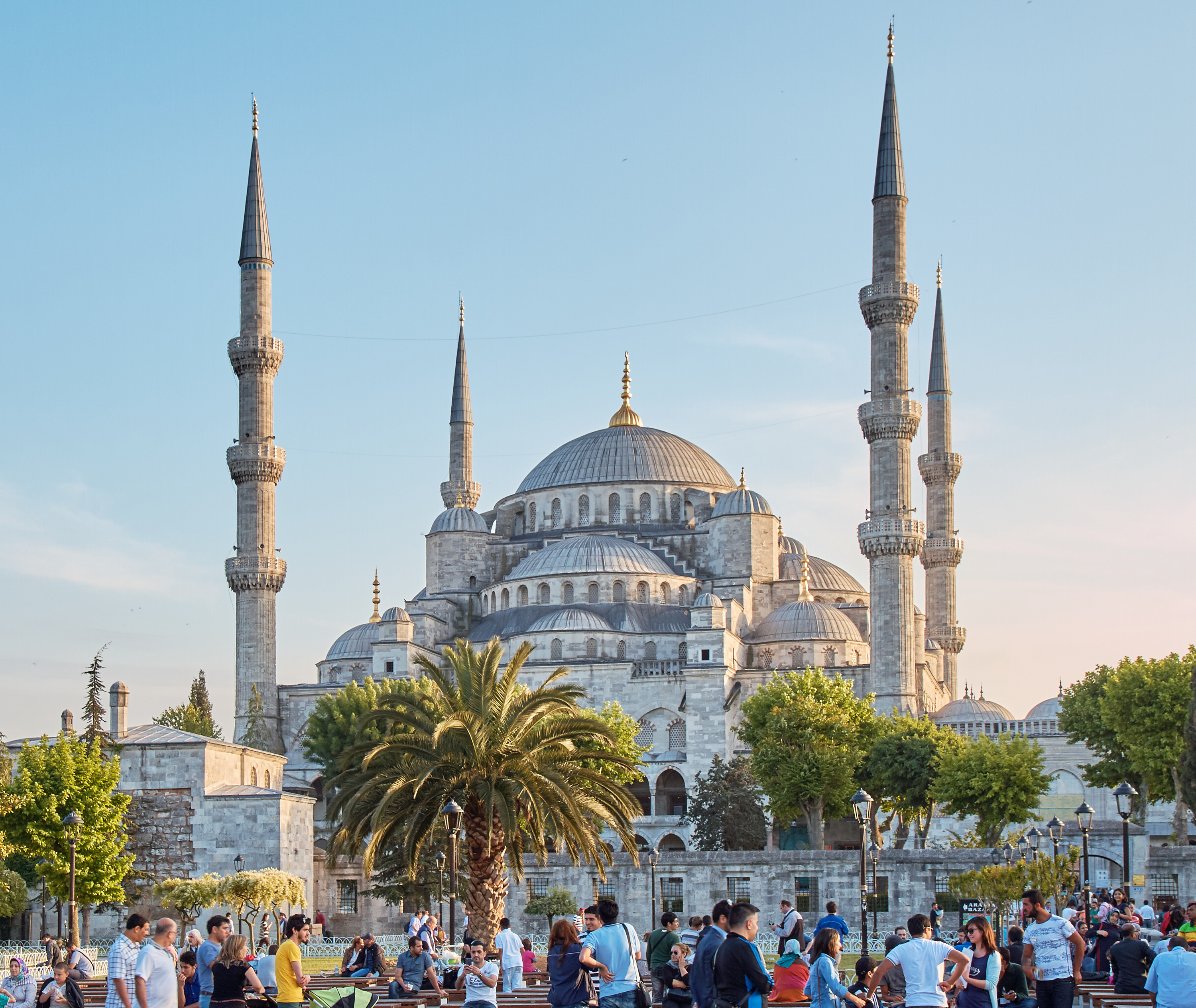
Blue Mosque is a mosque in Istanbul, Türkiye. Built in the early 17th century, this Ottoman mosque is named for the blue İznik tiles that cover its interior walls and dome. Most visitors spend 45–90 min here. The free Lokali audio guide runs 9 minutes.
✓ Verified August 2026 · how we write these guides
Visitor facts
| Time needed | 45–90 min |
|---|---|
| Lokali audio guide | 9 min · free |
| Type | Mosque |
| Best for | History |
| Location | Istanbul, Türkiye |
| Coordinates | 41.0054, 28.9768 |
| Languages | 45, in the Lokali app |
The story
Stand in the courtyard and look up. The six minarets pierce the sky in a rhythm you will not see anywhere else in Istanbul — most mosques have two or four, but Sultan Ahmed wanted six, a bold declaration that sparked controversy when it was built. The year was 1616, and only the mosque in Mecca had six minarets at the time. To calm the uproar, the sultan funded a seventh minaret for Mecca, and his six remained here, defining the skyline.
The name everyone uses — Blue Mosque — comes from the interior, not the exterior. Step inside and twenty thousand handmade Iznik tiles cover the upper walls and dome, each one glazed in shades of cobalt, turquoise, and white. The tiles depict tulips, roses, carnations, and cypress trees, all traditional Ottoman motifs. Natural light pours through two hundred and sixty windows, and the blue tiles seem to glow, filling the prayer hall with a cool, underwater luminescence.
Sultan Ahmed I commissioned the mosque when he was only nineteen years old. He wanted a monument that would rival the Hagia Sophia, which stands directly across the park. His architect, Sedefkar Mehmed Agha, had trained under Mimar Sinan, the master builder of the Ottoman golden age. The mosque took seven years to complete, and Sultan Ahmed died just a year after it opened. He is buried in a mausoleum on the north side of the courtyard, his tomb covered in more of those blue tiles.
The interior is vast and surprisingly serene despite the crowds. Four massive columns, each five metres in diameter, support the central dome. The dome itself rises forty-three metres above the floor and spans twenty-three metres across. Smaller half-domes cascade down on all sides, creating a sense of weightlessness. The effect is deliberate — Mehmed Agha wanted the structure to feel as if it were floating, held up by light rather than stone.
Look closely at the mihrab, the niche that indicates the direction of Mecca. It is carved from a single block of marble and flanked by more Iznik tiles. To the right, the minbar — the pulpit where the imam delivers the Friday sermon — is also marble, with a delicate stone canopy. The original decoration included gold calligraphy and semiprecious stones, though much of the gold was removed over the centuries.
The mosque is still active, so five times a day the call to prayer echoes from the minarets and worshippers fill the carpeted floor. Visitors are welcome outside prayer times, but you will need to remove your shoes, and women should cover their heads and shoulders. The entrance for tourists is on the south side, and there is no admission fee — this is a working place of worship, not a museum.
The courtyard outside is as large as the prayer hall itself, a rare feature. It is surrounded by a portico with thirty small domes, and at the centre stands a hexagonal fountain where worshippers perform ablutions before prayer. The courtyard was designed as a transitional space, a place to slow down and prepare for the quiet inside. Early morning is the best time to visit — the light is softer, the crowds thinner, and you can hear the pigeons settling on the domes.
The Iznik tiles inside are not reproductions. They come from the kilns of Iznik, a town two hundred kilometres southeast of Istanbul, which produced the finest ceramics in the Ottoman Empire during the sixteenth and seventeenth centuries. The technique involved layering mineral pigments under a clear glaze, then firing the tile at high temperatures. The cobalt blue was made from imported Persian cobalt, and the turquoise came from copper oxide. By the time this mosque was completed, the Iznik workshops were already in decline, and the craft nearly disappeared in the following century.
Walk around to the northwest corner of the complex and you will find the Arasta Bazaar, a row of vaulted shops that once generated income for the mosque's upkeep. Today it sells carpets, ceramics, and jewellery, and it is quieter than the Grand Bazaar. Beneath the bazaar lies the Great Palace Mosaic Museum, which displays floor mosaics from the Byzantine palace that stood here a thousand years before the mosque.
As you leave, turn back and look at the building from the park between the Blue Mosque and Hagia Sophia. The two structures face each other across a stretch of grass and fountains — one Christian, one Muslim, both architectural peaks of their respective empires. The dialogue between them is silent but unmistakable. The Blue Mosque was built to assert Ottoman confidence, but it also pays homage to the Byzantine past, borrowing the cascading dome structure and the sense of interior light. You are standing at the hinge of two worlds, and both are still visible.
Key facts
What to look for
Practical tips
Common questions
How long do you need at Blue Mosque?
Plan 45–90 min. That is the time most visitors spend at Blue Mosque. The free Lokali audio guide adds about 9 minutes of narration you can listen to as you walk, so it fits inside your visit rather than adding to it.
Is there a free audio guide to Blue Mosque?
Yes — the Lokali app narrates Blue Mosque free of charge in 50+ languages. It covers the history, what to look for on site and practical tips, and it works offline once downloaded.
Where is Blue Mosque?
Blue Mosque is in Istanbul, Türkiye, at 41.0054, 28.9768. Tap the map link on this page for directions from where you are.
What should you know before visiting Blue Mosque?
Visit early morning for softer light and smaller crowds.
What is Blue Mosque known for?
Built in 1616 with six minarets, sparking controversy.
What is the best time to visit Blue Mosque?
Enter during late afternoon to catch light streaming through the stained-glass windows, illuminating the blue tiles.
On the map
Opens directions to Blue Mosque from your location.
More to see in Istanbul


Hear Blue Mosque in your language
The full story, narrated, in 50+ languages. Download it before you go and it plays offline, at your own pace, with no ticket and no tour group.