
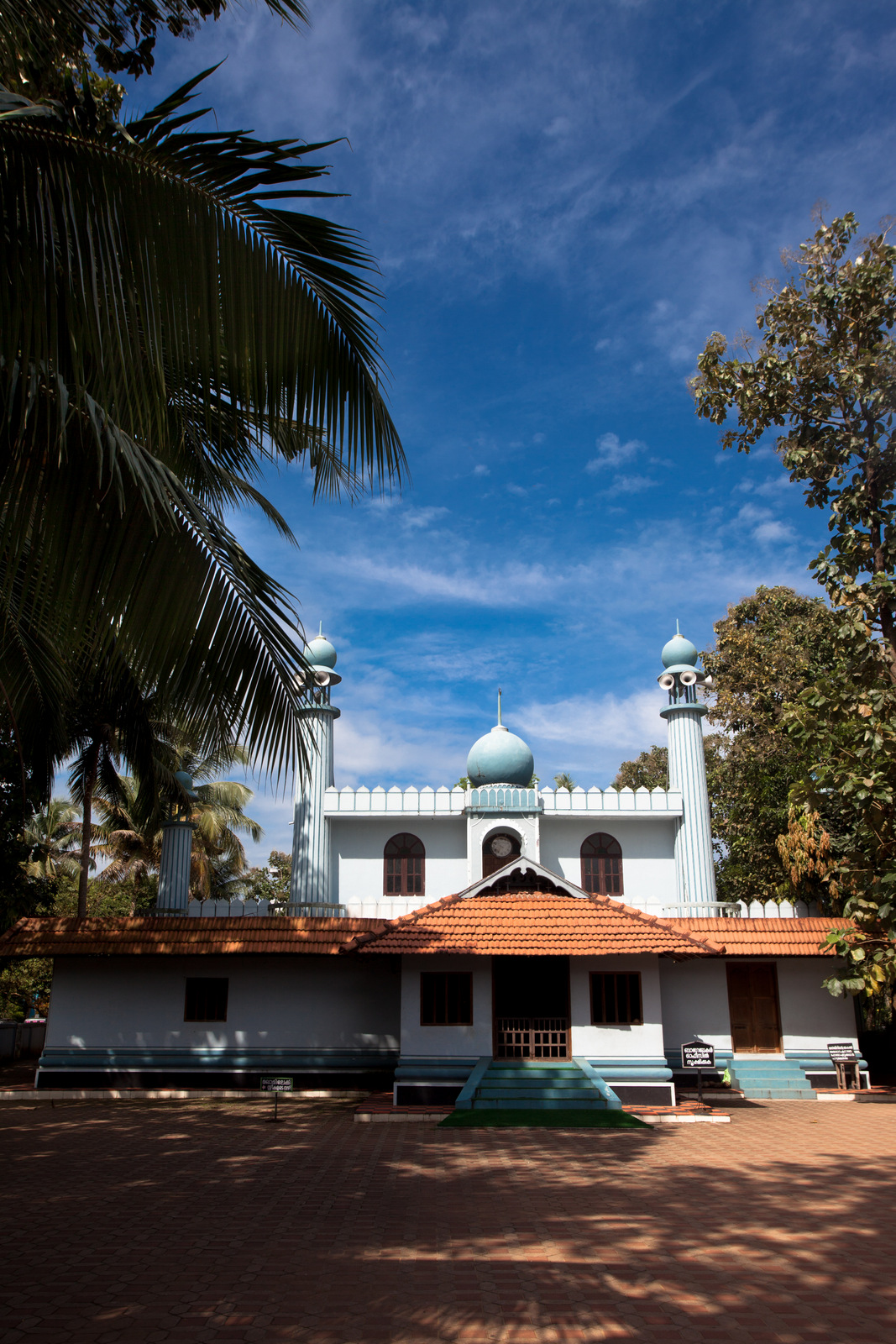
Photo: Ranjith Siji · CC BY-SA 4.0 · Wikimedia Commons
Mattancherry Palace is a palace in Ernakulam district, Keralam, India. Portuguese traders built the palace in the mid-sixteenth century. The free Lokali audio guide runs 8 minutes.
✓ Published October 2026 · how we write these guides
Visitor facts
| Lokali audio guide | 8 min · free |
|---|---|
| Type | Palace |
| Location | Kochi, India |
| Coordinates | 9.9583, 76.2594 |
| Languages | 50+, in the Lokali app |
The story
Step out of the heat of the lane and into the shade of the doorway. The air changes almost at once. It is cooler here, and quieter, and it carries a faint smell of old timber and lime plaster. Under your feet, the floor feels smooth and dark, almost like polished stone. Outside, auto-rickshaws rattle past and spice merchants call out from their shops. Inside these thick walls, the sound of Mattancherry drops away to a low hum.
You are standing in Mattancherry Palace, in the old trading quarter of Kochi, on the coast of Kerala in southern India. Many people call it the Dutch Palace. That name is a small puzzle, because the Dutch did not build it. The story of this building is a story of gifts, rivalries, and changing foreign powers. It also holds some of the finest wall paintings in all of Kerala. Let us walk through it slowly.
The palace began in the mid-sixteenth century. Portuguese traders built it and presented it to the Raja of Kochi, the local ruler. Why give a king a palace? Trade. The Portuguese wanted the pepper and spices of the Malabar coast, and they wanted the Raja on their side. They also had damaged a nearby temple during their wars in the region, and the palace is often described as a gesture to restore goodwill. So, from the very start, this building was part diplomacy, part business deal.
About a century later, the balance of power shifted. The Dutch East India Company pushed the Portuguese out of Kochi in the 1660s. The Dutch then repaired and extended the palace, and they too used it to keep good relations with the Raja. Their renovation is why the Dutch name stuck. Here is the surprise — the building looks almost nothing like a European palace. Its plan and its spirit belong to Kerala, not to Lisbon or Amsterdam.
Look at the shape of the place. The palace is built around a central courtyard, in the traditional Kerala style called nalukettu. That word describes a house with four wings that face an open square in the middle. Rain falls into the courtyard, light pours down into the rooms, and air moves through the building. In a humid coastal climate, this design keeps the interior comfortable. The long sloping roofs and wide eaves do the same work, shading the walls from the strong tropical sun.
In that courtyard stands a temple. It is dedicated to Pazhayannur Bhagavati, a form of the mother goddess who was the protective deity of the Kochi royal family. There are also shrines to Krishna and to Shiva on the grounds. This detail matters. It shows that the palace was never only a residence. It was a place of ritual and worship, where the life of the royal family and the life of the faith were tightly bound together. The temple area may be closed to visitors, so respect any barriers.
Now turn your attention to the floor once more. Visitors often stop and touch it, because it looks so dark and glassy. Traditional Kerala floors like this were made from local materials, and guides often say the mix included burnt coconut shells, charcoal, lime, and plant juices. Whatever the exact recipe here, the result is a surface that stays cool and smooth for generations. It is a quiet piece of engineering, and most people walk straight across it without a second glance.
Upstairs, the great Coronation Hall opens up. This is where the rajas of Kochi were crowned. Look up at the wooden ceiling, with its carved panels and its warm brown colour. Around the walls, you will see portraits of the rulers of Kochi, painted in a later style. In the display cases, there are royal objects — clothing, weapons, and palanquins, the covered chairs that servants carried on long poles. Together, they give a sense of the ceremony and the weight of royal life in this hall.
But the real treasure of Mattancherry is on the walls themselves. The palace holds a remarkable collection of Kerala murals. These are large paintings applied directly to the plaster. Traditional Kerala mural painters used natural pigments made from minerals and plants. That is why the colours sit in a warm, earthy range — deep red, yellow ochre, green, white, and black. Notice how the figures fill almost every space. There is very little empty background. The painters packed the walls with gods, animals, trees, and flowing ornament.
Many of the murals tell scenes from the Ramayana, one of the great epic poems of India. It follows Prince Rama, his exile into the forest, the kidnapping of his wife Sita, and the war to bring her home. Other panels show stories of Krishna, of Shiva, and of other gods from Hindu tradition. If you know the epics, you can follow the stories wall by wall. If you do not, simply watch the faces, the large expressive eyes, and the hand gestures. They carry the emotion of each scene.
Here is a second surprise. Some of the most famous paintings are in a room that was once a royal bedchamber. These murals include scenes of Krishna with the gopis, the cowherd women of his legends, and some panels are frankly romantic and sensual. Visitors are sometimes startled to find this in a royal palace. In the Kerala tradition, though, love and devotion are closely linked. Desire for the divine and earthly love share the same visual language on these walls.
Take a moment to think about the craft behind these walls. The artists worked on wet or prepared plaster, and they had to plan each figure with care. Many of these paintings have survived for centuries in a hot, wet climate. That is a real achievement. Over time, some areas have faded or flaked, and conservators have worked to protect them. Please do not touch the walls. The oils on our fingers can damage pigment that has lasted far longer than any of us.
The palace today is cared for by the Archaeological Survey of India, the national body that protects historic monuments. It sits in the heart of Mattancherry, close to the old Jewish quarter and the Paradesi Synagogue. Walk a few minutes in any direction and you will pass warehouses of ginger and pepper, antique shops, and the smell of drying spices. This mix of faiths and trading peoples is the same world that built the palace in the first place.
As you leave, pause in the doorway one more time. Feel the change as the cool interior gives way to the warm, bright street. Behind you are kings, epics, and painted gods. In front of you is the living market of Mattancherry, still trading, still busy, still shaped by the sea. Look at the sloping red roof above the gate. It has kept the sun off these walls for centuries... and it will still be there when you come back.
Key facts
What to look for
Practical tips
Common questions
Is there a free audio guide to Mattancherry Palace?
Yes — the Lokali app narrates Mattancherry Palace free of charge in 50+ languages. The guide runs about 8 minutes, covers the history, what to look for on site and practical tips, and works offline once downloaded.
Where is Mattancherry Palace?
Mattancherry Palace is near Kochi, India, at 9.9583, 76.2594. Tap the map link on this page for directions from where you are.
What is Mattancherry Palace known for?
Portuguese traders built the palace in the mid-sixteenth century. It was a gift to the Raja of Kochi.
What should you look for at Mattancherry Palace?
The dark, glassy traditional floor underfoot. Carved wooden ceiling panels in the Coronation Hall. Portraits of the Kochi rajas lining the hall.
What should you know before visiting Mattancherry Palace?
Visit in the morning before the lanes grow hot. Expect photography inside the galleries to be restricted.
When is the best time to visit Mattancherry Palace?
Visit in the morning before the lanes grow hot.
On the map
Opens directions to Mattancherry Palace from your location.
More to see in Kochi


Hear Mattancherry Palace in your language
The full story, narrated, in 50+ languages. Download it before you go and it plays offline, at your own pace, with no ticket and no tour group.