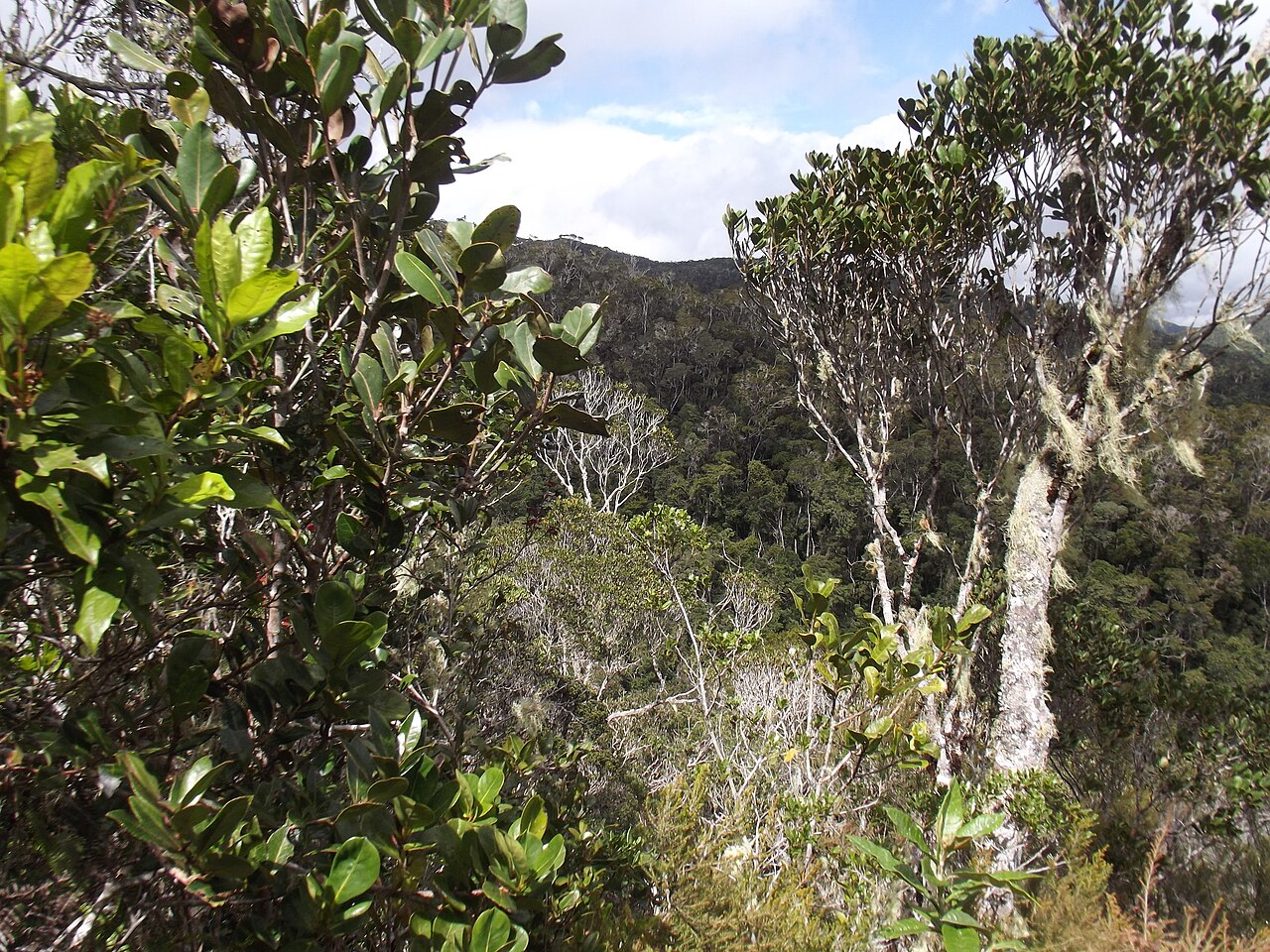
Andasibe-Mantadia National Park
18.9333° S · 48.4167° E · National Park
Andasibe-Mantadia National Park is a national park in Madagascar. Ninety percent of species here exist nowhere else on Earth. Indri lemurs are the largest living lemurs, found only in this forest. Most visitors spend 3-4 hours here. The free Lokali audio guide runs 7 minutes.
✓ Verified October 2026 · how we write these guides
Visitor facts
| Time needed | 3-4 hours |
|---|---|
| Lokali audio guide | 7 min · free |
| Type | National Park |
| Best for | Authentic finds |
| Location | Madagascar, Madagascar |
| Coordinates | -18.9333, 48.4167 |
| Languages | 45, in the Lokali app |
The story
The air here is thick and green — not just with moisture, but with sound. Before you see the forest, you hear it: the wail of the indri lemur cutting through the canopy like a song that predates human language. Stand still for a moment and let the chorus build around you — frogs clicking in the understory, insects thrumming, leaves dripping from last night's rain. This is Andasibe-Mantadia, one of Madagascar's most accessible primary rainforests, and the noise alone tells you this place operates on rules older than any city.
The park splits into two zones. Andasibe, the smaller section also called Analamazaotra, hugs the main road and draws most visitors — it is where the indri live, and their morning calls are the reason many people come. Mantadia, the larger and wilder half, sprawls to the north across steep ridges and river valleys. Fewer trails cut through it, and the forest feels older, less negotiated. Both sections protect what remains of Madagascar's eastern rainforest belt, a habitat that once ran unbroken along the island's spine and now survives in fragments.
Madagascar split from the African mainland roughly one hundred and sixty million years ago, then from India another ninety million years later. That isolation turned the island into an evolutionary laboratory. Ninety percent of the species here exist nowhere else on Earth. Walk twenty metres into the forest and you are surrounded by plants and animals that never learned to fear humans because humans arrived only two thousand years ago — a blink in evolutionary time. The lemurs, the chameleons, the leaf-tailed geckos pressed flat against bark — all of them are endemic, shaped by an island that drifted alone.
The indri is the largest living lemur, about the size of a small child, with black and white fur and a face that looks startled even in rest. They live in family groups and defend their territory with that eerie, haunting call — part whale song, part air-raid siren. Guides here can usually track them by sound, leading you through wet trails to a tree where a family sits grooming in the mid-canopy. The indri do not survive in captivity. Every individual you see here is wild, and this forest is the only place they exist. When the French colonial administration tried to protect them in the nineteen-twenties, the local Betsimisaraka people already considered them sacred — fady, or taboo to hunt — because of an old story that indri were once human ancestors who chose the forest over the village.
The trails vary in difficulty. The shortest loops in Andasibe take two hours and stay on graded paths; longer routes in Mantadia climb steep ridges and cross streams on fallen logs. You will see more than lemurs if you walk slowly. Chameleons the size of your thumb cling to twigs, changing colour in real time as they move from shadow to sun. Giraffe weevils — beetles with impossibly long necks — crawl across broad leaves. Orchids bloom in the forks of trees, some no bigger than a fingernail. The forest floor is a tangle of roots and moss, and every surface hosts something alive. Guides carry sticks to point out creatures you would otherwise step past: a leaf-tailed gecko invisible against lichen, a bright red frog no larger than a coin.
Rain falls here most days, even in the dry season. The forest depends on it. Clouds roll in from the Indian Ocean and dump water on these eastern slopes, feeding streams that cascade down to the coastal plain. The rain is warm and sudden, turning trails to mud in minutes. Most visitors come between September and December, when the weather is slightly drier and many animals are breeding. But the park never closes, and the wet season from January to March has its own beauty — fewer people, louder rivers, the forest exploding with green.
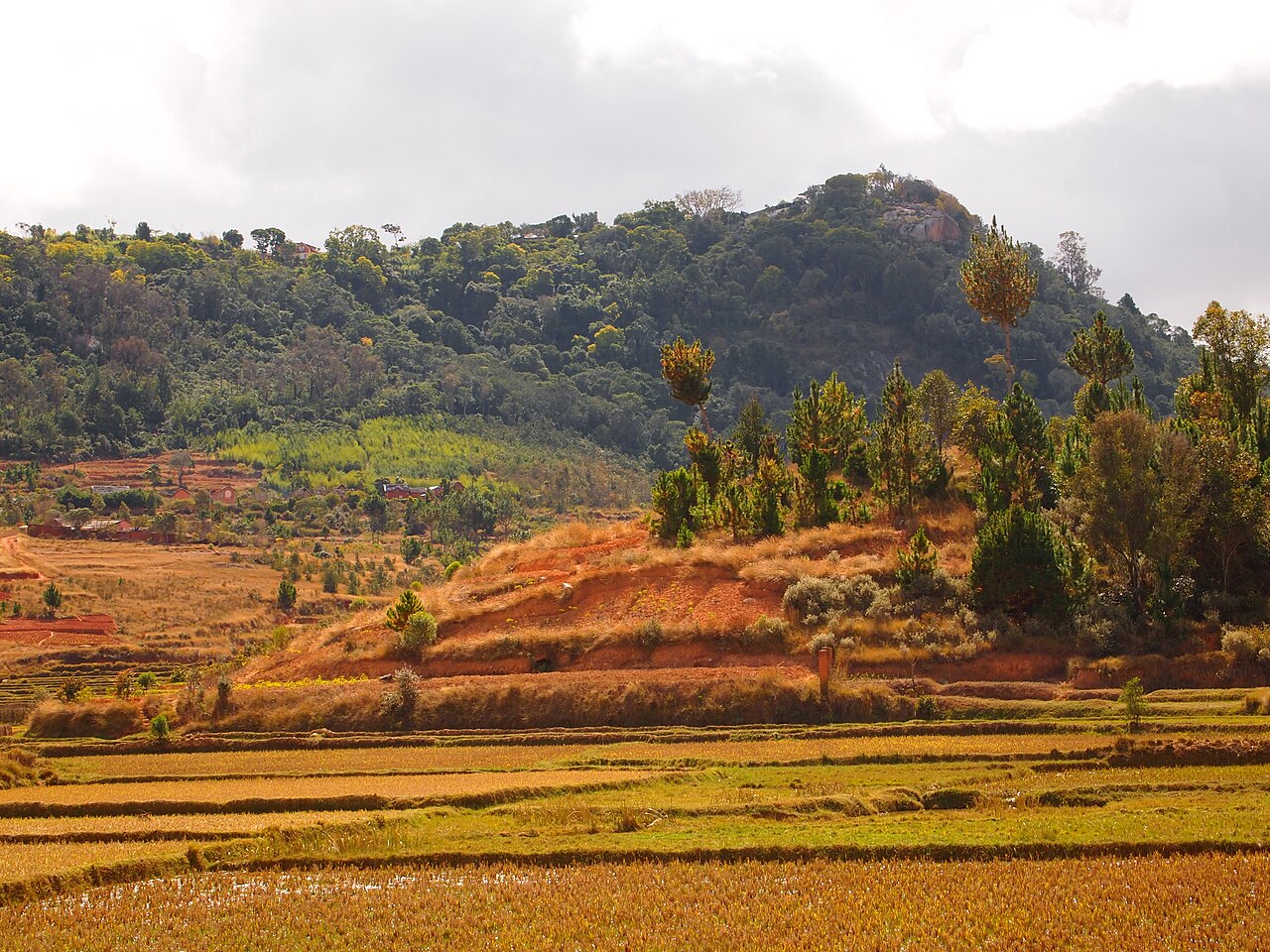
The park was formally established in 1989, stitched together from older reserves and village land. It covers roughly one hundred and fifty-five square kilometres, though the boundaries remain contested in places. Logging and slash-and-burn agriculture press against the edges. You can see the line from some viewpoints in Mantadia — dense green forest stopping abruptly where farmland begins, the canopy replaced by rice paddies and eucalyptus plantations. Conservation here is not abstract. It is a daily negotiation between protecting what remains and meeting the needs of people who live in one of the poorest regions of one of the poorest countries on Earth.
Night walks reveal a different forest. After dark, the diurnal lemurs sleep and the nocturnal species emerge — mouse lemurs smaller than your fist, wooly lemurs with eyes that glow orange in torchlight. Chameleons move in slow motion along branches, hunting moths. Frogs call from every puddle, each species with its own pitch. The guides know the trails by heart and walk without hesitation in the dark, their headlamps picking out eyeshine in the leaves. The night forest feels less like a place you visit and more like a place that tolerates your presence for a few hours before swallowing you back into the dark.
Madagascar lost most of its megafauna within a thousand years of human arrival. Giant lemurs the size of gorillas, elephant birds taller than a man, horned tortoises — all gone. What survives here is a fraction of what once was, and that fraction is still shrinking. But Andasibe-Mantadia holds. The indri still call at dawn. The chameleons still hunt in the canopy. The forest still breathes. Stand at the trailhead as the light fades and listen to the chorus build again — a sound that has filled this valley for millions of years, and with luck, will fill it for millions more.
When you leave, the noise of the forest follows you for a while, a ringing in your ears that fades only slowly as the road drops back toward the towns. You will remember the indri's call long after you forget the name of the trail you walked. That is the point. This place does not ask to be understood. It asks to be heard.
Key facts
What to look for
Practical tips
Common questions
How long do you need at Andasibe-Mantadia National Park?
Plan 3-4 hours. That is the time most visitors spend at Andasibe-Mantadia National Park. The free Lokali audio guide runs 7 minutes and is made to listen to while you walk.
Is there a free audio guide to Andasibe-Mantadia National Park?
Yes — the Lokali app narrates Andasibe-Mantadia National Park free of charge in 50+ languages. No ticket, tour group or subscription, and it works offline once downloaded.
Where is Andasibe-Mantadia National Park?
Andasibe-Mantadia National Park is in Madagascar, Madagascar, at -18.9333, 48.4167. Tap the map link on this page for directions.
What should you know before visiting Andasibe-Mantadia National Park?
Bring rain gear even in dry season, showers are common
What is Andasibe-Mantadia National Park known for?
Ninety percent of species here exist nowhere else on Earth
What is the best time to visit Andasibe-Mantadia National Park?
Bring rain gear even in dry season, showers are common
On the map
Opens directions to Andasibe-Mantadia National Park from your location.
More to see in Madagascar

Hear Andasibe-Mantadia National Park in your language
The full story, narrated, in 50+ languages. Download it before you go and it plays offline, at your own pace, with no ticket and no tour group.