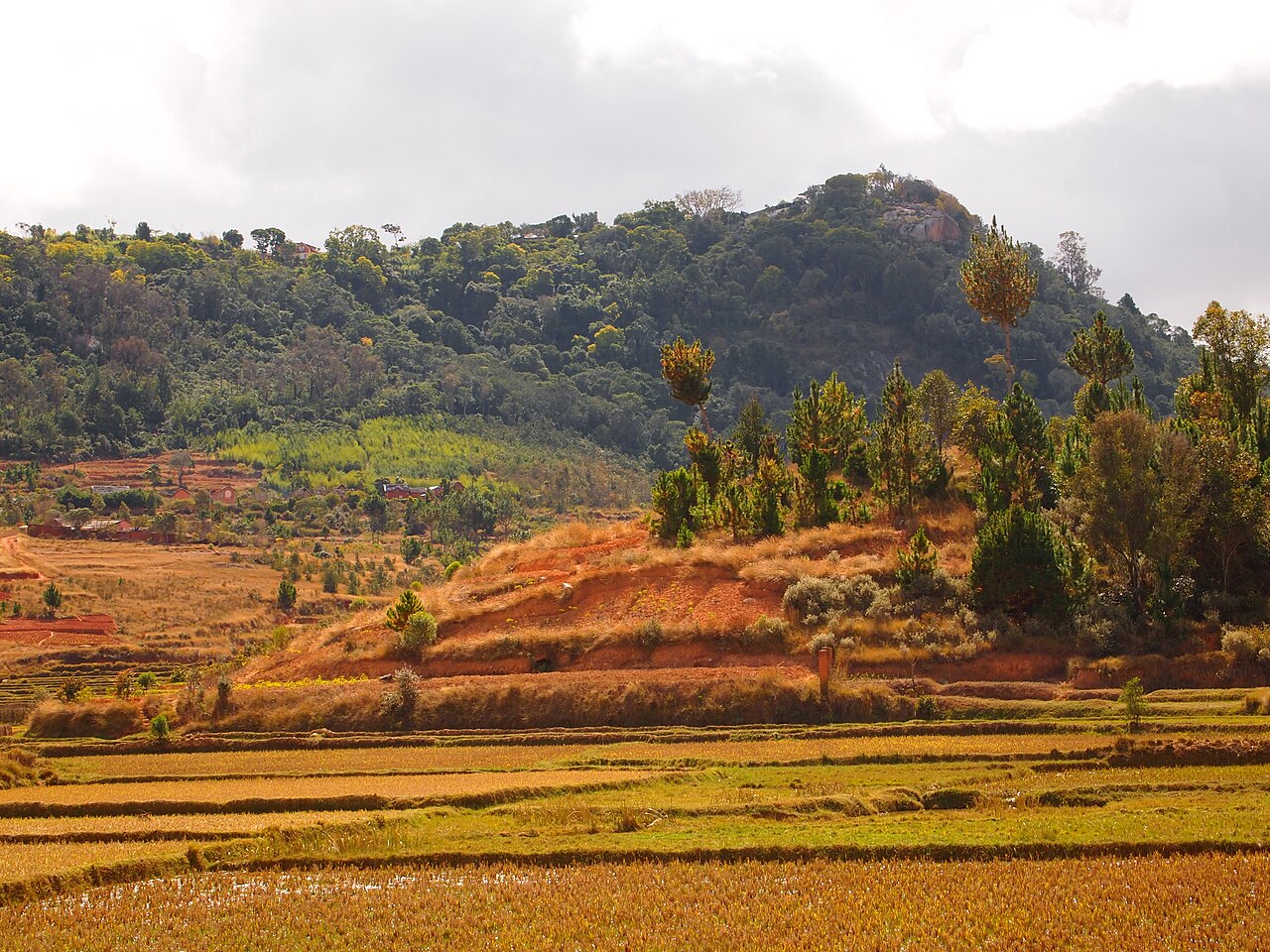
Royal Hill of Ambohimanga
18.7608° S · 47.5631° E · Historic Site
Royal Hill of Ambohimanga is a historic site in Madagascar. Birthplace of King Andrianampoinimerina, unifier of the Merina Kingdom. Name means blue hill in Malagasy, from seasonal vegetation colour. Most visitors spend 1-2 hours here. The free Lokali audio guide runs 6 minutes.
✓ Verified October 2026 · how we write these guides
Visitor facts
| Time needed | 1-2 hours |
|---|---|
| Lokali audio guide | 6 min · free |
| Type | Historic Site |
| Best for | History |
| Location | Madagascar, Madagascar |
| Coordinates | -18.7608, 47.5631 |
| Languages | 45, in the Lokali app |
The story
The red earth beneath your feet is packed hard by centuries of pilgrims, and the air carries the scent of eucalyptus mixed with something older — incense, perhaps, or the memory of ritual fires. You are standing on sacred ground, a hill that rises above the highland plateau like a natural throne, its summit ringed by stone walls and wooden gates that have guarded the heart of Merina royalty since long before European ships reached Madagascar's shores.
Ambohimanga means "blue hill" in Malagasy, named for the colour the vegetation takes on at certain times of year when mist rolls across the plateau. This was the birthplace of King Andrianampoinimerina, the ruler who unified the Merina Kingdom in the late eighteenth century and set the stage for a royal dynasty that would control much of the island. He was born here around 1745, grew up within these walls, and later moved his capital to Antananarivo — the city you can see spreading across the valley below — but Ambohimanga remained the spiritual centre, the place where kings returned to seek the blessing of ancestors.
The fortifications you see are not European-style ramparts but something distinctly Malagasy — deep ditches carved into the red laterite soil, earthen banks, and massive wooden gates that could be sealed at night by rolling a single enormous stone disc across the entrance. That disc, weighing several tonnes, still sits beside the gate called Ambatomitsangana. It took twenty men to move it into place each evening, and the grooves worn into the threshold by its passage are still visible. The engineering is elegant in its simplicity — no iron hinges, no complex locks, just weight and friction doing the work.
Inside the royal compound, the architecture tells a story of adaptation and pride. The king's house is built from rosewood, its beams fitted without nails, the roof thatched with layers of dried grass that shed the highland rains. The walls are thick, the windows small, designed to hold warmth during the cold season when temperatures on the plateau drop sharply at night. Beside the main residence stands a smaller structure where the queen lived, and beyond that a pavilion where the king dispensed justice and received emissaries. Each building is modest in scale — no soaring ceilings, no marble columns — but the craftsmanship in the joinery and the precision of the layout speak to a culture that valued order and continuity.
The hill itself has been a place of worship far longer than the royal structures have stood. Before the Merina kings built their palaces here, the summit was already considered fady — sacred, protected by ancestral spirits. Even today, visitors are asked to remove their shoes before entering certain areas, and some Malagasy families still make pilgrimages here to ask for blessings or to honour their ancestors. You may see offerings left at the base of certain trees or beside particular stones — small piles of coins, flowers, sometimes a bottle of rum. These are not museum displays; they are living practices, threads of belief that stretch back centuries.
The view from the summit is worth the climb. On clear days, you can see the entire Antananarivo basin laid out below, the city's red-brick buildings and green rice paddies forming a patchwork that shifts with the light. The air up here is cooler and thinner than down in the valley, and the wind carries the sound of church bells and car horns from the capital, a reminder that the modern world is close but not quite present. The hill remains a threshold, a place where the past holds its ground.
Ambohimanga was inscribed as a World Heritage Site in 2001, recognized not just for its architecture but for its continuing role in Malagasy spiritual life. The site is managed with care — paths are maintained, guides are available, and the royal tombs are kept locked except during certain ceremonies — but there is no theme-park polish here. The grass grows wild in places, the stone walls show their age, and the sense of sacredness is not manufactured. It simply is.
One detail often missed: the sacred pool near the entrance, fed by a spring that has never run dry. The water is considered to have healing properties, and for generations, people have come here to collect it in bottles or to wash their hands before entering the royal compound. The pool is small, easily overlooked, but it anchors the site in a way no monument could. Water, earth, ancestors — the elements that matter here are elemental.
As you walk back down the hill, notice how the light changes on the red soil, how the shadows of the eucalyptus trees lengthen across the path. The stone disc still sits beside the gate, waiting. The ancestors, they say, are still here too, watching over the blue hill as they have for centuries.
Key facts
What to look for
Practical tips
Common questions
How long do you need at Royal Hill of Ambohimanga?
Plan 1-2 hours. That is the time most visitors spend at Royal Hill of Ambohimanga. The free Lokali audio guide runs 6 minutes and is made to listen to while you walk.
Is there a free audio guide to Royal Hill of Ambohimanga?
Yes — the Lokali app narrates Royal Hill of Ambohimanga free of charge in 50+ languages. No ticket, tour group or subscription, and it works offline once downloaded.
Where is Royal Hill of Ambohimanga?
Royal Hill of Ambohimanga is in Madagascar, Madagascar, at -18.7608, 47.5631. Tap the map link on this page for directions.
What should you know before visiting Royal Hill of Ambohimanga?
Remove shoes before entering certain sacred areas
What is Royal Hill of Ambohimanga known for?
Birthplace of King Andrianampoinimerina, unifier of the Merina Kingdom
What is the best time to visit Royal Hill of Ambohimanga?
Visit early morning for clearer views across the valley
On the map
Opens directions to Royal Hill of Ambohimanga from your location.
More to see in Madagascar

Hear Royal Hill of Ambohimanga in your language
The full story, narrated, in 50+ languages. Download it before you go and it plays offline, at your own pace, with no ticket and no tour group.