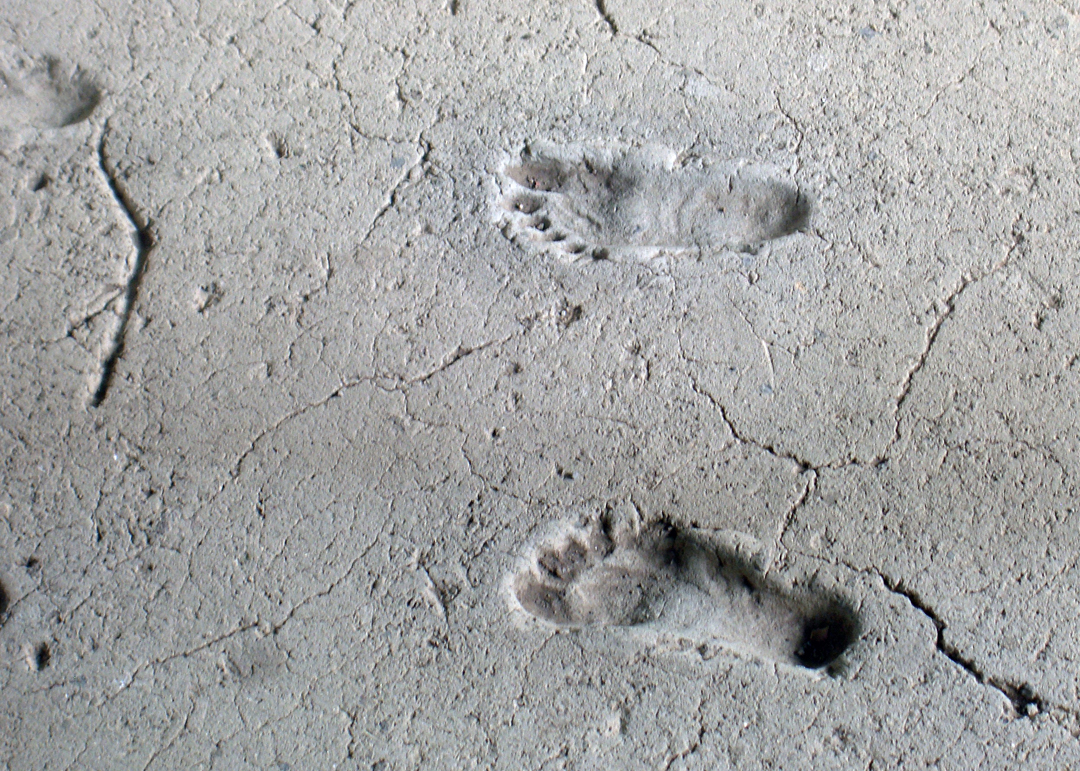
Acahualinca Footprints
12.0950° N · 86.2650° W · Archaeological Site
Acahualinca Footprints is an archaeological site in Managua, Nicaragua. Pre-Columbian volcanic ash footprints preserved in stone, dating back roughly 2,000 years. Most visitors spend 30–45 min here. The free Lokali audio guide runs 5 minutes.
✓ Verified August 2026 · how we write these guides
Visitor facts
| Time needed | 30–45 min |
|---|---|
| Lokali audio guide | 5 min · free |
| Type | Archaeological Site |
| Best for | History |
| Location | Managua, Nicaragua |
| Coordinates | 12.0950, -86.2650 |
| Languages | 45, in the Lokali app |
The story
Look down into the pit. Pressed into dark volcanic stone, you see them: human footprints, heel and toe, one after another. They look fresh, as if someone walked past this morning. But these steps are about 2,100 years old. They are the earliest known trace of humans in Nicaragua, left by people walking beside a lake.
The discovery happened by accident. In 1874, workers were digging stone in this neighborhood, close to the shore of Lake Managua. At the time, this ground was a quarry, and the stone had value. Their tools uncovered strange marks in a buried layer of hardened mud. The marks looked like footprints, because that is exactly what they were. Word spread, and scholars began to arrive.
One early researcher was Earl Flint, an American doctor who lived in Nicaragua. He studied the site in the 1870s and 1880s and sent reports abroad. Museums in the United States took interest. Some pieces of the track layer were even cut out and shipped away for study. The footprints became quietly famous.
For a long time, no one knew how old the prints were. Early guesses ran to many thousands of years. Modern dating of the volcanic layers settled the question. The people walked here about 2,100 years ago. That places them long before the arrival of Europeans, in a world of villages, canoes, and active volcanoes.
The dating method is worth a short note. Volcanic layers can be matched to known eruptions and measured with laboratory tests. The layer under the prints and the layer above them give a time window. That window centers near 2,100 years before the present. Science rarely gives ancient footsteps such a clear calendar.
Here is how the prints survived. A group of people crossed a flat of wet, ashy mud near the lake shore. Soon after, an eruption dropped fresh volcanic material over the ground. The layer sealed the footprints like a lid. More layers followed over the centuries, pressing down and hardening, until the mud turned to soft stone.
Scientists counted the walkers. The main track shows around 15 people, adults and younger walkers together, all barefoot. The depth and spacing of the steps suggest a steady, calm pace. They were not running from an eruption, as legend once claimed. They were simply walking, perhaps carrying loads, moving along the shore toward some ordinary task. Their feet were bare, and their steps were sure.
People were not alone on that mud flat. Around the human trail, researchers found animal tracks. Birds left thin marks. Deer left split hooves. A few prints may belong to other small animals of the lake shore. The stone holds one shared moment: people and animals crossing the same soft ground.
The site today is a small museum built around the excavation. A simple roof now shelters the pit from rain. Walkways let you stand at the edge and look straight down at the trail. On the walls of the pit, you can read the layers like pages: bands of ash and soil stacked over the footprint level. Each band records another eruption or another quiet century.
The museum rooms add context. Display cases hold ceramics, stone tools, and other finds from the region. Labels are simple, mostly in Spanish, and staff members often walk visitors through the story. The place is modest and quiet. Few tourists come here, and that makes the experience feel personal.
The neighborhood around the museum is called Acahualinca. It is a working district in the northwest of Managua, near the lake. The name is said to come from an indigenous phrase linked to sunflowers along the shore. Life here is loud and real: buses, workshops, children after school. The contrast with the silent pit is part of the visit. Taxis wait near the gate for the trip back to the center.
Think about what makes this site rare. Bones survive. Pots survive. But a movement, a single afternoon walk, almost never survives. Here, an eruption saved the most fragile evidence of all: motion. Archaeologists can measure stride length and body size from these prints. In a sense, the walkers still carry information for us.
Stand at the rail one more time before you go. Follow one line of steps with your eyes, heel to toe, heel to toe. Somewhere past the edge of the pit, the trail continues into unexcavated ground. The walkers went on with their day, and vanished. Their steps stayed. Outside, the city continues its own walk. Few monuments are this human.
Key facts
What to look for
Practical tips
Common questions
How long do you need at Acahualinca Footprints?
Plan 30–45 min. That is the time most visitors spend at Acahualinca Footprints. The free Lokali audio guide adds about 5 minutes of narration you can listen to as you walk, so it fits inside your visit rather than adding to it.
Is there a free audio guide to Acahualinca Footprints?
Yes — the Lokali app narrates Acahualinca Footprints free of charge in 50+ languages. It covers the history, what to look for on site and practical tips, and it works offline once downloaded.
Where is Acahualinca Footprints?
Acahualinca Footprints is in Managua, Nicaragua, at 12.0950, -86.2650. Tap the map link on this page for directions from where you are.
What should you know before visiting Acahualinca Footprints?
Take a taxi or ride service directly to the museum.
What is Acahualinca Footprints known for?
Discovered in 1874 by workers digging quarry stone.
What is the best time to visit Acahualinca Footprints?
The site is small and easily overlooked, but the museum display explains the discovery story clearly.
On the map
Opens directions to Acahualinca Footprints from your location.
More to see in Managua


Hear Acahualinca Footprints in your language
The full story, narrated, in 50+ languages. Download it before you go and it plays offline, at your own pace, with no ticket and no tour group.