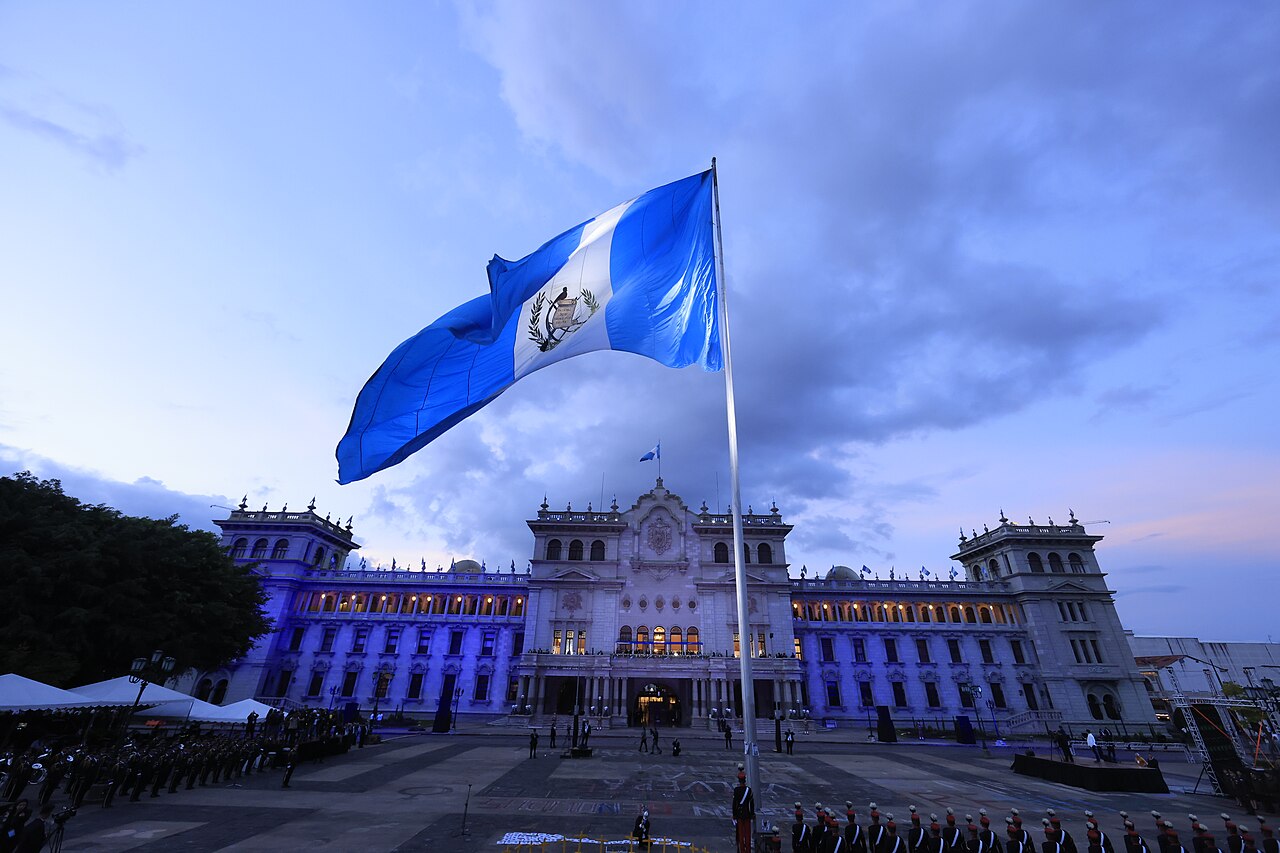
Palacio Nacional de la Cultura
12.1155° N · 86.2400° W · Palace
Palacio Nacional de la Cultura is a grand neoclassical government building completed in 1935, housing the National Library and National Archives. It is in Managua, Nicaragua. Most visitors spend 45–60 min here. The free Lokali audio guide runs 5 minutes.
✓ Verified August 2026 · how we write these guides
Visitor facts
| Time needed | 45–60 min |
|---|---|
| Lokali audio guide | 5 min · free |
| Type | Palace |
| Best for | History |
| Location | Managua, Nicaragua |
| Coordinates | 12.1155, -86.2400 |
| Languages | 45, in the Lokali app |
The story
A long row of columns faces the plaza, pale and orderly in the sun. The building behind them looks calm, almost sleepy. Do not let that fool you. This is the National Palace of Culture, and it has seen congress sessions, an earthquake, a revolution, and one of the boldest raids in Latin American history.
The story starts with a disaster. In 1931, an earthquake destroyed the earlier palace that stood on this ground. The government ordered a stronger replacement. The new National Palace was completed in 1935. Its designer was Pablo Dambach, a Belgian-born architect who also directed the construction of the cathedral across the square. Look at the facade before you go in. Tall columns run across the front in a straight, confident line. The style borrows from classical temples, a common choice for government buildings of that era. The message was simple. Law lives here. Order lives here. The design was meant to survive, and it did.
For more than four decades, this was the seat of Nicaragua's Congress. Senators and deputies argued, voted, and signed laws inside these walls. Under the Somoza family, who ruled the country for much of that time, the palace was a symbol of state power. That symbolism made it a target.
On August 22, 1978, a group of Sandinista fighters entered the building dressed as soldiers of the National Guard. Congress was in session. In a few minutes, the fighters controlled the building and everyone inside. The operation was led by Edén Pastora, who became famous as Comandante Cero, or Commander Zero.
Reports from that day describe close to 2,000 people trapped inside, from lawmakers to clerks and visitors. Radio stations broadcast confusion across the city. Curious crowds gathered at a safe distance, unsure if they were watching a tragedy or a turning point. It turned out to be both, depending on where a person stood in Nicaragua's long conflict.
The raiders demanded the release of political prisoners. After two days of tense talks, the government agreed. Dozens of prisoners walked free, among them Tomás Borge, a founder of the Sandinista movement. Crowds lined the road to the airport and cheered as the fighters left the country. The dictatorship looked weak. The next year, it fell.
The palace also lived through the great earthquake of 1972, the one that flattened the center of Managua. Most buildings around the plaza collapsed or were later demolished. The palace stood. Its survival left the city with a rare thing: a downtown building where the national story continued under one roof.
In the 1990s, the building changed its purpose. Politics moved out, and culture moved in. Today the palace holds the National Museum of Nicaragua, along with the national library and historic archives. The rooms where laws were once debated now hold ceramics, paintings, and fossils. It is a quieter life, but a useful one.
Inside, the museum moves through deep time. Archaeology rooms display pre-Columbian pottery and stone statues from the lake regions of Nicaragua. Other halls cover geology, nature, and colonial art. The collection is not huge, and that is part of its charm. You can see it slowly, room by room, and still leave with energy for the plaza outside.
Give attention to the interior itself. Bright murals near the entrance and stairs tell the history of Nicaragua in bold scenes, from ancient times to revolution. Two open courtyards bring light and palm trees into the heart of the building. Look up at the ceilings and the woodwork. The palace is its own largest exhibit.
A visit today is easy and calm. You enter past guards, pay a small fee, and often receive a staff member as a guide. Photography rules vary by room, so ask first. There is no crowd pressure here. On many mornings you may have a whole hall of ancient statues to yourself, with only a fan humming in the corner.
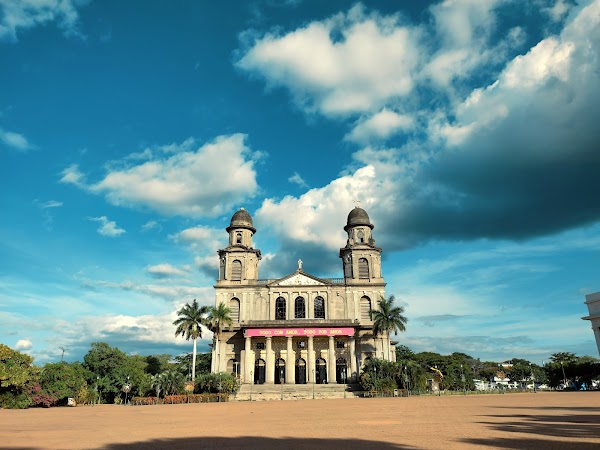
From the front steps you can read the whole plaza. To one side stands the Old Cathedral, ruined by the 1972 earthquake and kept as a monument. Nearby are gardens, fountains, and the tombs of national heroes. Few squares in the Americas hold so much history in such a small space.
Before you walk away, touch nothing, but imagine everything. Imagine the shouts of deputies, the boots of the raiders, the dust of two earthquakes settling over the marble. Buildings like this survive by changing their job. This one guarded laws, then guarded a revolution's story, and now it guards memory itself. That may be its most stable work so far.
Key facts
What to look for
Practical tips
Common questions
How long do you need at Palacio Nacional de la Cultura?
Plan 45–60 min. That is the time most visitors spend at Palacio Nacional de la Cultura. The free Lokali audio guide adds about 5 minutes of narration you can listen to as you walk, so it fits inside your visit rather than adding to it.
Is there a free audio guide to Palacio Nacional de la Cultura?
Yes — the Lokali app narrates Palacio Nacional de la Cultura free of charge in 50+ languages. It covers the history, what to look for on site and practical tips, and it works offline once downloaded.
Where is Palacio Nacional de la Cultura?
Palacio Nacional de la Cultura is in Managua, Nicaragua, at 12.1155, -86.2400. Tap the map link on this page for directions from where you are.
What should you know before visiting Palacio Nacional de la Cultura?
Bring small cash for the modest entry fee.
What is Palacio Nacional de la Cultura known for?
Completed in 1935 after the 1931 earthquake destroyed its predecessor.
What is the best time to visit Palacio Nacional de la Cultura?
The reading room and library sections are open to visitors.
On the map
Opens directions to Palacio Nacional de la Cultura from your location.
More to see in Managua


Hear Palacio Nacional de la Cultura in your language
The full story, narrated, in 50+ languages. Download it before you go and it plays offline, at your own pace, with no ticket and no tour group.