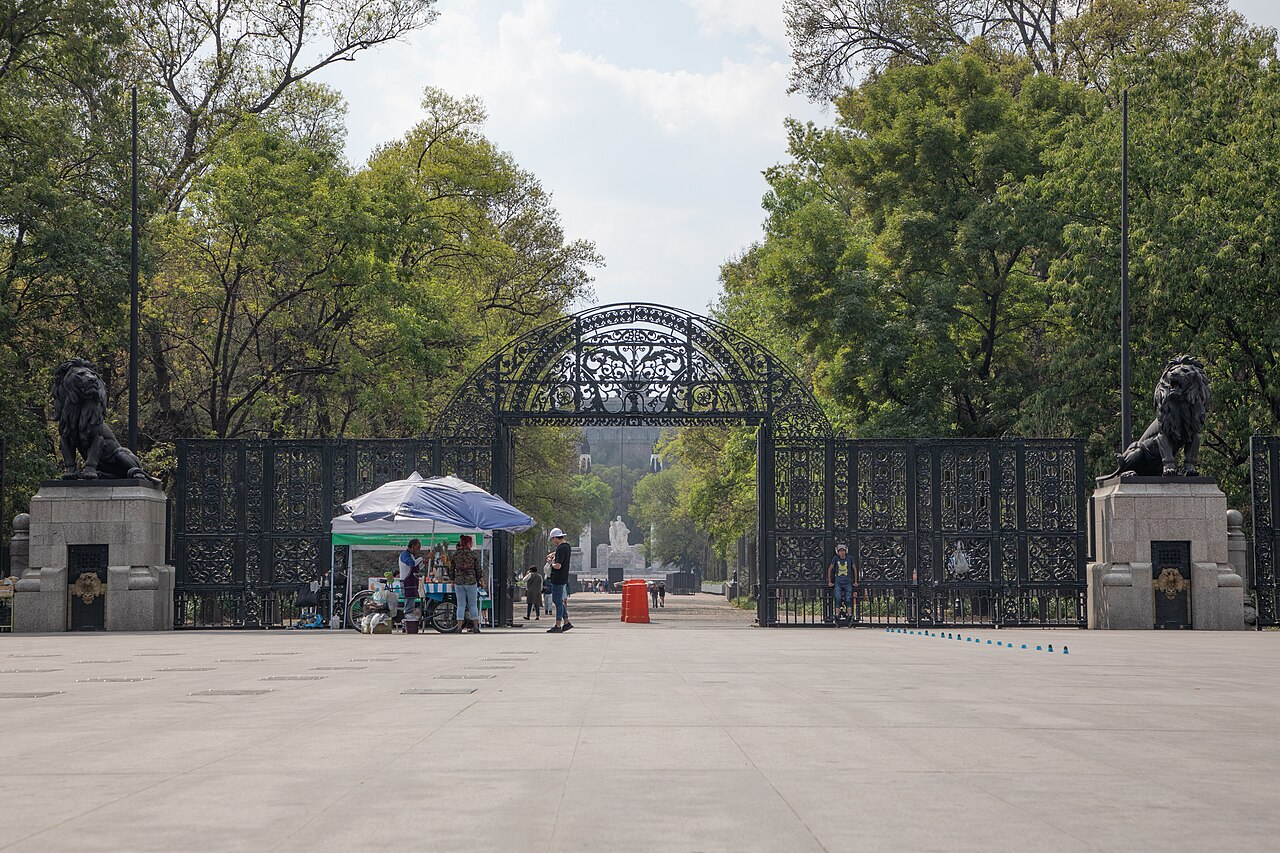
Bosque de Chapultepec
19.4267° N · 99.1876° W · Park
Bosque de Chapultepec is a park in Mexico City, Mexico. One of the world's largest urban forests, spanning 686 hectares. Most visitors spend 2–4 hours here. The free Lokali audio guide runs 5 minutes.
✓ Verified August 2026 · how we write these guides
Visitor facts
| Time needed | 2–4 hours |
|---|---|
| Lokali audio guide | 5 min · free |
| Type | Park |
| Best for | Family |
| Location | Mexico City, Mexico |
| Coordinates | 19.4267, -99.1876 |
| Languages | 45, in the Lokali app |
The story
You pass through the tall gates, and the noise of the city slowly softens behind you. Tall trees rise on every side of the path. Their shade falls cool and green across the ground. Birds call to one another somewhere high above. Families spread bright blankets on the open grass. Vendors push slow carts along the walkways. This is Bosque de Chapultepec, the great green heart of Mexico City.
The park is truly huge. It covers many hundreds of hectares, making it one of the largest city parks in all of the Americas. People come here to walk, to rest, and to escape the hard streets for a while. On weekends the wide paths fill with families and friends. Vendors sell food, drinks, and floating balloons. Children break free and run laughing toward the edge of the lake.
The name comes from the old Nahuatl language. Chapultepec means grasshopper hill. A low rocky hill rises near the main entrance, and the whole green area takes its name from it. The word is far older than the city's later Spanish name. It still carries the memory of the people who lived in this valley first, long before any European ship reached these distant shores.
This ground is very old and was always valued. Long before there was a park, Aztec rulers came here often. They prized the fresh springs that flowed cool from the base of the hill. Water from Chapultepec once traveled by a long stone aqueduct to their great island city. The rulers kept private gardens here and walked among the shaded trees. The whole hill was a quiet retreat for kings.
Look around for the very oldest trees. They are ahuehuetes, a kind of cypress native to Mexico. Some are enormous, with thick, twisted trunks and wide spreading branches. A few of them were already old when the first Spanish soldiers arrived. They have stood silently through wars, floods, and many long centuries. Rest a hand gently on the rough bark and try to feel the great weight of its age.
A castle crowns the rocky hill at the park's edge. You can catch sight of it from many of the lower paths. It once held emperors and presidents, and now it holds a fine museum. The climb up to its gates is steep but mercifully short. From the top, the view stretches out across the whole green park and far over the wide gray city beyond it.
The park is also a home for many museums. The National Museum of Anthropology stands here, among several others. There are bright halls for modern art and for the work of famous national painters. You could easily spend a whole long day moving slowly from one museum to the next. The shaded green paths connect them all, so you can walk between art and trees.
Walk down toward the lake. Small wooden boats drift gently on the calm water. Couples row slowly together beneath the leaning trees. Ducks paddle in and out between the floating hulls. The surface shines and ripples in the warm afternoon light. You can rent a boat for a while, or simply sit on the grassy bank and watch the slow circles spread out and fade.
Children have their own special corners here. The park holds a large zoo, open to all visitors without charge. Inside live animals from across Mexico and from far beyond its borders. There are wide play areas and broad green lawns for running games. On a sunny Sunday, the laughter and shouting of children carries far across the grass and drifts in among the trees.
The whole park works as the lungs of the city. Mexico City is vast, high, and crowded with millions of people. Its air can sometimes grow heavy and gray. But here among the trees, the leaves breathe out cool and cleaner air. People come simply to fill their tired chests with it. The great mass of green softens the hard edges of the busy streets all around.
Try to come either early in the morning or late in the day. In the soft, low light, the park is at its quiet best. The thick weekend crowds slowly thin away. The birds grow louder in the branches. The lake water turns to gold, and then to gray. The old trees darken into clear shapes against the sky. The hill and its pale castle stand calm and silent above it all.
Find a quiet bench before you finally leave. Sit a while longer in the shade under the wide branches. People have rested on this same hill for many hundreds of years. Aztec kings, tired soldiers, young families, and now you yourself. The patient old trees have watched them all come and go in their turn. They will go on to shade many thousands more, long after you are gone.
Key facts
What to look for
Practical tips
Common questions
How long do you need at Bosque de Chapultepec?
Plan 2–4 hours. That is the time most visitors spend at Bosque de Chapultepec. The free Lokali audio guide adds about 5 minutes of narration you can listen to as you walk, so it fits inside your visit rather than adding to it.
Is there a free audio guide to Bosque de Chapultepec?
Yes — the Lokali app narrates Bosque de Chapultepec free of charge in 50+ languages. It covers the history, what to look for on site and practical tips, and it works offline once downloaded.
Where is Bosque de Chapultepec?
Bosque de Chapultepec is in Mexico City, Mexico, at 19.4267, -99.1876. Tap the map link on this page for directions from where you are.
What should you know before visiting Bosque de Chapultepec?
Come early on weekends before the paths fill up.
What is Bosque de Chapultepec known for?
Chapultepec means grasshopper hill in the Nahuatl language.
What is the best time to visit Bosque de Chapultepec?
The oldest cypress tree, over 700 years old, stands near the castle entrance.
On the map
Opens directions to Bosque de Chapultepec from your location.
Reference
More to see in Mexico City


Hear Bosque de Chapultepec in your language
The full story, narrated, in 50+ languages. Download it before you go and it plays offline, at your own pace, with no ticket and no tour group.