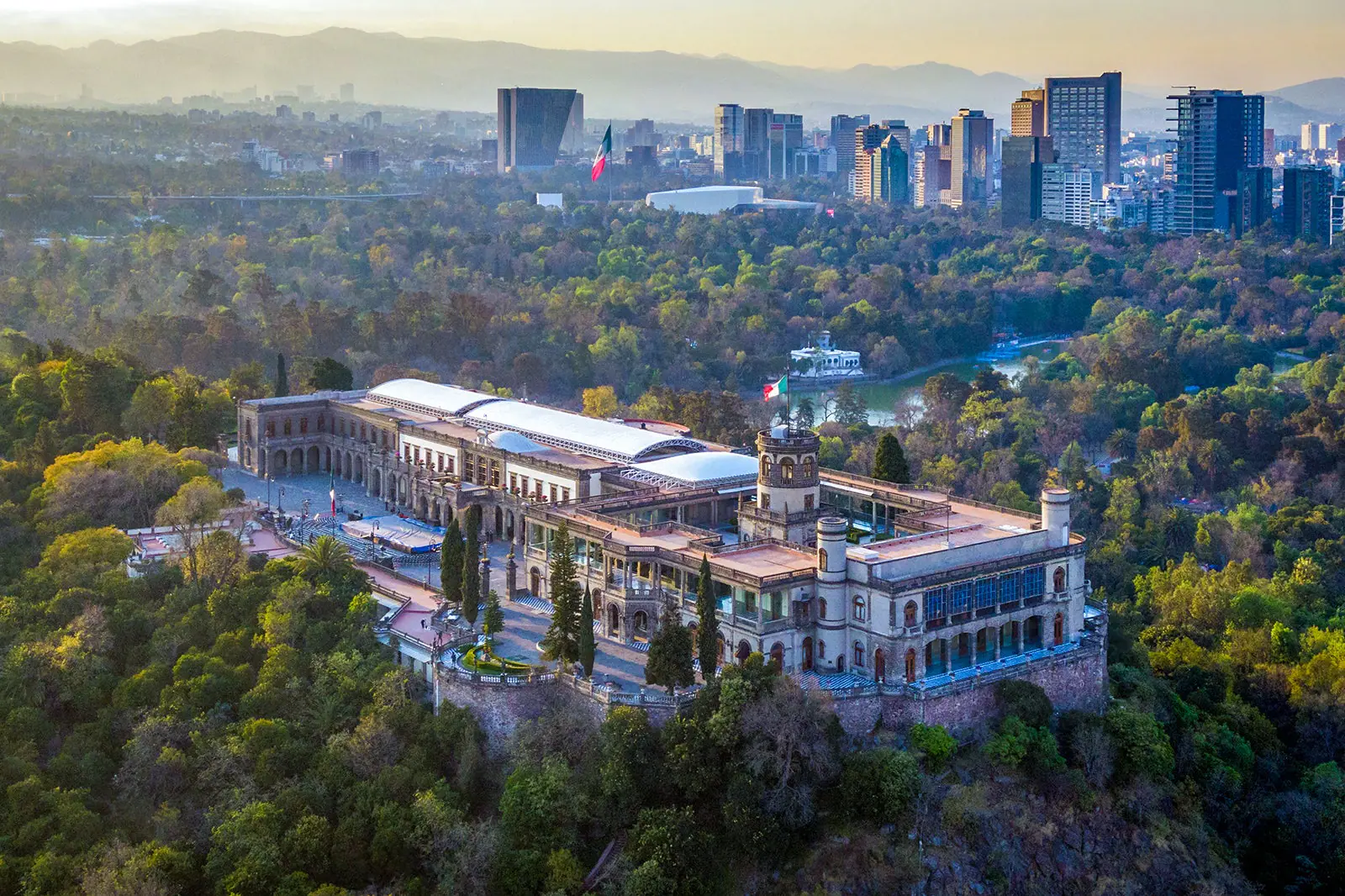
Castillo de Chapultepec
19.4205° N · 99.1821° W · Palace
Castillo de Chapultepec is a 19th-century castle perched on Chapultepec Hill, once the residence of Emperor Maximilian. It is in Mexico City, Mexico. Most visitors spend 1–2 hours here. The free Lokali audio guide runs 6 minutes.
✓ Verified August 2026 · how we write these guides
Visitor facts
| Time needed | 1–2 hours |
|---|---|
| Lokali audio guide | 6 min · free |
| Type | Palace |
| Best for | History |
| Location | Mexico City, Mexico |
| Coordinates | 19.4205, -99.1821 |
| Languages | 45, in the Lokali app |
The story
You climb the hill, and the city falls away below you. The air grows cooler under the old trees. Your steps slow on the winding road. At the top, a castle waits behind its gates. Its pale stone walls hold the warm light of the afternoon. Flags move in the wind above the towers. This is Castillo de Chapultepec. It stands on a rock that people have honored for many centuries, long before the first stone was laid.
The hill itself came first. Its name comes from the Nahuatl word for grasshopper hill. Long before the castle, Aztec rulers came here to rest. They drank from its cool springs. They walked among its tall cypress trees. The place was sacred to them, a green height above the valley floor. You can still feel why they loved it. The ground rises high above the streets, and the view opens in every direction.
The building you see began in 1785. A Spanish viceroy ordered a country house on the summit. The work was slow and costly. Money ran short more than once. For years the structure sat unfinished, open to the wind and rain. It passed through many different hands. At one time it served as a military academy, where young cadets studied and drilled. Their footsteps once filled these same courtyards and halls.
One date marks the castle forever. In 1847, during the war with the United States, soldiers attacked the hill. The cadets defended it to the end. Six of them died in the fighting. Mexico remembers them as the Niños Héroes, the Boy Heroes. A tall monument at the foot of the hill honors their names. Their story is taught to every child in the country, and fresh flowers often lie at the base of the stone.
Later the castle became a palace. In the 1860s, Emperor Maximilian and Empress Carlota made it their home. They came from Europe to rule Mexico for a brief and troubled time. They reshaped the rooms in the elegant style of their day. They planted gardens on the open terraces. They laid out a grand straight avenue to join the castle to the city center. That avenue still runs through the city today.
Walk through the lower rooms. The ceilings are high and painted. The wooden floors shine with age. Tall windows let in long bars of light. You pass furniture, carriages, mirrors, and china from the imperial years. Each room carries the taste of a vanished court. Velvet, gold, and dark wood fill the quiet spaces. Your footsteps echo softly on the stone, and the noise of the city cannot reach this high.
After the empire fell, the castle changed again. It became the official home of Mexico's presidents. For many decades, leaders lived and worked behind these walls. They received guests and signed papers in these halls. They looked out over the same wide valley each morning. The building absorbed the daily business of a young and changing republic. Power passed from hand to hand within these rooms for the better part of a century.
In 1939, the president gave the castle to the nation. It became the National Museum of History, and that is what you visit now. The rooms hold objects from across Mexico's long past. You move from the colonial age to the wars of independence, and on to the revolution of the twentieth century. Paintings, weapons, clothing, and documents line the walls. The whole story of the country unfolds room by room as you walk.
Look up as you walk. Several walls carry large, sweeping murals. Painters of the twentieth century covered them with scenes from the past. Faces, banners, horses, and battles spread across the plaster. The colors are deep and strong. The figures seem to move and crowd toward you. These works turn plain corridors into a kind of open book, where the nation's struggles are told in paint rather than words.
Step out onto the terrace. A garden sits on the roof, open to the sky. Plants grow in neat stone beds. A small pavilion of colored glass catches and scatters the sun. From the railing, the whole city spreads before you in a wide sea of rooftops. On a clear day you can trace the long avenue running straight toward the old center, and the green mass of the park directly below.
This is the only castle in the Americas that once housed crowned rulers. Few places anywhere hold so many lives within one set of walls. Aztec kings, Spanish viceroys, European royals, and modern presidents all stood on this same hill. Each of them left a mark on the place. The building wears them all at once, layer upon layer, like the rings inside the trunk of an ancient tree.
Before you leave, pause at the edge once more. Feel the same breeze that the rulers felt. The city hums far below, soft and distant from this height. The hill has watched the valley change for longer than any memory can reach. Empires have risen and fallen beneath it. You are simply the latest visitor to climb the road, stand at the wall, and look out over it all.
Key facts
What to look for
Practical tips
Common questions
How long do you need at Castillo de Chapultepec?
Plan 1–2 hours. That is the time most visitors spend at Castillo de Chapultepec. The free Lokali audio guide adds about 6 minutes of narration you can listen to as you walk, so it fits inside your visit rather than adding to it.
Is there a free audio guide to Castillo de Chapultepec?
Yes — the Lokali app narrates Castillo de Chapultepec free of charge in 50+ languages. It covers the history, what to look for on site and practical tips, and it works offline once downloaded.
Where is Castillo de Chapultepec?
Castillo de Chapultepec is in Mexico City, Mexico, at 19.4205, -99.1821 Tap the map link on this page for directions from where you are.
What should you know before visiting Castillo de Chapultepec?
Wear good shoes for the steep climb uphill.
What is Castillo de Chapultepec known for?
Construction began in 1785 under a Spanish viceroy.
What is the best time to visit Castillo de Chapultepec?
The climb up the hill is steep but rewarding—views stretch to the city's edge.
On the map
Opens directions to Castillo de Chapultepec from your location.
More to see in Mexico City


Hear Castillo de Chapultepec in your language
The full story, narrated, in 50+ languages. Download it before you go and it plays offline, at your own pace, with no ticket and no tour group.