
Photo: A.Savin · FAL · Wikimedia Commons
Moscow Zoo is a zoo in Moscow, Russia. Opened to the public in 1864. The free Lokali audio guide runs 7 minutes.
✓ Published October 2026 · how we write these guides
Visitor facts
| Lokali audio guide | 7 min · free |
|---|---|
| Type | Zoo |
| Location | Moscow, Russia |
| Coordinates | 55.7619, 37.5772 |
| Official website | moscowzoo.ru |
| Languages | 50+, in the Lokali app |
The story
Listen first. Under the city traffic there is a softer layer of sound. Ducks argue on the water. A heron lands with a slap of wings. Somewhere a large animal shifts its weight on straw. Smell the air too: wet leaves, hay, and the faint mineral breath of the ponds. You are in the middle of one of the largest cities in Europe. Yet for a few hours, this patch of ground in the Presnya district runs on a different clock.
The Moscow Zoo is one of the oldest zoos in Russia. It opened in 1864, and its origins are academic rather than royal. It began as a project of a scientific society devoted to the acclimatization of animals and plants. That word needs a quick gloss. Acclimatization meant studying whether creatures and crops from warmer lands could adapt to the Russian climate. The founders were scholars connected to Moscow University, and the zoo was meant as a living laboratory as much as a public park.
That scientific spirit still shapes the place today. The zoo describes itself as a centre for conservation and research, not only for display. Many species here are part of breeding programmes with other zoos. Some animals you see may be relatives of individuals living in collections across Europe and Asia. When you pass a quiet enclosure with nobody in sight, the residents may simply be resting. Animals in a working zoo keep their own schedules, not ours.
Before you go further, notice the main entrance. The large stone gateway looks like a rock outcrop or a fairy-tale fortress. It was built during a major reconstruction of the zoo in the 1990s. Children often stop here and stare up at the carved animal figures. It sets the tone. This is a place that wants to feel a little like a storybook while still doing serious work behind the scenes.
Now look at the water. The old territory of the zoo surrounds a series of ponds. In summer they fill with waterfowl. Some birds belong to the collection. Others are wild visitors that drop in because the food and the shelter are good. Swans, geese and many kinds of ducks share the surface. In the colder months, parts of the water are kept open, and the birds crowd into those dark patches between the ice.
Here is a detail many visitors miss. The zoo is split into two halves by a city street. The old territory sits on one side, and the new territory sits on the other. A covered pedestrian bridge links them, crossing above the traffic. Stand on that bridge for a moment. Below you, cars and buses move through ordinary Moscow. Ahead and behind you are elephants, bears and big cats. Few places show the contrast so plainly.
The history of the zoo follows the history of the city. After the revolution of 1917, the zoo passed into state hands. Through the Soviet decades it grew, changed and was rebuilt more than once. During the Second World War, Moscow faced great danger, yet the zoo continued to work. Keepers cared for the animals through hard winters and food shortages. That story of quiet persistence is part of why Muscovites feel so attached to this place.
Which animal best represents the zoo? Not the elephant, and not the polar bear. The official symbol is the Pallas's cat, called the manul in Russian. This is a small wild cat from the steppes and mountains of Central Asia. It has a flat face, thick fur and a famously grumpy expression. The manul has become something of a celebrity online. Look for its image on signs and souvenirs around the grounds.
On the new territory you will find many of the larger mammals. There are big cats, bears and hoofed animals from several continents. The polar bears draw crowds on warm days, when they swim and roll in their pool. The elephants have their own house and outdoor yard. Spend a few minutes watching them rather than moving straight on. Elephants are social animals, and their small gestures with trunks and ears show a lot about their mood.
Not every animal here is large or easy to see. The zoo has indoor pavilions for reptiles, amphibians, fish and insects. One building is devoted to nocturnal animals. Inside, the lighting is reversed. Day is made dark, so the animals are awake and active while you visit. Let your eyes adjust for a full minute before you look closely. Shapes that seemed empty will slowly start to move.
The zoo also gives space to younger visitors. There is a children's area where families can see smaller and more familiar animals up close. On weekends the paths fill with strollers, school groups and grandparents carrying ice cream. This is part of the human texture of the place. For generations of Moscow families, a first visit to the zoo is a small rite of childhood, remembered long after.
The seasons change this place completely. In spring the ponds come alive with nesting birds and new arrivals. In summer the trees give shade and the paths stay busy until evening. Autumn brings yellow leaves on the water and cooler, more active animals. Winter is the surprise. Many northern species, from bears to wolves, are at their best in snow. On a frosty morning the grounds are quieter, and the animals often seem more alert.
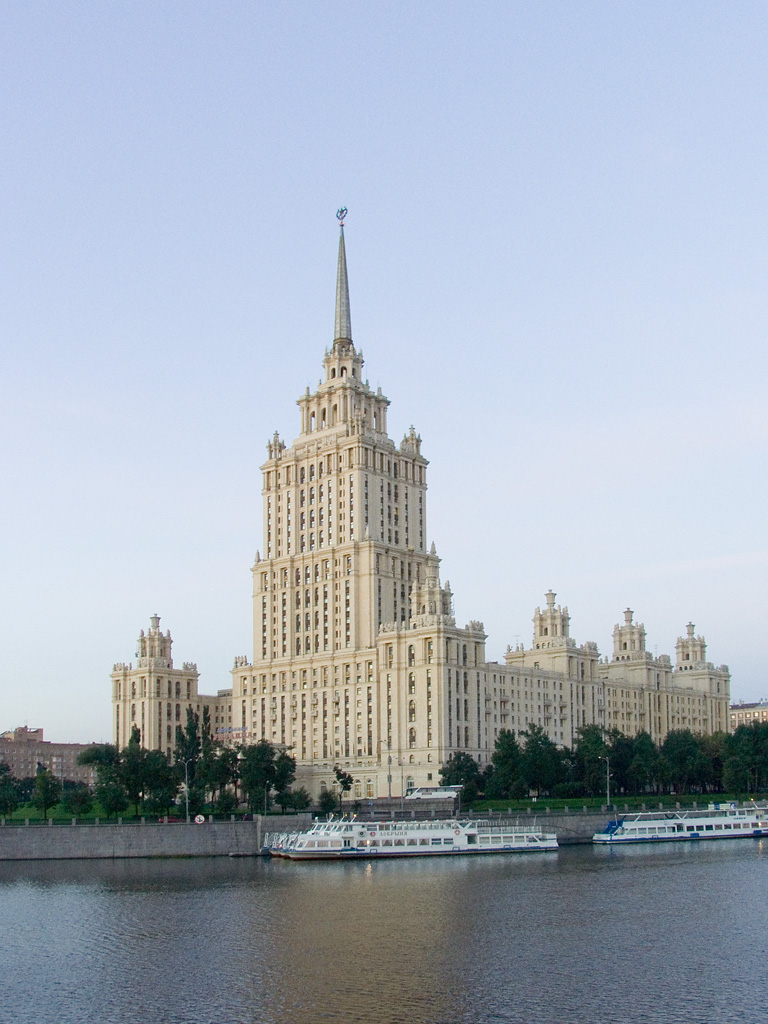
As you walk, look beyond the animals to the city around you. High-rise buildings rise above the trees on several sides. One of the tall Stalin-era skyscrapers stands not far away, its spire visible from parts of the grounds. These towers are a reminder of how much Moscow has grown around this old scientific garden. When the zoo opened, this area sat near the edge of the city. Today it is close to the centre.
Before you leave, pause again by the ponds. Listen for the same layer of sound you heard at the start. The ducks, the wind in the branches, the low voices of other visitors. Think of the scholars who planned this place more than a century and a half ago, hoping to understand how living things adapt. As you step back into the street, the city noise will return. Notice how long the quiet of the zoo stays with you.
Key facts
What to look for
Practical tips
Common questions
Is there a free audio guide to Moscow Zoo?
Yes — the Lokali app narrates Moscow Zoo free of charge in 50+ languages. The guide runs about 7 minutes, covers the history, what to look for on site and practical tips, and works offline once downloaded.
Where is Moscow Zoo?
Moscow Zoo is in Moscow, Russia, at 55.7619, 37.5772. Tap the map link on this page for directions from where you are.
What is Moscow Zoo known for?
Opened to the public in 1864. Founded by a scientific acclimatization society.
What should you look for at Moscow Zoo?
Carved animal figures on the rock-like entrance gate. Pedestrian bridge crossing above the city street. Wild ducks mixing with collection birds on the ponds.
What should you know before visiting Moscow Zoo?
Visit on a winter morning to see northern species active. Arrive early on weekends to avoid family crowds.
When is the best time to visit Moscow Zoo?
Visit on a winter morning to see northern species active.
On the map
Opens directions to Moscow Zoo from your location.
More to see in Moscow



Hear Moscow Zoo in your language
The full story, narrated, in 50+ languages. Download it before you go and it plays offline, at your own pace, with no ticket and no tour group.