
Kudrinskaya Square Building
55.7589° N · 37.5806° E · Tourist Attraction
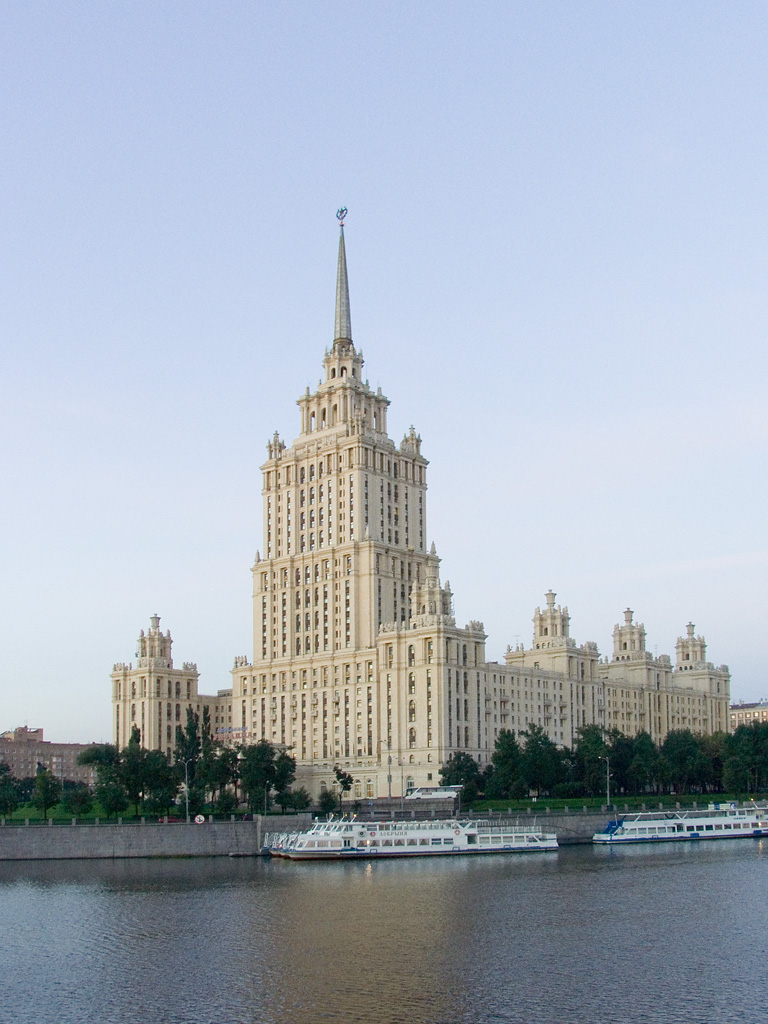
Photo: Dmitry Rozhkov · CC BY-SA 3.0 · Wikimedia Commons
Kudrinskaya Square Building is a revenue house, architectural landmark in Moscow, Russia. One of Moscow's seven Stalin-era tall buildings. The free Lokali audio guide runs 7 minutes.
✓ Published October 2026 · how we write these guides
Visitor facts
| Lokali audio guide | 7 min · free |
|---|---|
| Type | Tourist Attraction |
| Location | Moscow, Russia |
| Coordinates | 55.7589, 37.5806 |
| Languages | 50+, in the Lokali app |
The story
Stand at the edge of the square and tilt your head back. The building climbs in stages, each tier narrower than the one below, until a slim spire catches the light far above the traffic. Around you, cars stream along the Garden Ring with a steady roar. Underfoot, the pavement is wide and worn. And above it all, pale stone and rows of windows rise into the Moscow sky, calm and heavy, like a wedding cake built by an empire.
This is the Kudrinskaya Square Building, one of the tall towers that Muscovites call the Seven Sisters. All seven were built in the years after the Second World War, under Joseph Stalin. They share a family look. There is a strong central tower, stepped wings on either side, and a spire on top. Together, the seven towers changed the skyline of the city. They gave Moscow a set of landmarks you can see from many kilometres away on a clear day.
Here is the first surprise. There were meant to be eight sisters, not seven. In September 1947, Moscow celebrated its eight hundredth anniversary. On that occasion, foundation stones were laid for eight tall buildings across the city. Seven were finished. The eighth, planned near the Kremlin, was never completed. So when you look at this tower, you are looking at one part of a larger plan that the city never fully carried out.
The architects of this building were Mikhail Posokhin and Ashot Mndoyants. Construction ran from the late 1940s into the early 1950s. Unlike some of its sisters, which hold ministries, a university, or a hotel, this tower was designed mainly as a residential building. It is a place where people actually live. Behind those windows are apartments, kitchens, and living rooms, some of them still filled with the furniture and memories of several generations.
In Soviet times, an apartment here was a sign of status. The residents were not ordinary citizens chosen at random. Many were members of the Soviet elite. Accounts describe scientists, engineers, pilots, writers, and performers among the people who received keys. The apartments were large by Moscow standards of the time. They had high ceilings, good materials, and a view over a city that was still rebuilding after the war.
The most famous resident was the actress Faina Ranevskaya. She was one of the best-loved character actors in Soviet film and theatre, known for her sharp wit. A popular story says she described her home with a joke: she lived above bread and opposite spectacles. Below her, there was a bakery. Across the square, there was a cinema. The line is repeated often by Muscovites, so treat it as a well-loved anecdote rather than a recorded quote.
Now look at the name of the square itself. Today it is Kudrinskaya Square, an old name that comes from the historic Kudrino area of the city. But for most of the Soviet period, it had a different name — Uprising Square. That name remembered the revolutionary uprising of 1905, when fighting took place in this part of Moscow. After the Soviet Union ended, in the 1990s, the square returned to its older, pre-revolutionary name.
That history is still close by. The nearest metro station is Barrikadnaya, which means "barricade". The name refers to the barricades that workers built in these streets during the 1905 uprising. The surrounding district, Krasnaya Presnya, carries the word "red" in its name for the same reason. So this calm, polished tower stands in a neighbourhood that was once a scene of street fighting.
Here is a harder truth that many visitors miss. The postwar construction boom in Moscow relied partly on forced labour. Historians and many accounts state that prisoners from the Soviet labour camp system worked on several of the tall buildings, and this tower is often mentioned among them. The exact numbers are not clear. But it is worth remembering, as you admire the stonework, that not everyone who built it chose to be here.
Let your eyes move slowly up the facade. Notice how the building is organised. The lower floors are wide and solid. Then the wings step back, floor by floor, like a staircase for giants. This stepping makes the tower look even taller from the street. It also lets more light reach the apartments. The style mixes classical columns and decorative details with the vertical push of an American skyscraper. People sometimes call this style Stalinist Empire.
The decoration is worth a close look. Along the upper levels, you can see sculpted details, balustrades, and ornamental elements that frame the windows and corners. The spire at the top was a deliberate choice. A tower without a spire would have looked like a plain office block. A spire made it a symbol. It linked this building visually with its sisters and with the towers of the Kremlin itself.
Take a moment to notice the street level, too. The ground floor was planned with shops and services for residents and for the neighbourhood. Over the decades, the shops have changed many times. Today the base of the building is part of everyday Moscow. People hurry past with shopping bags, wait for buses, and cross toward the metro. The grand tower and the ordinary city meet right here, at the height of a doorway.
If you walk a short distance from the square, you will reach the Moscow Zoo, one of the oldest in Russia. From some angles near the zoo, the tower rises above the trees, and the contrast is striking. Families with children, the sound of animals, and the shadow of a Stalin-era skyscraper all sit together. It is a reminder that this was always a living district, not only a monument.
Before you move on, look up one more time. Watch how the light changes on the stone as clouds pass over the spire. Somewhere up there, a person is making tea, opening a window, or looking down at you. This tower was built to impress a nation. Today, it is simply someone's home. As you walk away along the Garden Ring, turn around once — and see how the tower follows you, still visible above the rooftops.
Key facts
What to look for
Practical tips
Common questions
Is there a free audio guide to Kudrinskaya Square Building?
Yes — the Lokali app narrates Kudrinskaya Square Building free of charge in 50+ languages. The guide runs about 7 minutes, covers the history, what to look for on site and practical tips, and works offline once downloaded.
Where is Kudrinskaya Square Building?
Kudrinskaya Square Building is in Moscow, Russia, at 55.7589, 37.5806. Tap the map link on this page for directions from where you are.
What is Kudrinskaya Square Building known for?
One of Moscow's seven Stalin-era tall buildings. Designed by architects Mikhail Posokhin and Ashot Mndoyants.
What should you look for at Kudrinskaya Square Building?
Stepped wings narrowing toward the central tower. The slim spire crowning the top of the building. Balustrades and sculpted details on the upper tiers.
What should you know before visiting Kudrinskaya Square Building?
Use Barrikadnaya metro station for the closest approach. Cross the Garden Ring to see the full facade.
When is the best time to visit Kudrinskaya Square Building?
Return in late afternoon for warmer light on the stone.
On the map
Opens directions to Kudrinskaya Square Building from your location.
More to see in Moscow



Hear Kudrinskaya Square Building in your language
The full story, narrated, in 50+ languages. Download it before you go and it plays offline, at your own pace, with no ticket and no tour group.