
Chhatrapati Shivaji Maharaj Vastu Sangrahalaya
18.9267° N · 72.8322° E · Museum
Photo: Bernard Gagnon · CC BY-SA 4.0 · Wikimedia Commons
Chhatrapati Shivaji Maharaj Vastu Sangrahalaya is a museum in Mumbai, India. Foundation stone laid in 1905 by the Prince of Wales. The free Lokali audio guide runs 6 minutes.
✓ Published October 2026 · how we write these guides
Visitor facts
| Lokali audio guide | 6 min · free |
|---|---|
| Type | Museum |
| Location | Mumbai, India |
| Coordinates | 18.9267, 72.8322 |
| Official website | csmvs.in |
| Languages | 50+, in the Lokali app |
The story
Stand at the garden gate for a moment and listen. Behind you, the traffic of south Mumbai honks and growls without pause. In front of you, palm fronds move in the sea breeze, crows call from the treetops, and a grey stone building rises under a white dome. The air feels a little cooler here. The noise softens. This is one of the oldest museums in India, and it begins with the walk across its garden.
The museum's full name is Chhatrapati Shivaji Maharaj Vastu Sangrahalaya. Many older residents still call it by its first name, the Prince of Wales Museum of Western India. The new name honours Shivaji, the seventeenth-century Maratha king who is a central figure in the history of this region. "Vastu Sangrahalaya" means, simply, a house for collected objects. The renaming took place in the late 1990s. Both names say something about the city's story.
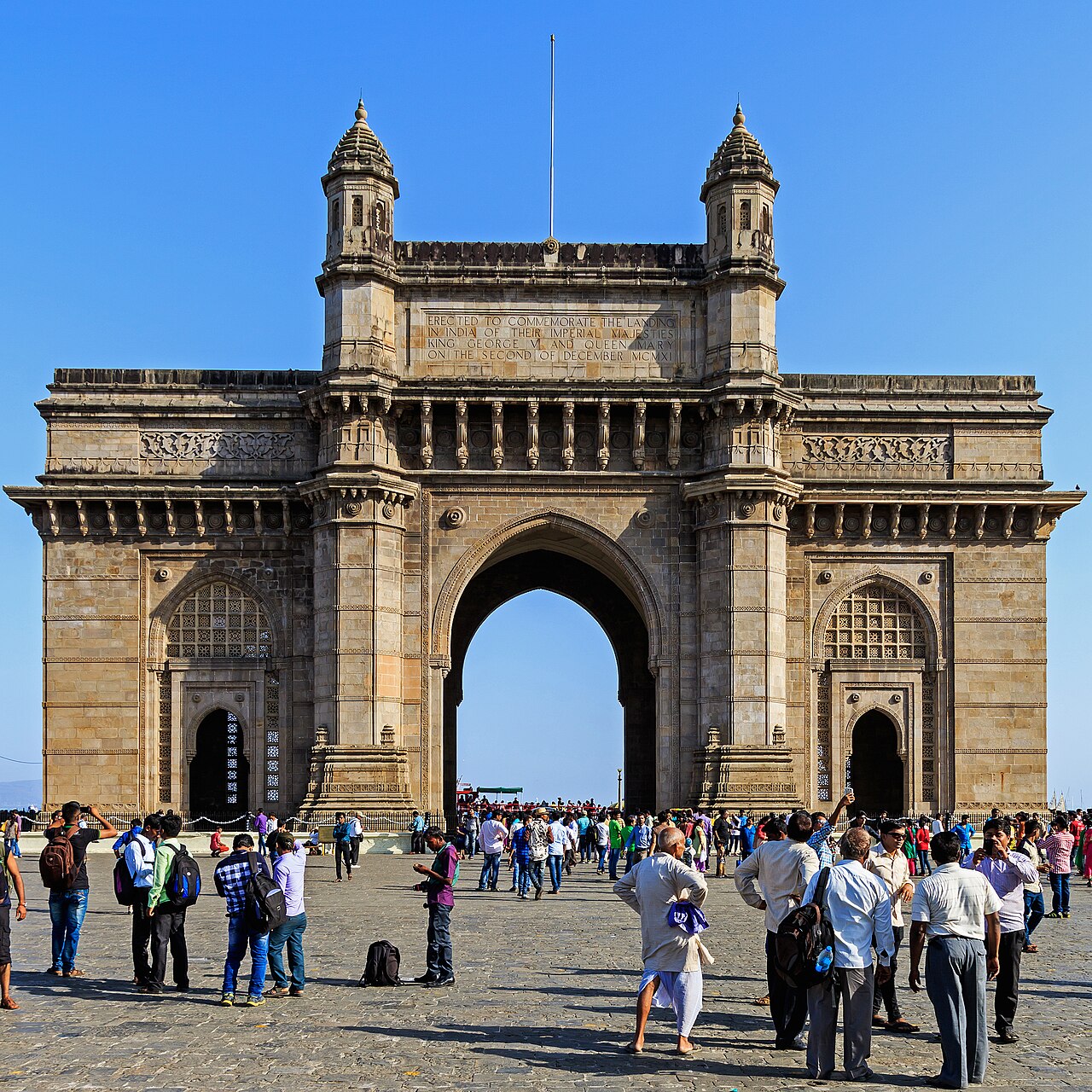
That story begins in 1905. The Prince of Wales, who later became King George the Fifth, laid the foundation stone during a royal visit to India. Leading citizens of Bombay, as the city was then called, had decided to build a museum to mark the occasion. They raised money from local merchants and the colonial government. The design competition went to an architect named George Wittet. His name may sound familiar... he later designed the Gateway of India, a short walk from here on the waterfront.
Now look at the building itself. Wittet worked in a style called Indo-Saracenic. This was a colonial-era blend — British building methods combined with arches, domes, and decoration taken from Indian Islamic and Hindu architecture. Notice the pointed arches, the small projecting balconies, and the slender corner pavilions on the roof. Every element is borrowed from older Indian buildings, yet the overall plan follows European ideas about how a public museum should look.
The walls are worth a closer look. The builders used two local stones. The dark grey blocks are basalt, a volcanic rock that forms much of the land under Mumbai. The warmer, buff-coloured stone around windows and edges is a softer sandstone. Together they give the façade its two-tone pattern. Run your eye along the lines of stone, and you will see how the pale trim outlines each arch like a frame.
Then there is the dome. It is often compared to the great domes of the Deccan sultanates, the Muslim kingdoms that ruled the plateau east of Mumbai for several centuries. Above it sits a lotus-shaped finial, the pointed crown at the very top. On a clear afternoon the dome glows white against the sky. From the garden paths it is one of the easiest landmarks in this part of the city to photograph.
Here is a surprise most visitors never hear. The building was finished during the First World War, but it did not open as a museum straight away. For a time it served other wartime purposes, including use as a military hospital. Only after the war ended did the collections move in. The museum finally opened its doors to the public in 1922, almost two decades after the foundation stone was laid.
Inside, the scale of the collection becomes clear. It holds tens of thousands of objects, spread across galleries of sculpture, painting, decorative arts, and natural history. Some of the oldest pieces come from the Indus Valley civilisation, one of the world's earliest urban cultures, which flourished more than four thousand years ago in what is now Pakistan and northwest India. Small seals, beads, and pottery sit in the cases. Most of them fit in the palm of a hand.
The sculpture galleries are the heart of the museum for many people. Here you meet stone gods, goddesses, and guardian figures from temples and cave sites across western India. Some pieces came from the Elephanta Caves, the rock-cut temples on an island in Mumbai's harbour. Look at how the carvers handled the stone — the soft curve of a hip, the folds of a garment, the calm expression of a face worn smooth by centuries.
A second surprise sits upstairs. A large part of the museum's art came from private collectors, especially members of the Tata family, the industrial dynasty that shaped modern Mumbai. Sir Ratan Tata and Sir Dorab Tata gave European paintings, Chinese and Japanese objects, jade, and ivory. So in one building you can move from Indian temple sculpture to porcelain from East Asia. The museum reflects Bombay's role as a trading port, open to goods from around the world.
Do not miss the miniature paintings. These small, detailed works were made for royal courts — Mughal, Rajput, and Deccani, among others. Bring your face close to the glass. Painters sometimes used brushes with only a few hairs to draw an eyelash or a single leaf. Gold and mineral colours still shine after hundreds of years. The stories show hunts, love scenes, court life, and episodes from Hindu epics.
The natural history section has a different feel. Here older-style dioramas show Indian birds and animals in painted landscapes. Children often enjoy these rooms the most. The museum also runs education programmes and has added new galleries in recent years. Beyond the walls, the surrounding Kala Ghoda district is Mumbai's art quarter, with galleries, cafés, and colonial-era buildings along shaded streets. It is easy to combine a visit here with an afternoon walk.
Before you leave, step back into the garden and turn around once more. Look at the dome, the grey and golden stone, the arches catching the light. Listen again for the crows, the leaves, and the distant traffic beyond the gate. This building has stood here through empire, war, independence, and a new name. Inside, it keeps thousands of years of human work in its quiet rooms... and outside, the city keeps moving, just a few steps away.
Key facts
What to look for
Practical tips
Common questions
Is there a free audio guide to Chhatrapati Shivaji Maharaj Vastu Sangrahalaya?
Yes — the Lokali app narrates Chhatrapati Shivaji Maharaj Vastu Sangrahalaya free of charge in 50+ languages. The guide runs about 6 minutes, covers the history, what to look for on site and practical tips, and works offline once downloaded.
Where is Chhatrapati Shivaji Maharaj Vastu Sangrahalaya?
Chhatrapati Shivaji Maharaj Vastu Sangrahalaya is in Mumbai, India, at 18.9267, 72.8322. Tap the map link on this page for directions from where you are.
What is Chhatrapati Shivaji Maharaj Vastu Sangrahalaya known for?
Foundation stone laid in 1905 by the Prince of Wales. Originally named the Prince of Wales Museum of Western India.
What should you look for at Chhatrapati Shivaji Maharaj Vastu Sangrahalaya?
Two-tone façade of grey basalt and buff stone. Lotus-shaped finial crowning the white central dome. Pointed arches and small projecting balconies on the façade.
What should you know before visiting Chhatrapati Shivaji Maharaj Vastu Sangrahalaya?
Start with the garden walk to frame the dome. Pick up an audio guide or map at the entrance.
On the map
Opens directions to Chhatrapati Shivaji Maharaj Vastu Sangrahalaya from your location.
More to see in Mumbai


Hear Chhatrapati Shivaji Maharaj Vastu Sangrahalaya in your language
The full story, narrated, in 50+ languages. Download it before you go and it plays offline, at your own pace, with no ticket and no tour group.