
Photo: Fizzerfung · CC BY-SA 4.0 · Wikimedia Commons
Inokashira Park is a park in Musashino and Mitaka, Tokyo. The park opened in 1917 on imperial gift land. The free Lokali audio guide runs 8 minutes.
✓ Published October 2026 · how we write these guides
Visitor facts
| Lokali audio guide | 8 min · free |
|---|---|
| Type | Park |
| Location | Musashino, Japan |
| Coordinates | 35.6983, 139.5715 |
| Official website | kensetsu.metro.tokyo.lg.jp |
| Languages | 50+, in the Lokali app |
The story
Listen first. Under the trees, footsteps sound soft on packed earth. Somewhere a wooden oar knocks against the side of a boat. A crow calls from a high branch, and from the far bank you might catch a guitar, a busker tuning up for the afternoon. The air near the water feels a few degrees cooler than the streets you just left. This is Inokashira Park, and the long pond in front of you is the reason it exists.
The park sits on the edge of Kichijoji, a lively shopping district in the city of Musashino, west of central Tokyo. Its grounds actually cross a municipal line, so part of the park lies in neighbouring Mitaka. Most visitors never notice the boundary. They walk down from the station through narrow lanes of cafés and yakitori stalls, and the city simply gives way to trees. That short transition, from shop fronts to deep green, is one of the quiet pleasures of coming here.
The name carries a clue. Inokashira can be read as the head of the well, the place where water begins. And that is literal. Springs once fed this pond from below, and the water that leaves it becomes the Kanda River, which winds east across Tokyo toward the Sumida. So you are standing at a beginning. The river that passes under busy city bridges many kilometres away starts here, as a calm surface with ducks on it.
That water mattered enormously to old Edo, the city we now call Tokyo. In the early seventeenth century, the shogun's government built the Kanda Aqueduct to carry drinking water into the growing capital, and this pond was its source. For generations, people in the heart of Edo drank water that began right here. Legend has it that the third Tokugawa shogun, Iemitsu, gave the pond its name after tasting the water. It is a lovely story, but treat it as tradition rather than record.
The park itself is younger than the pond. It opened in 1917, on land given by the Imperial Household, and it is often described as one of the first suburban parks in Japan. Its formal name still includes the word onshi, meaning an imperial gift. In 2017 the park marked its first hundred years. Think about what Tokyo was in 1917, a city of low wooden houses, and how far out this green space must have felt.
Now look at the boats. You will see plain rowboats, pedal boats, and the famous swan boats, white and slightly comic, gliding in slow circles. Hiring one is a classic Tokyo weekend ritual. But here is the first surprise. Locals say that couples who go boating together on this pond will break up. The blame falls on the goddess of the nearby shrine, who, according to the popular tale, grows jealous of happy pairs. Many couples laugh it off and row anyway.
That goddess is Benzaiten, a deity of water, music, and eloquence, who came to Japan from Indian and Buddhist traditions. Her shrine stands near the western end of the pond, its vermilion halls bright against the dark trees. Look for the small bridges leading toward it, and for the stone carvings and lanterns along the approach. A shrine to a water goddess at the very source of a river makes perfect sense. People have been coming to pray at this spot for centuries.
The second surprise lies under the surface. Over the years, the pond became cloudy and crowded with non-native fish, released by people who no longer wanted them. So in the 2010s, the park did something dramatic. It drained the pond completely, more than once, in a traditional practice called kaibori. Workers pulled out invasive species, and they also found large numbers of abandoned bicycles in the mud. Afterward, the water grew clearer, and native plants returned to places where they had not been seen for years.
Walk across the main bridge and look down. On a still day you may see right to the bottom near the edges, with waterweed moving gently in the current. Carp drift below. Herons sometimes stand motionless in the shallows. All of this is the result of that patient restoration work. It is easy to take a clean pond for granted. This one was earned, by draining it, cleaning it, and letting nature recover in its own time.
The park has several distinct areas, and it rewards wandering. Beyond the pond, there is a small zoo and aquarium area, where families come to see local animals and freshwater fish. For many decades, the zoo was home to Hanako, an Asian elephant who became a much-loved figure in Tokyo. She died in 2016, after a very long life, and people still remember her fondly. Her statue near Kichijoji Station keeps her memory close to the crowds passing by.
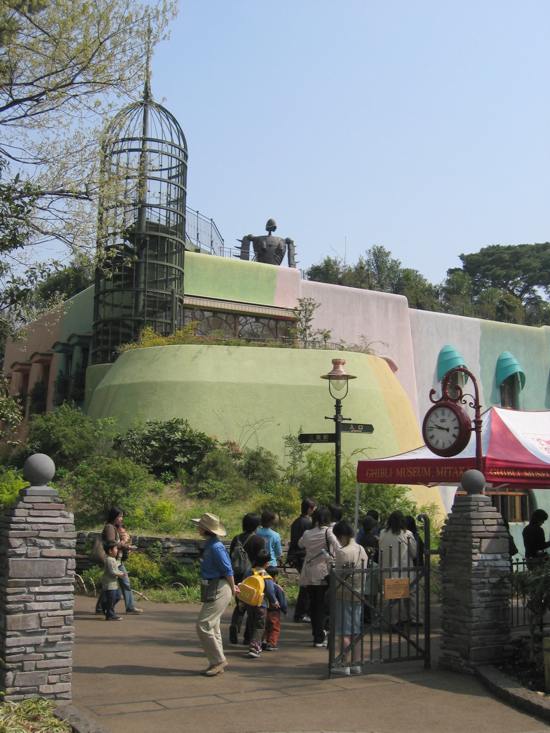
On the western, wooded side of the park is the Ghibli Museum, created by the animation studio behind films like My Neighbour Totoro and Spirited Away. Its entry works only with advance reservations, so do not expect to walk in. Even from outside, the building's playful shapes and climbing plants feel at home among these trees. It is not hard to imagine why the forest paths and quiet water here sit so comfortably beside a studio known for gentle, green worlds.
The park changes completely with the seasons. In spring, cherry trees lean over the water, and their falling petals collect on the surface in pale drifts. Picnic blankets cover every open patch of ground. In summer the canopy turns dense and shady. In autumn, the maples and ginkgo trees turn red and gold. Winter brings bare branches, clear views across the pond, and visiting waterbirds. Each season offers a different park, built on the same calm water.
On weekends, the paths fill with a particular Kichijoji energy. You will hear street musicians, see craft sellers spreading out their small works, and watch performers drawing little crowds. Students sketch by the water. Older residents walk their dogs on routes they have followed for years. This mix of the artistic and the everyday gives the park its character. It is not a showpiece garden to be admired from a distance. It is a place that people actually live in.
Before you go, find a bench near the water and simply sit for a moment. Watch the boats move slowly. Notice the light through the leaves, and the way the pond narrows toward the east, where it quietly becomes a river. Somewhere beyond those trees, that same water is on its way across Tokyo. As you walk back toward the station, listen for the moment the birdsong fades and the city sounds return.
Key facts
What to look for
Practical tips
Common questions
Is there a free audio guide to Inokashira Park?
Yes — the Lokali app narrates Inokashira Park free of charge in 50+ languages. The guide runs about 8 minutes, covers the history, what to look for on site and practical tips, and works offline once downloaded.
Where is Inokashira Park?
Inokashira Park is in Musashino, Japan, at 35.6983, 139.5715. Tap the map link on this page for directions from where you are.
What is Inokashira Park known for?
The park opened in 1917 on imperial gift land. The pond is the source of the Kanda River.
What should you look for at Inokashira Park?
Vermilion halls of the Benzaiten shrine near the pond. White swan boats circling slowly on the water. Waterweed and carp visible near the clear edges.
What should you know before visiting Inokashira Park?
Walk down from Kichijoji Station through the shopping lanes. Reserve Ghibli Museum entry well in advance.
When is the best time to visit Inokashira Park?
Come on a weekday morning for a quieter pond.
On the map
Opens directions to Inokashira Park from your location.
More to see near Inokashira Park


Hear Inokashira Park in your language
The full story, narrated, in 50+ languages. Download it before you go and it plays offline, at your own pace, with no ticket and no tour group.