
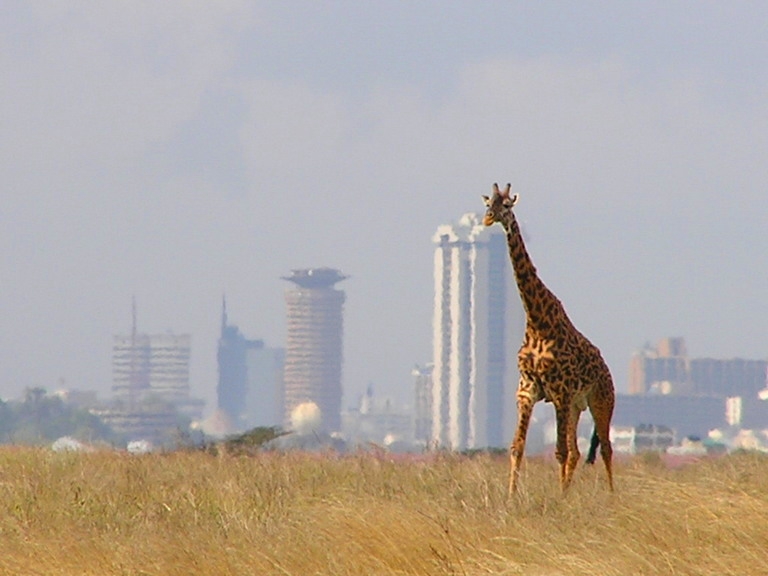
Photo: Rod Waddington · CC BY-SA 2.0 · Wikimedia Commons
Karen Blixen Museum is a museum in Kenya. Karen Blixen wrote under the pen name Isak Dinesen. The free Lokali audio guide runs 6 minutes.
✓ Published October 2026 · how we write these guides
Visitor facts
| Lokali audio guide | 6 min · free |
|---|---|
| Type | Museum |
| Location | Nairobi, Kenya |
| Coordinates | -1.3519, 36.7125 |
| Official website | karen-blixen.dk |
| Languages | 50+, in the Lokali app |
The story
Listen for a moment. Wind moves through tall trees, and somewhere a bird repeats the same few notes. The grass is soft and green, and the air feels cool, even at midday. That coolness comes from the altitude, because this part of Nairobi sits high above sea level. Ahead of you is a long, low farmhouse with stone walls and deep verandas. It looks calm and settled, as if it has always stood here.
This is the Karen Blixen Museum. It was once the home of a Danish woman who came to East Africa early in the twentieth century to farm coffee. She left years later with almost nothing except her memories. From those memories she wrote one of the best-known books ever written about Africa. Its first line is famous. "I had a farm in Africa, at the foot of the Ngong Hills."
Here is the first surprise. The neighbourhood around you is called Karen, and many visitors assume it was named after her. Locals and historians usually connect the name to her farm. The coffee estate covered a very large area, and the suburb later grew over that land. Today the area has leafy roads, private gardens and quiet homes. A century ago it was a working farm, with coffee bushes in long rows across the hills.
Karen Blixen arrived in what was then British East Africa during the 1910s. She came with her husband, a Swedish baron, and together they started a coffee plantation. They lived in this house from the late 1910s. The marriage did not last. In the end, she ran the farm largely on her own. A European woman managing an estate of this size was unusual at that time, and many colonial neighbours noticed it.
The farm had a serious problem from the beginning. The land was simply too high for coffee to grow well. The cool nights that make this garden pleasant today were hard on the crop. Harvests were often poor, and the farm carried heavy debts. Then world coffee prices fell around the time of the Great Depression. By 1931 the farm had failed, and she had to sell it.
Look up beyond the house, toward the horizon. On a clear day you can see the Ngong Hills, a ridge with several rounded peaks. In her book, she compared these peaks to the knuckles of a fist resting on the land. Once you hear that image, it is hard to forget. The hills change colour through the day. In the morning they look soft blue, and in the late afternoon they turn warm and golden.
Those hills hold a quiet story. Denys Finch Hatton was an English hunter and pilot, and he was very close to Karen Blixen. He often stayed at this house and flew his small plane over the plains. In 1931 he died when his plane crashed. He was buried in the Ngong Hills, within sight of the farm. That same year, she left Kenya for Denmark and never returned.
Now step inside. The rooms are modest in size, with wooden floors and simple, solid furniture. Some pieces belonged to Karen Blixen herself. Others were added later, so ask a guide which items are original. Notice the light in these rooms. It comes in sideways from the verandas and falls softly on the walls. The house feels designed for shade and cool air, not for show.
Back in Denmark, she began to write under the pen name Isak Dinesen. Out of Africa appeared in 1937. The book describes the farm, the landscape, the animals and the people who lived and worked here. It became widely read in many languages. Many readers came to picture Kenya through her eyes, and that is an important point to remember as you walk through these rooms.
This place holds a second set of lives that matter just as much. Kikuyu families lived on the farm land and worked the coffee. She wrote warmly about some of them, especially a young cook named Kamante. Modern readers also see the colonial structure behind her stories. Her view was not the only view of this land. The house is part of a wider and more difficult history, and it is worth holding both stories in mind.
Here is the second surprise. Many people know this place from the 1985 film Out of Africa, starring Meryl Streep and Robert Redford. The film brought huge attention to the house. However, the production did not film its main scenes inside these walls. The museum opened to the public in 1986, partly because the film made so many people want to see the real home behind the story.
After Kenya became independent, the house passed into Kenyan hands. Today the National Museums of Kenya manages it. That detail matters. A Kenyan institution now tells this story, on Kenyan land. As you walk the grounds, look for the old farm machinery near the garden. These rusted iron pieces once helped process coffee. They are among the last physical signs of the plantation that gave this neighbourhood its shape.
Take a few minutes before you leave. Walk slowly across the lawn and turn back to face the house. Notice the low roofline, the stone walls and the shade under the veranda. Then look past the trees toward the hills. The same ridge that she described almost a century ago is still there, with its rounded knuckles against the sky.
The coffee bushes are gone, and houses now cover much of the old farm. Still, the birds sing, the wind moves through the trees, and the air stays cool. As you head back toward the gate, listen once more. This is the same sound that someone once heard here every morning, at the foot of the Ngong Hills.
Key facts
What to look for
Practical tips
Common questions
Is there a free audio guide to Karen Blixen Museum?
Yes — the Lokali app narrates Karen Blixen Museum free of charge in 50+ languages. The guide runs about 6 minutes, covers the history, what to look for on site and practical tips, and works offline once downloaded.
Where is Karen Blixen Museum?
Karen Blixen Museum is near Nairobi, Kenya, at -1.3519, 36.7125. Tap the map link on this page for directions from where you are.
What is Karen Blixen Museum known for?
Karen Blixen wrote under the pen name Isak Dinesen. Out of Africa was first published in 1937.
What should you look for at Karen Blixen Museum?
The rounded Ngong Hills peaks she compared to knuckles. Old coffee-processing machinery rusting near the garden. Deep shaded verandas wrapping around the stone farmhouse.
What should you know before visiting Karen Blixen Museum?
Read the opening pages of Out of Africa before visiting. Ask the guide which furniture pieces are originally hers.
When is the best time to visit Karen Blixen Museum?
Come on a clear morning for the best Ngong Hills views.
On the map
Opens directions to Karen Blixen Museum from your location.
More to see in Nairobi

Hear Karen Blixen Museum in your language
The full story, narrated, in 50+ languages. Download it before you go and it plays offline, at your own pace, with no ticket and no tour group.