
National Museums of Kenya
1.2739° S · 36.8150° E · Museum
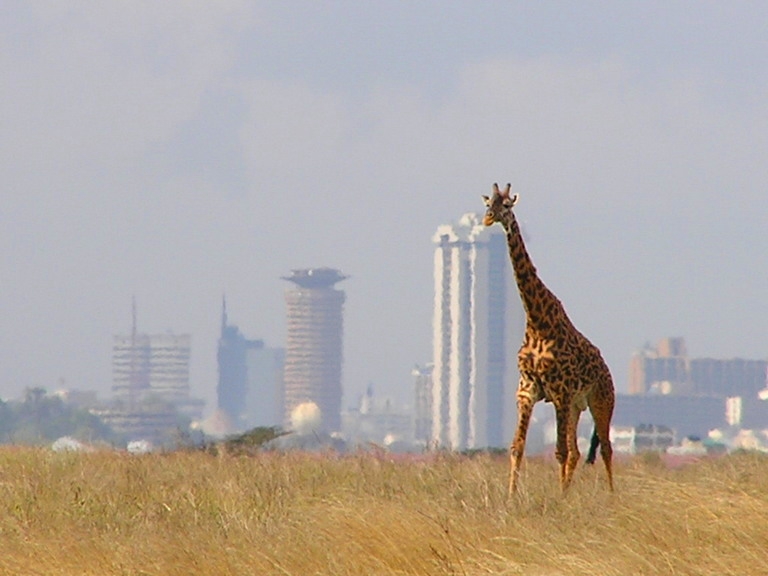
Photo: Karl Ragnar Gjertsen Krg This photo was taken by Karl Ragnar Gjertsen. Please credit · CC BY-SA 3.0 · Wikimedia Commons
National Museums of Kenya is a state corporation that manages museums, sites and monuments in Kenya. The museum on this hill opened in 1930. The free Lokali audio guide runs 7 minutes.
✓ Published October 2026 · how we write these guides
Visitor facts
| Lokali audio guide | 7 min · free |
|---|---|
| Type | Museum |
| Location | Nairobi, Kenya |
| Coordinates | -1.2739, 36.8150 |
| Official website | museums.or.ke |
| Languages | 50+, in the Lokali app |
The story
Start with the air. Up here on Museum Hill, the traffic of Nairobi drops to a low hum, and the breeze carries the green smell of trees and cut grass. Underfoot, paved paths lead past flowering shrubs toward a long, pale building. Somewhere nearby, a school group is laughing. Pause for a moment before you go inside. This hill holds one of the oldest scientific institutions in East Africa, and its story starts with a handful of curious amateurs.
The name you see, National Museums of Kenya, covers more than this one building. It is a national body that cares for museums, heritage sites and research stations across the country. That includes the old Portuguese fortress of Fort Jesus on the coast at Mombasa, which is a UNESCO World Heritage Site. It also includes major fossil sites in the Rift Valley and the far north. The building in front of you, the Nairobi National Museum, is the flagship. It is the place where much of that national work comes together.
The roots go back to the early twentieth century. A group of naturalists formed the East Africa Natural History Society and began collecting birds, insects, plants and animals. Their collection needed a home. The museum on this hill opened in 1930 under the name Coryndon Museum. It honoured Sir Robert Coryndon, a colonial governor of Kenya. After Kenya won independence, the institution took a new name, the National Museum, and a new purpose. It became a museum that told Kenya's story for Kenyans.
Here is the first thing many visitors miss. The famous palaeoanthropologist Louis Leakey worked here for years as curator. From this museum, he and his colleagues organised expeditions into the Rift Valley. Later, members of the Leakey family and Kenyan researchers made a long series of fossil discoveries in the north of the country. Many of those finds are still cared for by this institution. So this quiet building is tied directly to some of the most important questions in science about where humans came from.
Before you step inside, look for the elephant. In the grounds stands a life-size replica of Ahmed, a famous bull elephant from Marsabit in northern Kenya. Ahmed was known for his enormous tusks, which were said to nearly touch the ground. He became so well known that President Jomo Kenyatta placed him under special presidential protection, with guards to watch over him. Ahmed died of natural causes in the 1970s. Children climb around his model now, and adults usually stop to stand beside it and compare their height.
The building itself is worth a second look. In the 2000s, the museum closed for a major renovation and modernisation, and it reopened with new galleries and a refreshed exterior. You can see the mix of eras in the architecture. Older sections sit beside clean, modern lines and large windows. The galleries are laid out so that light from outside reaches many of the halls. Notice how quiet it becomes once the doors close behind you.
The Hall of Kenya is a good place to begin. It introduces the country through objects, from everyday tools to ceremonial pieces. Kenya is home to dozens of ethnic communities, each with its own language, dress and traditions. The displays show beadwork, carved wood, weapons, musical instruments and household items. Look closely at the beadwork. The colours are not random. In many communities, particular colours and patterns can signal age, marital status or social role. Each piece carries meaning for the people who made it.
Next, the natural history galleries. This is where the museum's origins as a naturalists' collection still show. The Great Hall of Mammals holds mounted animals and skeletons, and the bird galleries display a remarkable number of species. Kenya has one of the richest bird populations in Africa. Take a moment with the cases of small, brightly coloured birds. Sunbirds, kingfishers and weavers sit side by side. It is a reminder of how much life moves through the gardens outside, often unnoticed.
Now for the second surprise. Among the museum's art holdings are paintings by Joy Adamson. Many people know her from the book and film about Elsa the lioness. Fewer know that she was also a skilled painter. Over many years, she painted portraits of people from communities across Kenya, often in traditional dress. She also painted many of the country's plants. Her portraits now form an important visual record of clothing and adornment from the mid twentieth century.
The human origins gallery brings the story back to Leakey's work. Here you can follow the long path of human evolution through fossils and carefully made casts. Kenya's Rift Valley and the area around Lake Turkana have produced some of the most significant early human fossils ever found. Take your time with the skulls. Look at the brow ridges, the shape of the jaw, the size of the braincase. You are looking at evidence of ancestors who walked this same region long before any city existed.
The gallery called Historia ya Kenya, which means the History of Kenya in Swahili, carries the story into more recent times. It covers trade along the coast, the colonial period, and the long struggle for independence. This section matters to many Kenyan visitors in a personal way. You may hear families explaining the displays to their children in Swahili or another local language. Listen for that. It is one of the best signs that this museum still belongs to the people it describes.
When you leave the main building, the grounds are part of the experience. Gardens and a nature trail wind across the hill, with trees and plants labelled for visitors. Nearby is the Snake Park, where living reptiles are kept, including some of Kenya's venomous species. It usually needs a separate entry, so check at the gate. On weekends, the grounds fill with families, students and couples sitting in the shade. The pace here is slow, and that is part of its charm.
Before you walk away, turn around and look back at the building one last time. Think about the path from a small society of collectors to a national institution guarding fossils, art and memory. Listen to the birds in the trees around you. Some of them may be the same species you just saw in the glass cases. Then follow the path back down the hill, toward the noise of the city, carrying a little of this quiet with you.
Key facts
What to look for
Practical tips
Common questions
Is there a free audio guide to National Museums of Kenya?
Yes — the Lokali app narrates National Museums of Kenya free of charge in 50+ languages. The guide runs about 7 minutes, covers the history, what to look for on site and practical tips, and works offline once downloaded.
Where is National Museums of Kenya?
National Museums of Kenya is near Nairobi, Kenya, at -1.2739, 36.8150. Tap the map link on this page for directions from where you are.
What is National Museums of Kenya known for?
The museum on this hill opened in 1930. Originally named after governor Sir Robert Coryndon.
What should you look for at National Museums of Kenya?
The life-size replica of Ahmed in the grounds. Colour patterns in the beadwork display cases. Joy Adamson's portraits of Kenyan people.
What should you know before visiting National Museums of Kenya?
Start in the Hall of Kenya for useful context. Visit on a weekday morning for quieter galleries.
When is the best time to visit National Museums of Kenya?
Visit on a weekday morning for quieter galleries.
On the map
Opens directions to National Museums of Kenya from your location.
More to see in Nairobi

Hear National Museums of Kenya in your language
The full story, narrated, in 50+ languages. Download it before you go and it plays offline, at your own pace, with no ticket and no tour group.