
Mieza: The School of Aristotle
40.6442° N · 22.1222° E · Archaeological Site
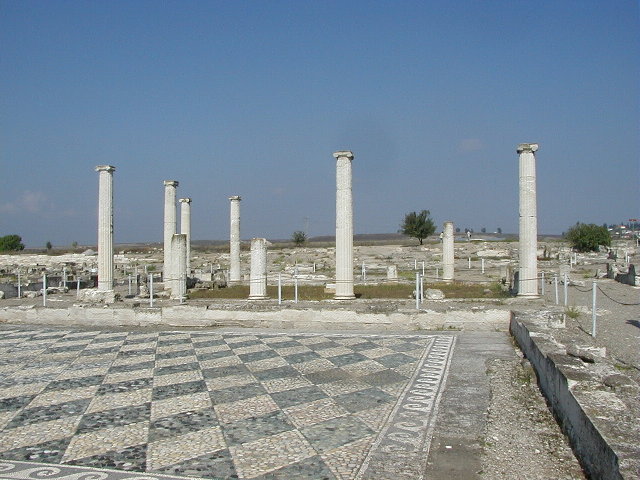
Photo: Jean Housen · CC BY-SA 4.0 · Wikimedia Commons
Mieza: The School of Aristotle is a village in Ancient Macedon. Aristotle taught the young Alexander here in the fourth century BCE. The free Lokali audio guide runs 7 minutes.
✓ Published October 2026 · how we write these guides
Visitor facts
| Lokali audio guide | 7 min · free |
|---|---|
| Type | Archaeological Site |
| Location | Naoussa, Greece |
| Coordinates | 40.6442, 22.1222 |
| Languages | 50+, in the Lokali app |
The story
Listen first. Somewhere close by, water is moving over stone. The air under these plane trees feels cooler than the road you just left. Underfoot, the path is soft earth and fallen leaves. Ahead, a wall of pale limestone rises from the slope, cut with shallow caves and ledges. This is Mieza, on the eastern foot of Mount Vermio, a short drive from Naoussa. For more than two thousand years, this spot has carried one remarkable story.
The story goes like this. In the fourth century before Christ, King Philip the Second of Macedon wanted the best possible teacher for his son. He chose a philosopher from the town of Stagira, in the north of Greece. That philosopher was Aristotle. The son was a boy called Alexander, who would later march as far as India. Philip did not keep them in the royal palace at Pella. He sent them here, to a quiet sanctuary of the Nymphs, away from the noise and politics of court.
Why here? Look around and the answer is easy to feel. The Nymphs were nature spirits in Greek religion, linked to springs, caves and groves. A place like this, with running water and natural shelter in the rock, was a classic setting for their worship. The Greeks called such a place a nymphaeum. It was calm, green and close to the capital, but far enough to concentrate the mind. For a teacher and his students, it was close to ideal.
Alexander was probably around thirteen when the lessons began, and the teaching likely lasted a few years. He was not alone. Ancient tradition says that other young Macedonian nobles studied beside him. Some of them may later have become his generals and closest companions. Imagine them here as teenagers, sitting on the rock, arguing about ethics, poetry and the natural world. The empire, the battles, the legends... all of that was still ahead of them.
Here is something many visitors miss. The Greek writer Plutarch lived several centuries after Alexander. In his biography of the king, he mentions the Nymphaeum near Mieza. He writes that, even in his own day, people still showed the stone seats and the shaded walks used by Aristotle. So this place was already a tourist site in the Roman period. You are standing in a line of curious travellers that stretches back almost two thousand years.
Now look closely at the limestone face. You will see natural caves, overhangs and flat areas cut into the rock. Archaeologists have found traces of a colonnade, a covered walkway with columns, set against the cliff. Beam holes in the stone show where a roof structure once rested. Very little stands to full height today. But the shape of the place is still clear: rock, shelter, open ground and water, all within a few steps.
A quick word of honesty. Most scholars accept that this site matches the Nymphaeum described by Plutarch. The landscape, the caves and the remains of buildings all fit. But there is no inscription carved with Aristotle's name, and no signed lesson plan. The link rests on ancient texts and careful archaeology working together. That is normal for a place this old, and it makes the experience more interesting, not less. You are invited to weigh the evidence yourself.
Walk slowly along the path and pay attention to the water. The springs here still run, and the ground stays damp even in summer. In ancient Greece, water was more than a resource. It carried religious meaning, and springs were often treated as sacred. The steady sound you hear is one of the few things that has not changed since Alexander was a boy. The trees above you are younger, of course, but plane trees have shaded springs in this region for a very long time.
Mieza was not only a school. It was a real Macedonian town, spread across the plain below. In the farmland near the village of Lefkadia, excavations have uncovered a theatre and a series of grand underground tombs. The largest is often called the Tomb of Judgment. Its painted facade shows figures from Greek belief about the afterlife. If you have time, these sites help you picture the wealthy, confident society that sent its sons to study here.
Those tombs give the school a context. Macedon was once seen by southern Greeks as a rough northern kingdom. Philip worked hard to change that image. Hiring the most famous thinker of the age was part of that project. Placing him in a sacred, beautiful setting was a statement too. This was a royal investment in ideas. In a way, the school at Mieza was as political as any palace.
Step back now and think about what happened next. Aristotle later returned to Athens and founded his own school, the Lyceum. His writings on logic, biology, politics and ethics shaped learning in Europe and the Middle East for many centuries. Alexander, meanwhile, crossed into Asia and built an empire across Persia and Egypt. Two very different lives, one philosophical and one military. Both of them passed through this quiet slope of limestone and water.
The land around Mieza tells a modern story as well. The hills near Naoussa are known for vineyards and orchards. Naoussa is one of the best-known wine areas in northern Greece. Its main red grape is Xinomavro, a name that means roughly sour and black. On the drive in, you may have passed rows of vines and fruit trees. The same fertile ground that fed a Macedonian town still feeds the region today.
Before you leave, find a spot on the rock or under the trees and simply stay for a minute. Notice the light moving through the leaves. Notice the cool stone under your hand and the sound of the spring. It is easy to think of history as kings and battles. Here, it is quieter: a teacher, a few students and a shaded place to think. As you walk back to the road, listen once more for the water.
Key facts
What to look for
Practical tips
Common questions
Is there a free audio guide to Mieza: The School of Aristotle?
Yes — the Lokali app narrates Mieza: The School of Aristotle free of charge in 50+ languages. The guide runs about 7 minutes, covers the history, what to look for on site and practical tips, and works offline once downloaded.
Where is Mieza: The School of Aristotle?
Mieza: The School of Aristotle is near Naoussa, Greece, at 40.6442, 22.1222. Tap the map link on this page for directions from where you are.
What is Mieza: The School of Aristotle known for?
Aristotle taught the young Alexander here in the fourth century BCE. Philip the Second of Macedon chose Aristotle as his son's tutor.
What should you look for at Mieza: The School of Aristotle?
Beam holes cut into the limestone where a roof once rested. Shallow natural caves along the pale rock face. Traces of the colonnade foundations at the base of the cliff.
What should you know before visiting Mieza: The School of Aristotle?
Wear shoes with grip; paths near the springs can be damp. Visit early morning for cool shade and fewer groups.
When is the best time to visit Mieza: The School of Aristotle?
Bring water and insect repellent on warm summer days.
On the map
Opens directions to Mieza: The School of Aristotle from your location.
More to see near Mieza: The School of Aristotle

Hear Mieza: The School of Aristotle in your language
The full story, narrated, in 50+ languages. Download it before you go and it plays offline, at your own pace, with no ticket and no tour group.