
Necromanteion of Acheron
39.2362° N · 20.5345° E · Archaeological Site
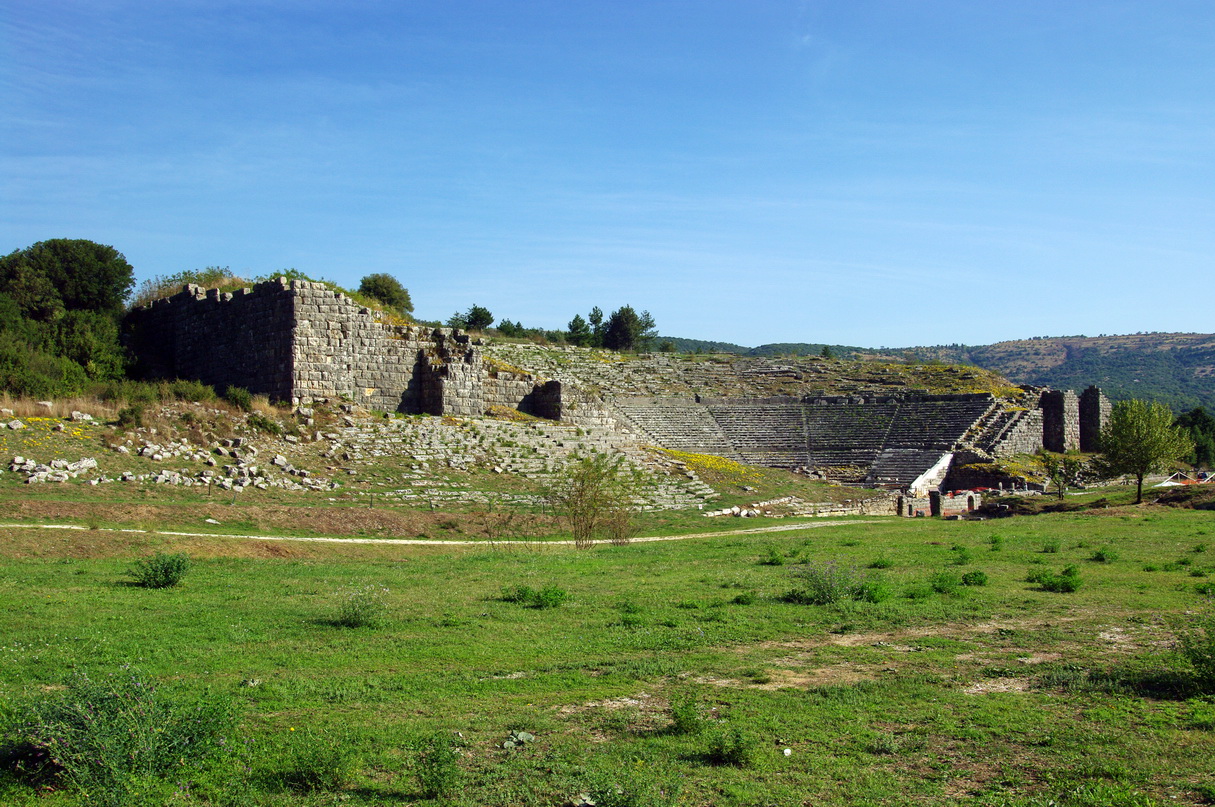
Photo: Nikos Laskaridis · CC BY-SA 4.0 · Wikimedia Commons
Necromanteion of Acheron is an archaeological site in Greece. Herodotus mentions an oracle of the dead on the Acheron. The free Lokali audio guide runs 7 minutes.
✓ Published October 2026 · how we write these guides
Visitor facts
| Lokali audio guide | 7 min · free |
|---|---|
| Type | Archaeological Site |
| Location | Parga, Greece |
| Coordinates | 39.2362, 20.5345 |
| Official website | odysseus.culture.gr |
| Languages | 50+, in the Lokali app |
The story
Listen for a moment. Under the cicadas, the air here smells of dry grass and warm stone. Beneath your feet the ground rises gently above a flat green plain. Somewhere out there, between the reeds and the orchards, water is moving slowly toward the sea. For the ancient Greeks, this was not just any water. This was the river Acheron, one of the rivers of the underworld. You are standing on a low hill, above the village of Mesopotamos, where they believed the dead could still be asked a question.
The name says it plainly. Necromanteion means an oracle of the dead. It was a place where the living came to consult the spirits of those they had lost. Greece had many oracles. Delphi spoke for Apollo. Dodona, not far from here in the mountains of Epirus, listened to the rustling oak of Zeus. But this oracle was different. Here people came to speak with the departed. Ancient tradition placed one of the gates of Hades in this landscape, somewhere close to where three rivers met.
That tradition is very old. In the Odyssey, Homer's epic of a hero's long journey home, the sorceress Circe gives Odysseus directions to the land of the dead. She tells him to go where the rivers of fire and lamentation pour into the Acheron. Many readers, ancient and modern, have looked at this corner of Epirus and seen those lines on the map. The Kokytos, whose name suggests wailing, really does join the Acheron near here. Whether Homer ever had this exact hill in mind... nobody can say for sure.
There is also a written story from history. The Greek historian Herodotus tells of Periander, a ruler of Corinth, who sent messengers to the oracle of the dead on the river Acheron. He wanted to speak with the spirit of his dead wife, Melissa. In the tale, her ghost refused to help at first. She complained that she was cold, because her clothes had not been burned with her. It is a strange, very human detail. Even the dead, it seemed, had grievances.
Now look at the land below the hill. Today it is farmland, crossed by ditches and lines of trees. In antiquity much of it was a marsh and a shallow lake, the Acherousian lake. Mist would have hung over the water in the early mornings. Reeds would have rustled at the edges. The lake was drained in modern times, so the setting has changed a great deal. Try to picture still, grey water around this hill. That was the stage on which visitors arrived.
The ruins in front of you were uncovered by the Greek archaeologist Sotirios Dakaris, who began excavating here in the late 1950s. What he found was a large stone complex of the Hellenistic period, the centuries after Alexander the Great. Notice the walls. Many blocks are cut into irregular, many-sided shapes that fit tightly together without mortar. This is called polygonal masonry. It is heavy, careful work, and it has held for more than two thousand years.
Dakaris read the building as a carefully designed journey. Visitors, he believed, moved through dark corridors and small rooms over several days. They may have eaten special foods, slept in darkness, and lost their sense of time. In some storage areas his team found remains of beans and other foods. He suggested these were part of a diet meant to cloud the mind. Each turn of the passage took the pilgrim further from daylight, and closer to the moment of meeting the dead.
Here is the part most visitors are waiting for. Below the central hall there is an underground chamber. Its stone roof is held up by a series of arches, like the ribs of a great animal. Steps lead down into it. Dakaris saw this crypt as the symbolic heart of the oracle, the chamber of Hades itself. Go down if it is open. The temperature drops. Sound becomes softer. Even with modern lights, you feel how the darkness presses in from every side.
Now for a twist. Dakaris also found bronze fittings and wheel-like metal parts in the building. He imagined them as pieces of a hidden machine, perhaps used by priests to raise a figure into the dim light, like a ghost. It is a thrilling idea. But later scholars looked again at these objects. Several argued that they were parts of catapults, the war machines of the period. Some now believe the building was a fortified farmhouse or a small fortress, not an oracle at all.
So which is it? The honest answer is that the debate is still open. An oracle of the dead certainly existed somewhere on the Acheron, because ancient writers mention it. Whether these exact walls belonged to it is less certain. Perhaps that is fitting. A place devoted to speaking with the unseen keeps one secret of its own. You are free to stand in the crypt and decide for yourself what kind of silence surrounds you.
Ancient sources say that the region of Epirus suffered badly in the second century before Christ, when Roman armies swept through and destroyed many settlements. Burned layers found in the complex suggest that this building also met a violent end around that time. Afterwards the site was gradually forgotten. Earth and rubble covered the walls. Life on the hill continued in other forms, and the ruins waited underground for many centuries before the excavators returned.
Look up toward the small church on the hill. This is the monastery church of Saint John the Baptist, a Christian building that sits right on top of the ancient complex. It is a quiet reminder that sacred places in Greece are often reused. One belief replaces another, but the same high ground stays important. Notice how the pale church walls stand above the older, darker stones. The meeting point of two worlds is visible in a single glance.
Before you leave, walk to the edge of the site and look out across the plain once more. The farmers' fields, the line of hills, the faint shine of the river in the distance... all of it is ordinary and peaceful today. Yet for many generations people came here carrying grief and questions they could not answer alone. As you walk back down toward the road, listen again to the cicadas and the wind in the grass. Somewhere beyond the trees, the Acheron is still flowing toward the sea.
Key facts
What to look for
Practical tips
Common questions
Is there a free audio guide to Necromanteion of Acheron?
Yes — the Lokali app narrates Necromanteion of Acheron free of charge in 50+ languages. The guide runs about 7 minutes, covers the history, what to look for on site and practical tips, and works offline once downloaded.
Where is Necromanteion of Acheron?
Necromanteion of Acheron is near Parga, Greece, at 39.2362, 20.5345. Tap the map link on this page for directions from where you are.
What is Necromanteion of Acheron known for?
Herodotus mentions an oracle of the dead on the Acheron. Excavations here were led by archaeologist Sotirios Dakaris.
What should you look for at Necromanteion of Acheron?
Tightly fitted polygonal stone blocks without any mortar. Stone arches supporting the roof of the underground crypt. The church of Saint John above the ancient walls.
What should you know before visiting Necromanteion of Acheron?
Bring a light layer for the cool underground crypt. Wear shoes with grip for the stone steps.
When is the best time to visit Necromanteion of Acheron?
Visit early morning to avoid the strongest midday heat.
On the map
Opens directions to Necromanteion of Acheron from your location.
More to see near Necromanteion of Acheron


Hear Necromanteion of Acheron in your language
The full story, narrated, in 50+ languages. Download it before you go and it plays offline, at your own pace, with no ticket and no tour group.