
Photo: KoS · Public domain · Wikimedia Commons
Le Lido is a cabaret and burlesque theatre in Paris. The name comes from the Lido beach island in Venice. The free Lokali audio guide runs 7 minutes.
✓ Published October 2026 · how we write these guides
Visitor facts
| Lokali audio guide | 7 min · free |
|---|---|
| Type | Theatre |
| Location | Paris, France |
| Coordinates | 48.8724, 2.3006 |
| Official website | theatredulido.com |
| Languages | 50+, in the Lokali app |
The story
Stand for a moment on the wide pavement of the Champs-Élysées and listen. Tyres hiss over the stone, shopping bags rustle, tourists call to each other in a dozen languages. Then look at the entrance in front of you. Behind this doorway, for most of the last eighty years, Paris kept one of its great late-night rituals. Here, the lights went down, the orchestra played, and a line of tall dancers stepped into a white glare of feathers and sequins.
This is the Lido. The name does not come from Paris at all. It comes from Venice, from the long sandy island where wealthy Europeans went to swim and be seen in the early twentieth century. In the years between the world wars, that word meant beaches, leisure and a certain glamour. Paris borrowed the name for an earlier venue on this avenue — a fashionable bathing establishment with a pool, built for the elegant swimming culture of the time.
The cabaret that made the name famous came later. It opened in 1946, in the first months of peace after the Second World War. Think about that timing. Paris had just come through occupation and shortage. Many people wanted light, music and spectacle again, and the city wanted visitors. The Lido offered all of it — dinner, champagne and a full stage revue in a single evening. For many foreign travellers, this became their idea of a night in Paris.
A revue, by the way, is not a play with one story. It is a chain of short scenes — dance numbers, costume parades, comic acts, sometimes acrobats or magicians — held together by a theme and a lot of glitter. The Paris version of the revue grew out of the nineteenth-century music halls. The Lido took that old form and made it bigger, faster and more technical, with ever more elaborate sets for each new season.
The most famous faces here were the Bluebell Girls. The troupe was created by Margaret Kelly, an Irish-born dancer known to everyone as Miss Bluebell. She had a clear vision. Her dancers were tall, disciplined and precise, and they moved together like a single body. The troupe became closely linked with the Lido from the late 1940s onward. For decades, being a Bluebell was a serious professional career, and dancers came from across Britain, Europe and beyond to audition.
Here is something many visitors do not realise. The dancers you might picture from old posters were athletes as much as performers. They worked through two shows a night, often six or seven nights a week. Their headdresses could be large and heavy, and the staircases they descended were steep and brightly lit. A dancer had to smile, keep her balance and hit her mark in the dark. The glamour on stage depended on hard training backstage.
The Lido did not always stand on this exact spot. In the 1970s, the cabaret moved to its present home further along the same avenue. The new hall was designed for spectacle on a large scale. The stage machinery became part of the show itself. Over the years, audiences watched sets rise from below, scenery fly in from above, and effects with water and even ice. The building was, in a sense, a machine for producing wonder on a nightly schedule.
The guest list added to the legend. Through the postwar decades, film stars, singers and politicians came here for an evening out, and the Lido became part of the international celebrity circuit. Stories still circulate about which famous visitor sat at which table, and some of those tales have grown with each retelling. What is certain is that a night at the Lido became a symbol of Parisian glamour in magazines and films around the world.
Now for the second surprise. The famous feather revue is no longer here. In the early 2020s, the venue changed hands and the long era of the classic cabaret show came to an end. Many Parisians felt the loss sharply. The hall was then reopened as a theatre for musicals and live productions, under the name Lido2Paris. So the stage is still active — but the programme today is closer to Broadway or the West End than to the old dinner-and-feathers night.
In a way, this change follows the oldest pattern of the place. The Lido was always about adapting entertainment to its moment. The bathing club fitted the interwar years. The postwar revue fitted a city hungry for light and visitors. The musical theatre fits a new audience that wants a full story on stage. The name has stayed the same, while the shows inside have changed with each generation of Parisians and travellers.
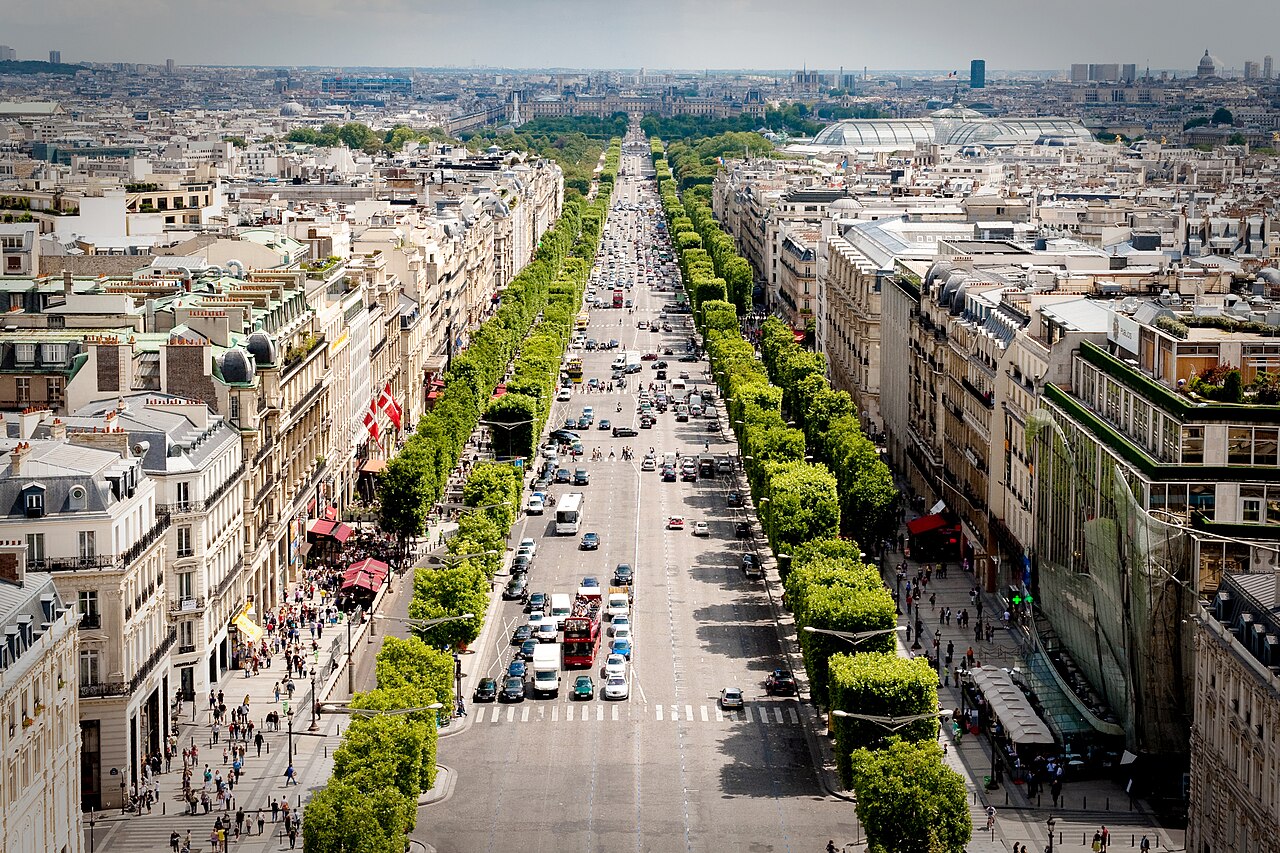
While you stand here, notice the setting. The Champs-Élysées runs in a long, straight line between the Arc de Triomphe and the Place de la Concorde. The Lido sits close to the Arc end of the avenue, among flagship shops, cinemas and cafés. This avenue has long been the city's stage for parades and celebrations. It makes sense that one of its best-known theatres should sit right here, where Paris goes to show itself off.
If you plan to come back for a performance, give yourself time. The evening experience here has always been part of the appeal — arriving in good clothes, moving from the bright avenue into a dim, warm hall, and waiting for the curtain. Check the current programme before you go, since productions change and some shows run for a limited season. And if you only pass by tonight, the lit frontage at dusk is worth a slow look.
So take one more look at the doorway before you walk on. Picture the queues of the 1950s, the evening coats and the cigarette smoke drifting along the pavement. Then hear the avenue as it is now — the traffic, the footsteps, the music from a shop entrance nearby. As you walk toward the Arc de Triomphe or down toward Concorde, you carry a small piece of the Lido's story with you. Paris still comes here for a night of light and song.
Key facts
What to look for
Practical tips
Common questions
Is there a free audio guide to Le Lido?
Yes — the Lokali app narrates Le Lido free of charge in 50+ languages. The guide runs about 7 minutes, covers the history, what to look for on site and practical tips, and works offline once downloaded.
Where is Le Lido?
Le Lido is in Paris, France, at 48.8724, 2.3006. Tap the map link on this page for directions from where you are.
What is Le Lido known for?
The name comes from the Lido beach island in Venice. The cabaret opened in 1946, just after the Second World War.
What should you look for at Le Lido?
The illuminated Lido lettering above the entrance on the avenue. Show posters near the doorway announcing the current production. The Arc de Triomphe visible at the top of the avenue.
What should you know before visiting Le Lido?
Check the current show programme online before planning an evening visit. Book performance seats in advance, especially for weekend evenings.
When is the best time to visit Le Lido?
Come at dusk to see the avenue frontage lit up.
On the map
Opens directions to Le Lido from your location.
More to see in Paris



Hear Le Lido in your language
The full story, narrated, in 50+ languages. Download it before you go and it plays offline, at your own pace, with no ticket and no tour group.