
National Museum of Cambodia
11.5658° N · 104.9290° E · Museum
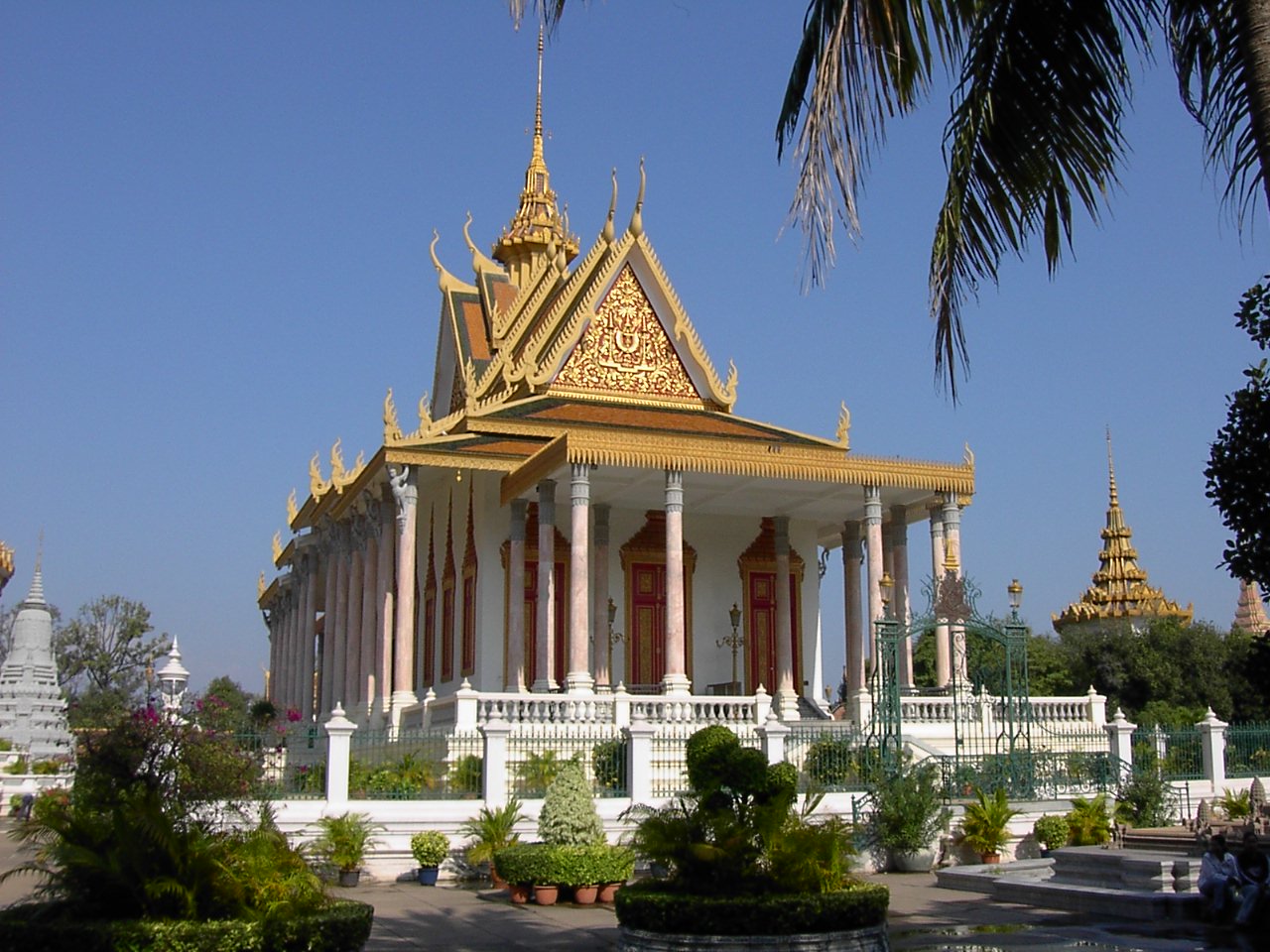
Photo: Marcin Konsek · CC BY-SA 4.0 · Wikimedia Commons
National Museum of Cambodia is an art museum, archaeology,and history in Phnom Penh, Cambodia. The museum opened to the public in 1920. The free Lokali audio guide runs 7 minutes.
✓ Published October 2026 · how we write these guides
Visitor facts
| Lokali audio guide | 7 min · free |
|---|---|
| Type | Museum |
| Location | Phnom Penh, Cambodia |
| Coordinates | 11.5658, 104.9290 |
| Official website | cambodiamuseum.info |
| Languages | 50+, in the Lokali app |
The story
Stand at the gate for a moment and look up. The building in front of you glows a deep rust red, the colour of fired clay. Its roofs rise in layers, one above another, and the tips curl upward like flames. Somewhere behind the walls, water lies still in a lotus pond. The traffic of Phnom Penh hums at your back. Ahead of you, it is cooler, quieter, and a little darker. This is the National Museum of Cambodia.
The museum opened in 1920, under French colonial rule. A French scholar and artist named George Groslier shaped its early life. He was born in Phnom Penh, and he loved Khmer art deeply. He wanted a home for the sculpture of Cambodia that looked Cambodian, not European. So the building follows the lines of traditional Khmer temples and pavilions. It sits close to the Royal Palace, and the two belong to the same skyline of red and gold.
Notice the rhythm of the architecture as you walk in. The museum is built as four long wings around an open courtyard. You move through shaded galleries, and then the light opens up again over the garden. This pattern matters. In a hot city, deep verandas, high ceilings and open air keep the rooms bearable. The design is beautiful, yes — but it is also practical. It was made for this climate and this light.
Here is the first surprise. For many years, the roof spaces of this museum were home to a large colony of bats. Every evening, they poured out into the dusk above the city. Their droppings damaged the building and the air inside. In the early 2000s, a new ceiling was put in place to separate the bats from the galleries. Some visitors still watch the sky around the roofs at sunset, half hoping to see them.
Inside, the collection tells one long story. It is the story of Khmer art, from early centuries to the more recent past. The galleries move roughly in time order. Many visitors go clockwise. You start with the pre-Angkorian period, before the great temple city of Angkor rose in the north. Then you reach the Angkor era itself. Later rooms show what came after. Stone dominates. Bronze, wood and ceramics fill the gaps between.
Look for an eight-armed figure of Vishnu, the Hindu god who preserves the world. This statue comes from Phnom Da, a hill in southern Cambodia, and it belongs to the pre-Angkorian period. Stand in front of it and count the arms. Then step to the side. The sculptors carved a stone arch behind the figure to support those heavy limbs. It is engineering and devotion in one piece of stone. Many people consider it one of the finest works in the country.
Keep walking, and the faces change. In the Angkor galleries, the features become calmer and more rounded. Eyes look down. Lips hold a soft, closed smile. This gentle expression is often linked to the reign of King Jayavarman the Seventh, a Buddhist ruler of the late twelfth century. He built Angkor Thom, the walled city near Angkor Wat. Watch for faces like this throughout the museum. Once you notice the smile, you will see it everywhere.
Now, a second surprise — and perhaps the most moving object here. It is a large bronze fragment of Vishnu lying on his side. Only the head, shoulders and part of the arms survive. It was found at the West Mebon, a temple on an island in a great reservoir near Angkor. Experts date it to the eleventh century. Look closely at the face. Small hollows show where precious inlay once filled the eyes and brows. Even in pieces, it shows enormous skill.
In the courtyard, you may meet a seated figure known as the Leper King. The statue came from a terrace in Angkor Thom. Its name comes from local legend, not from the record. Some say the worn, spotted surface of the stone made people think of illness. Others link the name to a story about a king who suffered from leprosy. No one is fully sure who the figure represents. Many scholars think it may show Yama, the god of death and judgement.
The museum also carries a harder chapter. In 1975, the Khmer Rouge took power in Cambodia. They emptied Phnom Penh, and the museum was closed and abandoned. Many staff members did not survive those years. After the regime fell in 1979, the museum reopened within months. Since then, Cambodian curators and international partners have worked to restore objects and rebuild expertise. Some statues taken out of the country in earlier decades have also come home in recent years.
This is not only a museum. For many Cambodians, some of these figures are still sacred. You may see incense, flowers or small offerings left in front of certain statues. You may see someone pause, press their palms together, and bow. Please give them space and quiet. Dress respectfully, with shoulders and knees covered, as you would in a temple. The rules on photography differ between the galleries and the courtyard, so check the signs before you raise your camera.
Take time in the garden. It is the heart of the building, and many visitors rush past it. Find a bench in the shade and listen. You may hear birds, the splash of water, and the soft sound of sandals on stone. The plants and ponds frame the red walls, and the light shifts across the roof tiles through the day. After the dense galleries, this space lets your eyes and mind rest.
Before you leave, think about how the pieces fit together. The stone gods here once stood in temples across the country. Some came from forests, some from rice fields, some from hilltops. Today they share one quiet building in the capital. Together they show more than a thousand years of faith, craft and change. And many came through war, theft and neglect to stand in front of you now.
As you step back out through the gate, turn around once more. Look at the curled roof tips against the sky, and the deep red of the walls. Listen as the noise of the street returns, with motorbikes, voices and vendors. The calm faces inside are still there, looking down with that soft smile. Carry that stillness with you a little way into the city.
Key facts
What to look for
Practical tips
Common questions
Is there a free audio guide to National Museum of Cambodia?
Yes — the Lokali app narrates National Museum of Cambodia free of charge in 50+ languages. The guide runs about 7 minutes, covers the history, what to look for on site and practical tips, and works offline once downloaded.
Where is National Museum of Cambodia?
National Museum of Cambodia is in Phnom Penh, Cambodia, at 11.5658, 104.9290. Tap the map link on this page for directions from where you are.
What is National Museum of Cambodia known for?
The museum opened to the public in 1920. George Groslier shaped the museum's early design and mission.
What should you look for at National Museum of Cambodia?
Curled, flame-like tips at the ends of the roofs. The stone arch supporting Phnom Da Vishnu's eight arms. Empty eye hollows on the bronze West Mebon Vishnu.
What should you know before visiting National Museum of Cambodia?
Follow the galleries clockwise to move roughly through time. Cover shoulders and knees, as you would in a temple.
On the map
Opens directions to National Museum of Cambodia from your location.
More to see in Phnom Penh


Hear National Museum of Cambodia in your language
The full story, narrated, in 50+ languages. Download it before you go and it plays offline, at your own pace, with no ticket and no tour group.