
Charles Bridge is a 14th-century stone bridge spanning the Vltava River, lined with Baroque statues and connecting Old Town to Prague Castle. It is in Prague, Czechia. Most visitors spend 30–45 min here. The free Lokali audio guide runs 5 minutes.
✓ Verified August 2026 · how we write these guides
Visitor facts
| Time needed | 30–45 min |
|---|---|
| Lokali audio guide | 5 min · free |
| Type | Bridge |
| Best for | Editors' pick |
| Location | Prague, Czechia |
| Coordinates | 50.0864, 14.4119 |
| Languages | 45, in the Lokali app |
The story
Stand at one end of the bridge early in the morning. The stones are cool under your feet. The river moves slowly below. Mist often rises off the water. The towers ahead catch the first light. Few people are here yet. A lone street painter may be setting up. This is the best time to begin your walk across Charles Bridge. Take a slow breath, and step onto the stones.
The bridge crosses the Vltava River. It joins two parts of the city. On one side lies the Old Town. On the other side lies the Lesser Town, which people call Mala Strana. For hundreds of years this was the main link between them. Kings rode across it on the way to be crowned. Traders pushed their carts across it. Today only people on foot may cross. No cars are allowed here.
The story begins in 1357. The Holy Roman Emperor Charles IV ordered a new bridge. An older bridge had stood on this spot before. People called it the Judith Bridge. A flood destroyed it in 1342. The city needed a stronger crossing. Charles wanted one that would last for ages. The bridge now carries his name.
The work took many years. The bridge was finished around 1402. The architect was Peter Parler. He also worked on the great cathedral up at the castle. He built the bridge from blocks of sandstone. It rests on sixteen arches. It stretches about 516 meters from one end to the other. It is nearly ten meters wide. For its time, this was a huge undertaking.
There is a famous legend about the stones. People say the builders mixed egg yolks into the mortar. They believed this would make the bridge stronger. Some tales say eggs were sent in from towns across the land. Whether any of this is true is not certain. But the bridge has stood for more than six hundred years. It has survived flood after flood.
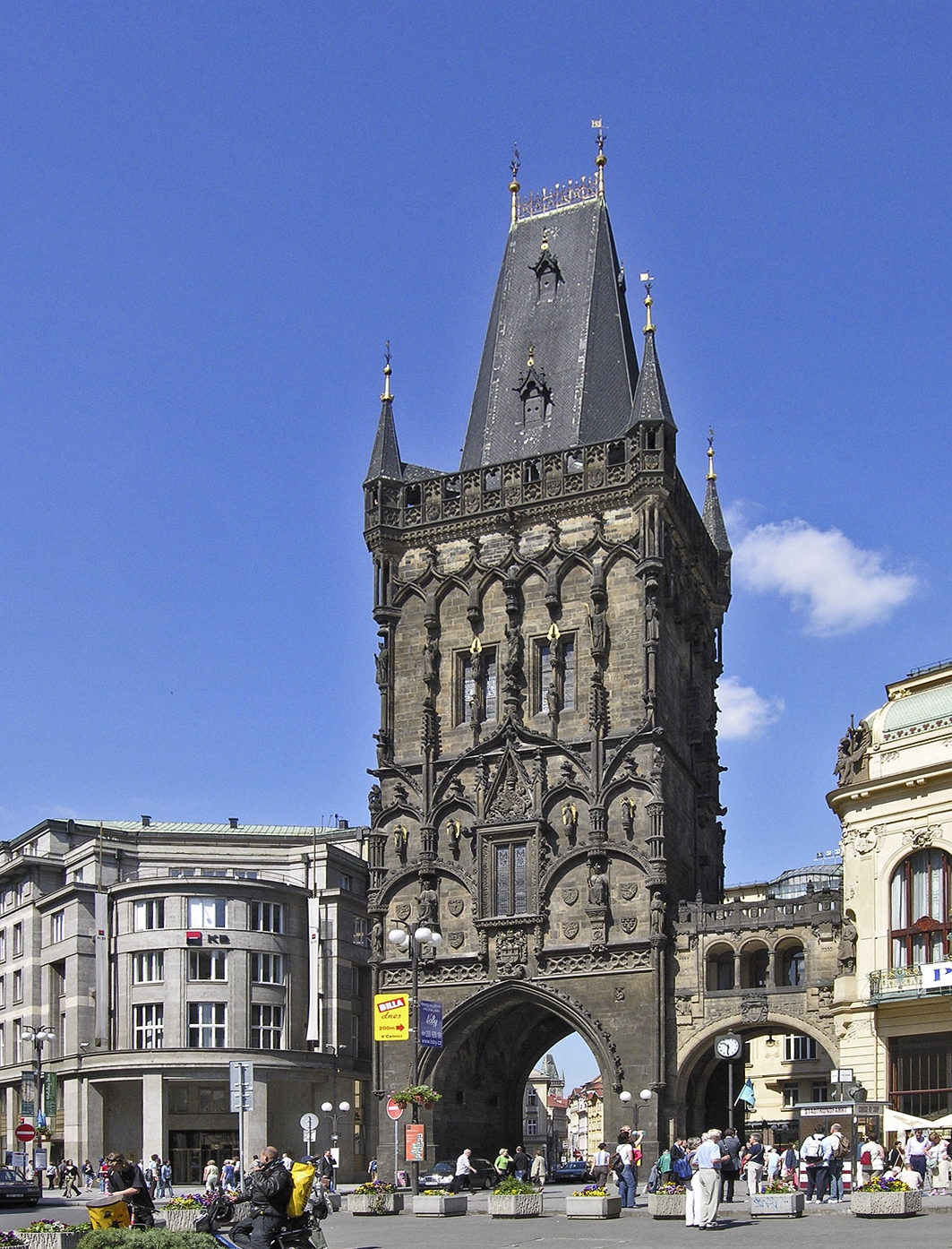
Three towers guard the crossing. One stands on the Old Town side. Two stand on the Lesser Town side. The Old Town Bridge Tower is the most decorated of them. Stone carvings cover its face. Climb its steps if you have the time and energy. From the top you can see the whole bridge below. You can watch the river bend through the heart of the city.
As you walk, you pass two long rows of statues. There are about thirty of them in all. Most were added later, in the seventeenth and eighteenth centuries. They show saints and holy figures in dark, weathered stone. Many of them are copies. The originals are kept safe indoors, away from the weather. Wind and rain slowly wear the soft stone away.
One statue draws the largest crowd of all. It shows Saint John of Nepomuk. The first version was placed here in 1683. At its base there is a small bronze panel. Years of touching have rubbed it smooth and bright. Visitors press their hands to it and make a wish. Look for the warm shine of the metal, polished by countless hands before yours.
The bridge has lived through hard times. Armies have marched across it. Fights have been waged at its towers. Floods have risen high against its arches. In recent centuries, parts of it have been damaged and rebuilt. Each time, the city repaired the harm. The crossing you walk on today still carries the marks of all these years.
Stop in the middle for a moment. Turn and look upriver toward the hill. The castle spreads along the ridge. The cathedral towers rise above the rooftops. Now look the other way, downriver. You will see low weirs and small green islands. The light shifts across the water through the day. Painters and musicians often gather here to work.
Listen as you walk on. You may hear a violin or a small band playing for coins. You may hear the water moving below the arches. You may hear many languages spoken around you. People come here from every corner of the world. The bridge has always been a place where strangers meet and pass.
Try to come back at more than one hour. In the early morning it is calm and almost empty. By midday it fills with a thick crowd. At night the lamps glow, and the statues throw long shadows. Each visit shows you a different face of the same old stones.
Charles Bridge is more than a way across the water. It is a thread that ties the two halves of the city together. People have walked here for over six centuries. Now it is your turn to join them. Take it slowly. Let the others rush ahead. The bridge has all the time in the world.
Key facts
What to look for
Practical tips
Common questions
How long do you need at Charles Bridge?
Plan 30–45 min. That is the time most visitors spend at Charles Bridge. The free Lokali audio guide adds about 5 minutes of narration you can listen to as you walk, so it fits inside your visit rather than adding to it.
Is there a free audio guide to Charles Bridge?
Yes — the Lokali app narrates Charles Bridge free of charge in 50+ languages. It covers the history, what to look for on site and practical tips, and it works offline once downloaded.
Where is Charles Bridge?
Charles Bridge is in Prague, Czechia, at 50.0864, 14.4119 Tap the map link on this page for directions from where you are.
What should you know before visiting Charles Bridge?
Cross early in the morning to avoid the largest crowds.
What is Charles Bridge known for?
Construction began in 1357 under Emperor Charles IV.
What is the best time to visit Charles Bridge?
Cross at dawn before crowds arrive, when the light catches the river mist.
On the map
Opens directions to Charles Bridge from your location.
More to see in Prague



Hear Charles Bridge in your language
The full story, narrated, in 50+ languages. Download it before you go and it plays offline, at your own pace, with no ticket and no tour group.