
Church of St. James the Greater
50.0884° N · 14.4246° E · Church
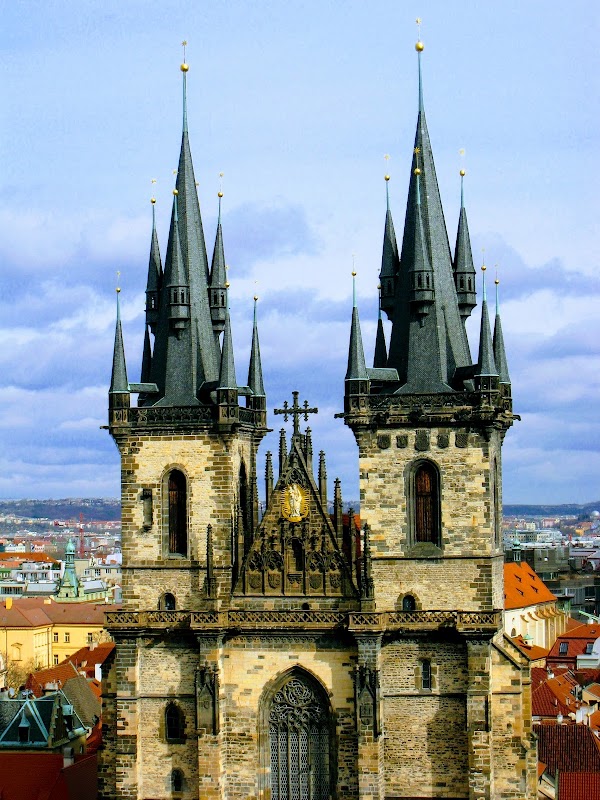
Photo: VitVit · CC BY-SA 4.0 · Wikimedia Commons
Church of St. James the Greater is a church. It is in Prague, Czechia. Saint James the Greater was one of the twelve apostles. The free Lokali audio guide runs 7 minutes.
✓ Published October 2026 · how we write these guides
Visitor facts
| Lokali audio guide | 7 min · free |
|---|---|
| Type | Church |
| Location | Prague, Czechia |
| Coordinates | 50.0884, 14.4246 |
| Languages | 50+, in the Lokali app |
The story
Before you look up, listen. Old town churches hold a particular kind of quiet. The noise of the street drops away behind the door, and your footsteps on the floor sound louder than they should. The air is a little cooler here. It often carries a faint trace of candle wax and old stone. Give your eyes a moment to adjust to the softer light, and let us begin with the name above the door.
This church is dedicated to Saint James the Greater. He was one of the twelve apostles, the inner circle of followers around Jesus. The Gospels describe him as a fisherman, the son of a man named Zebedee. He worked the Sea of Galilee alongside his brother John. Together with Peter, the two brothers appear again and again at the key moments of the Gospel stories, which made James one of the most important figures of the early Church.
So why "the Greater"? The title is not a ranking of holiness. It separates him from a second apostle, also called James, who is known as James the Less. Nobody is entirely sure where the labels came from. One explanation is age, with the Greater being the elder. Another is height. A third suggests he was simply called to follow Jesus first. Whatever the reason, the name has stayed with him for close to two thousand years.
James also holds a sombre distinction. The Acts of the Apostles, a book of the New Testament, records that King Herod Agrippa had him put to death with the sword. That makes him the first of the twelve apostles whose martyrdom is recorded in the Bible. This is why you will sometimes see him shown holding a sword. It is not a weapon of war in his hands. It is a reminder of how he died.
What happened next moves from scripture into tradition. According to a much-loved medieval story, his followers carried his body by boat to the far northwest of Spain. Centuries later, legend says, a hermit saw a light in a field and found the apostle's tomb. Historians treat this account with caution. But the belief was powerful enough to create one of the great pilgrim routes of Europe — the Camino de Santiago, the Way of Saint James, which ends in the city of Santiago de Compostela.
That pilgrimage explains a detail worth searching for right here. The emblem of Saint James is the scallop shell. Medieval pilgrims to Compostela wore shells on their hats and cloaks as a badge of the journey. Over time, the shell became the saint's own symbol. Look carefully at the carvings, the paintings, the metalwork, and even the floor. In many churches named after him, a scallop shell appears somewhere quietly, waiting for someone patient enough to notice.
You may also find James dressed as a pilgrim himself. This is one of the surprises of his imagery. An apostle who lived in the first century is often shown in the clothing of a medieval traveller. He wears a wide-brimmed hat and a heavy cloak. He holds a tall walking staff, sometimes with a small water gourd tied to it. In other words, artists painted the saint to look like the people who walked to visit him.
Now take a slow look around the building itself. Churches in old town centres were rarely built in a single campaign. They grew, burned, were repaired, and were redecorated as tastes and fortunes changed. Look for places where the stone or brick changes colour or texture. Look for windows of different shapes, or a doorway that seems older than the wall around it. These small mismatches often show where one generation of builders stopped and the next one began.
Turn toward the main altar, the focal point at the far end. In most churches, this is where the richest decoration gathers. The eye is led forward by the line of the nave — the long central space where the congregation stands or sits. Notice how the light falls here. Builders often placed windows to brighten the altar more than the rest of the interior, so the most important part of the church also became the most visible.
If the church is open for prayer, you are walking through a working place of worship, not only a monument. Local people may come in to light a candle, sit for a few minutes, or attend a service. The feast day of Saint James falls on the twenty-fifth of July. In many communities that carry his name, it remains a day of special services, and sometimes of processions through the surrounding streets.
Think, too, about the pilgrims who came before you. Across Europe, many churches of Saint James stood along roads that travellers followed toward Compostela. Some offered shelter, blessing, or simply a place to rest tired feet. Whether or not this particular church sat on such a route, its name connects it to that long tradition of walking. Every visitor who stops here, map in hand, belongs in a small way to the same story.
Before you leave, find a quiet spot near the back and simply sit for a minute. Let your eyes travel upward from the floor to the highest point of the ceiling. Notice the sounds — a door closing, a coin dropping into a box, a whispered conversation that carries further than the speaker intended. Stone interiors hold sound in a way modern buildings rarely do, and that echo is part of the experience.
When you step back outside, pause on the threshold. Turn around once more and look at the entrance from the street. Notice how the church sits among the buildings around it — older houses, narrow lanes, the shopfronts and cafés of the old town. For centuries, this building was a fixed point in the life of the neighbourhood. Its bells marked time. Its doors opened for weddings, funerals, and ordinary mornings.
As you walk on, keep an eye out for one last thing. Somewhere in these streets, you may spot another scallop shell, set into a pavement, a wall, or a signpost. It is a small sign, easy to miss. But it points the same way the pilgrims once walked — onward, one step at a time.
Key facts
What to look for
Practical tips
Common questions
Is there a free audio guide to Church of St. James the Greater?
Yes — the Lokali app narrates Church of St. James the Greater free of charge in 50+ languages. The guide runs about 7 minutes, covers the history, what to look for on site and practical tips, and works offline once downloaded.
Where is Church of St. James the Greater?
Church of St. James the Greater is in Prague, Czechia, at 50.0884, 14.4246. Tap the map link on this page for directions from where you are.
What is Church of St. James the Greater known for?
Saint James the Greater was one of the twelve apostles. He was a fisherman and brother of the apostle John.
What should you look for at Church of St. James the Greater?
Scallop shells carved, painted, or set into the floor. Saint James shown with pilgrim hat, staff, and gourd. A sword in his hand marking his martyrdom.
What should you know before visiting Church of St. James the Greater?
Dress modestly with covered shoulders when entering the church. Keep your voice low if a service is underway.
On the map
Opens directions to Church of St. James the Greater from your location.
More to see in Prague


Hear Church of St. James the Greater in your language
The full story, narrated, in 50+ languages. Download it before you go and it plays offline, at your own pace, with no ticket and no tour group.