
Cave of El Castillo
43.2923° N · 3.9655° W · Archaeological Site
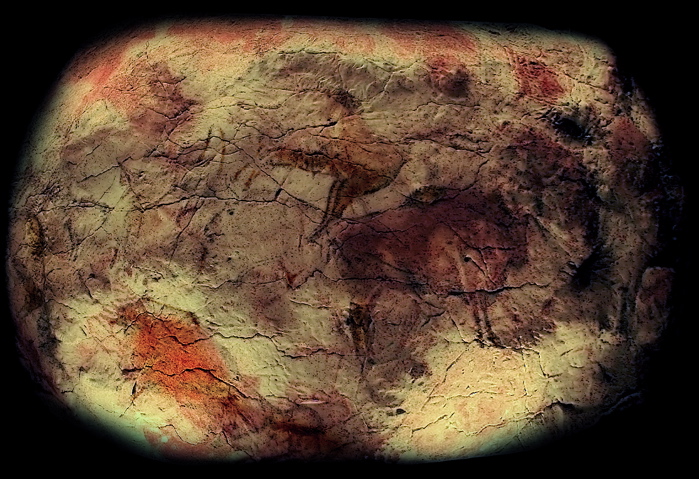
Photo: Gabinete de Prensa del Gobierno de Cantabria · CC BY 3.0 es · Wikimedia Commons
Cave of El Castillo is a cave with prehistoric art. It is near Puente Viesgo, Spain. Cave discovered in 1903 by Hermilio Alcalde del Río. The free Lokali audio guide runs 6 minutes.
✓ Published October 2026 · how we write these guides
Visitor facts
| Lokali audio guide | 6 min · free |
|---|---|
| Type | Archaeological Site |
| Location | Puente Viesgo, Spain |
| Coordinates | 43.2923, -3.9655 |
| Official website | cuevas.culturadecantabria.com |
| Languages | 50+, in the Lokali app |
The story
The air changes first. A few steps past the entrance, the warmth of the Cantabrian hillside falls away. The air turns cool and damp, and it smells of wet stone and old earth. The path is narrow and the light is low. Somewhere ahead, water drips slowly onto rock. You are walking into the side of a mountain, and you are following people who came here many thousands of years before you.
This is the Cave of El Castillo, inside Monte Castillo, a cone-shaped limestone hill above the village of Puente Viesgo. Below you, the river Pas runs through a green valley toward the Bay of Biscay. For the people of the Ice Age, this hill was a landmark. It rises clearly from the valley floor and can be seen from far away. It is easy to imagine hunters using it to find their way back to shelter.
The cave was discovered by scientists in 1903. The man who found it was Hermilio Alcalde del Río, a local researcher from Cantabria. At that time, the idea that prehistoric people made art was still new and still debated. Only a few years earlier, many experts had refused to believe that the paintings at nearby Altamira were genuine. Discoveries like El Castillo helped to change their minds.
Soon after the discovery, serious excavation began at the cave entrance. Much of the early work was led by the German priest and prehistorian Hugo Obermaier. His team worked with support from Prince Albert the First of Monaco, who funded research into human origins. They dug down through layer after layer of soil. What they found was one of the longest records of human occupation in Western Europe.
Here is the first surprise. The entrance deposits do not belong to one group of people. They hold tools and bones from many different periods, stacked on top of each other like pages in a book. The deepest layers reach back to Neanderthal times. Later layers belong to our own species, Homo sapiens. People returned to this same doorway in the rock again and again, across an enormous stretch of time.
Now look at the walls as your guide lights them. El Castillo is famous for its hand stencils. To make one, a person placed a hand against the rock. Then they blew red pigment around it, probably through a hollow bone or a reed, or straight from the mouth. When the hand moved away, its outline stayed on the stone. One section of the cave is known as the Panel of Hands, because so many of these outlines appear there.
Stand still for a moment and look closely at one of them. It is a real human hand, at real size. Some stencils seem small, and researchers have discussed whether some were made by women or by young people. The answer is not certain. But the feeling is very direct. Across tens of thousands of years, someone stood exactly where you are standing and pressed a palm against this wall.
The second surprise is about age. Among the paintings are rows of simple red dots and disks. In 2012, a team of scientists published new dates for the art in several Spanish caves. They measured the thin crusts of mineral that had formed on top of the paint. One red disk here was dated to at least forty thousand years ago. At the time, this made it among the oldest known cave art in Europe.
That date raised a difficult question. Forty thousand years ago is close to the time when modern humans first arrived in this part of Europe. Neanderthals were still living in the region. So who made the red disk? Some researchers have suggested that Neanderthals could be the artists. Others think early modern humans are more likely. The debate is still open, and the dot on this wall sits at the centre of it.
The cave holds animals too. As you move deeper, look for outlines of bison, horses, and deer. Some are painted in red or black. Others are engraved, scratched lightly into the rock. Watch how certain figures follow the natural bumps and curves of the wall. A bulge in the stone can become the shoulder of a bison. The artists did not work on a flat surface. They used the shape of the cave itself.
El Castillo is not alone. The same hill holds other decorated caves, including La Pasiega, Las Monedas, and Las Chimeneas. Together they form one of the richest clusters of Ice Age art in Spain. In 2008, El Castillo became part of a UNESCO World Heritage listing for the Palaeolithic cave art of northern Spain. That listing groups it with Altamira and many other caves across this coastal region.
Because the art is so fragile, visits are carefully controlled. Groups are small and always guided. The lighting is kept low, and the temperature and humidity inside are monitored. Even the warmth of human breath can affect the walls over time. So the rules you follow here — staying on the path, not touching the rock — are part of how these images have survived. Every visitor helps protect them for the next one.
When you step back outside, give your eyes a moment to adjust. Notice the brightness, the green slopes, the sound of the river below. Look down at the valley of the Pas and imagine it colder, with herds moving across open ground. Then look at your own hand. It is the same shape as the outlines in the dark behind you. That small likeness is perhaps the quietest thing this hill has to offer.
Key facts
What to look for
Practical tips
Common questions
Is there a free audio guide to Cave of El Castillo?
Yes — the Lokali app narrates Cave of El Castillo free of charge in 50+ languages. The guide runs about 6 minutes, covers the history, what to look for on site and practical tips, and works offline once downloaded.
Where is Cave of El Castillo?
Cave of El Castillo is near Puente Viesgo, Spain, at 43.2923, -3.9655. Tap the map link on this page for directions from where you are.
What is Cave of El Castillo known for?
Cave discovered in 1903 by Hermilio Alcalde del Río. One red disk dated to at least forty thousand years.
What should you look for at Cave of El Castillo?
Red hand stencils clustered on the Panel of Hands. Rows of red dots and disks along the walls. Animal figures shaped around natural bulges in the rock.
What should you know before visiting Cave of El Castillo?
Book your guided visit well ahead; group sizes are small. Bring a light jacket, since the cave stays cool and damp.
On the map
Opens directions to Cave of El Castillo from your location.
More to see near Cave of El Castillo



Hear Cave of El Castillo in your language
The full story, narrated, in 50+ languages. Download it before you go and it plays offline, at your own pace, with no ticket and no tour group.