
Cave of La Pasiega
43.2889° N · 3.9658° W · Archaeological Site
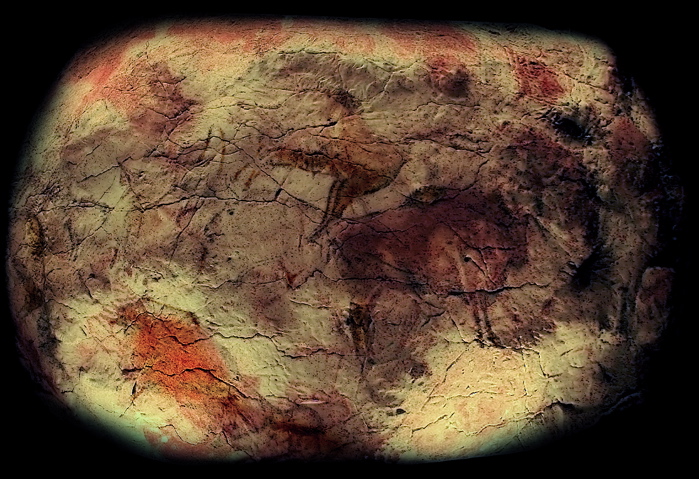
Photo: Codigowiki · CC BY-SA 3.0 es · Wikimedia Commons
Cave of La Pasiega is a cultural property in Puente Viesgo, Spain. Scientifically explored in 1911 by Hugo Obermaier's team. The free Lokali audio guide runs 6 minutes.
✓ Published October 2026 · how we write these guides
Visitor facts
| Lokali audio guide | 6 min · free |
|---|---|
| Type | Archaeological Site |
| Location | Puente Viesgo, Spain |
| Coordinates | 43.2889, -3.9658 |
| Languages | 50+, in the Lokali app |
The story
Cool air meets your face the moment the path turns toward the hillside. It smells of wet limestone and old earth. Behind you, the green valley of the River Pas falls away toward Puente Viesgo. Ahead, a narrow mouth opens into Monte Castillo, a cone-shaped hill that has drawn people for tens of thousands of years. Listen for a moment. Birds, the wind in the oaks, perhaps a car on the road below. Inside, those sounds will disappear completely.
This is the Cave of La Pasiega. It takes its name from the Pas valley around you, and from the people of this valley, who are known in Spain as pasiegos. The cave is one of several decorated caves inside this one hill. Its neighbours include El Castillo, Las Monedas and Las Chimeneas. Together they form one of the densest clusters of Ice Age art in Europe. You are standing at the edge of a very old gallery.
The cave entered modern history in 1911. Archaeologists were already digging at the nearby cave of El Castillo. During that work, a team led by the German prehistorian Hugo Obermaier, with his colleague Paul Wernert, learned of this second opening and went inside. The French priest and scholar Henri Breuil soon joined the study. He spent long hours copying the images by hand, by lamplight. His drawings are still used by researchers today.
Underground, La Pasiega is not one room. It is a maze of narrow, twisting passages. Researchers divide it into sections, usually labelled with the letters A, B, C and D. Some passages are tight. Others widen into small chambers. The floor is uneven, and the ceiling dips and rises. Your guide will lead you through a protected route, and the group stays small. This is not just a safety rule. Human breath and body heat change the air, and that air protects the paintings.
So what will you see on the walls? Mostly animals. Red deer appear again and again, especially hinds, the females. There are horses, bison, aurochs — the wild cattle that once roamed Europe — and ibex, a mountain goat with long curved horns. Many figures are painted in red ochre, a pigment made from iron-rich earth. Others are drawn in black, often with charcoal. Some are not painted at all. They are engraved, scratched into the stone with a sharp tool.
Look closely at how the artists used the rock itself. A bulge in the wall can become the belly of a bison. A crack can become the line of a back. In the moving light of a lamp, these shapes seem to shift. Many visitors do not expect this. The images were not made for a flat museum wall. They were made for a curved, living surface, seen by a flickering flame.
Alongside the animals, there are signs. These are the marks that puzzle researchers most. Some look like dots in rows. Others look like rectangles divided into boxes, or like ladders. Experts call the ladder shapes scalariform signs, from the Latin word for a ladder. Nobody knows what they meant. Were they tribal marks, maps, counting systems, or something sacred? Honest science says simply... we do not know.
One group of these signs in La Pasiega has an unusual nickname. Early researchers called it the inscription. It is a cluster of red marks that, to some eyes, looks almost like a written line. It is not writing in our sense. But it shows that the people here repeated certain symbols with care. They seem to have shared a visual language across many caves in this region.
Now comes the surprise most visitors never hear. In 2018, an international team published a study in the journal Science. They dated thin mineral crusts that had formed over some red marks, including a ladder-shaped sign here at La Pasiega. They used a method based on the slow decay of uranium in those crusts. Their results suggested the paint was more than 64,000 years old. That is older than the arrival of modern humans in Europe.
If that date is right, the artist was not one of our direct ancestors. It was a Neanderthal. For a long time, many people pictured Neanderthals as simple and brutish. This finding challenged that picture. However, other scientists have questioned the dating method and the results. The debate is still open. So as you stand in front of these red marks, you are looking at a real scientific argument, not a settled fact.
Whoever made the oldest marks, the cave was used over a very long period. Different images likely belong to different ages, separated by thousands of years. This is a second thing many visitors miss. A single wall can hold layers of time. A horse painted by one generation may sit beside a sign made by people who lived long before or long after. The wall is less like a painting and more like a notebook.
In 2008, La Pasiega and its neighbours on Monte Castillo were added to a UNESCO World Heritage listing. The listing covers the Cave of Altamira and a group of decorated caves across northern Spain. That status brings strict protection. Visitor numbers are limited, and photography inside is not allowed. The rules can feel tight, but they are the reason these images still exist for us to see.
When you step back out into the daylight, pause before you walk down the hill. Notice how bright the green looks after the darkness. Feel the warmer air on your skin. Look across the Pas valley at the same ridges the cave artists would have known. The hill behind you looks ordinary from outside. Inside it, red deer and silent ladders still wait in the dark, as they have for an almost unimaginable length of time.
Key facts
What to look for
Practical tips
Common questions
Is there a free audio guide to Cave of La Pasiega?
Yes — the Lokali app narrates Cave of La Pasiega free of charge in 50+ languages. The guide runs about 6 minutes, covers the history, what to look for on site and practical tips, and works offline once downloaded.
Where is Cave of La Pasiega?
Cave of La Pasiega is in Puente Viesgo, Spain, at 43.2889, -3.9658. Tap the map link on this page for directions from where you are.
What is Cave of La Pasiega known for?
Scientifically explored in 1911 by Hugo Obermaier's team. Henri Breuil made early hand copies of the images.
What should you look for at Cave of La Pasiega?
Red ochre deer hinds repeated along the passage walls. Ladder-shaped red signs that researchers call scalariform. Rock bulges used as the bodies of animals.
What should you know before visiting Cave of La Pasiega?
Book your guided visit ahead because group sizes are limited. Wear closed shoes with grip for the uneven cave floor.
On the map
Opens directions to Cave of La Pasiega from your location.
More to see near Cave of La Pasiega



Hear Cave of La Pasiega in your language
The full story, narrated, in 50+ languages. Download it before you go and it plays offline, at your own pace, with no ticket and no tour group.