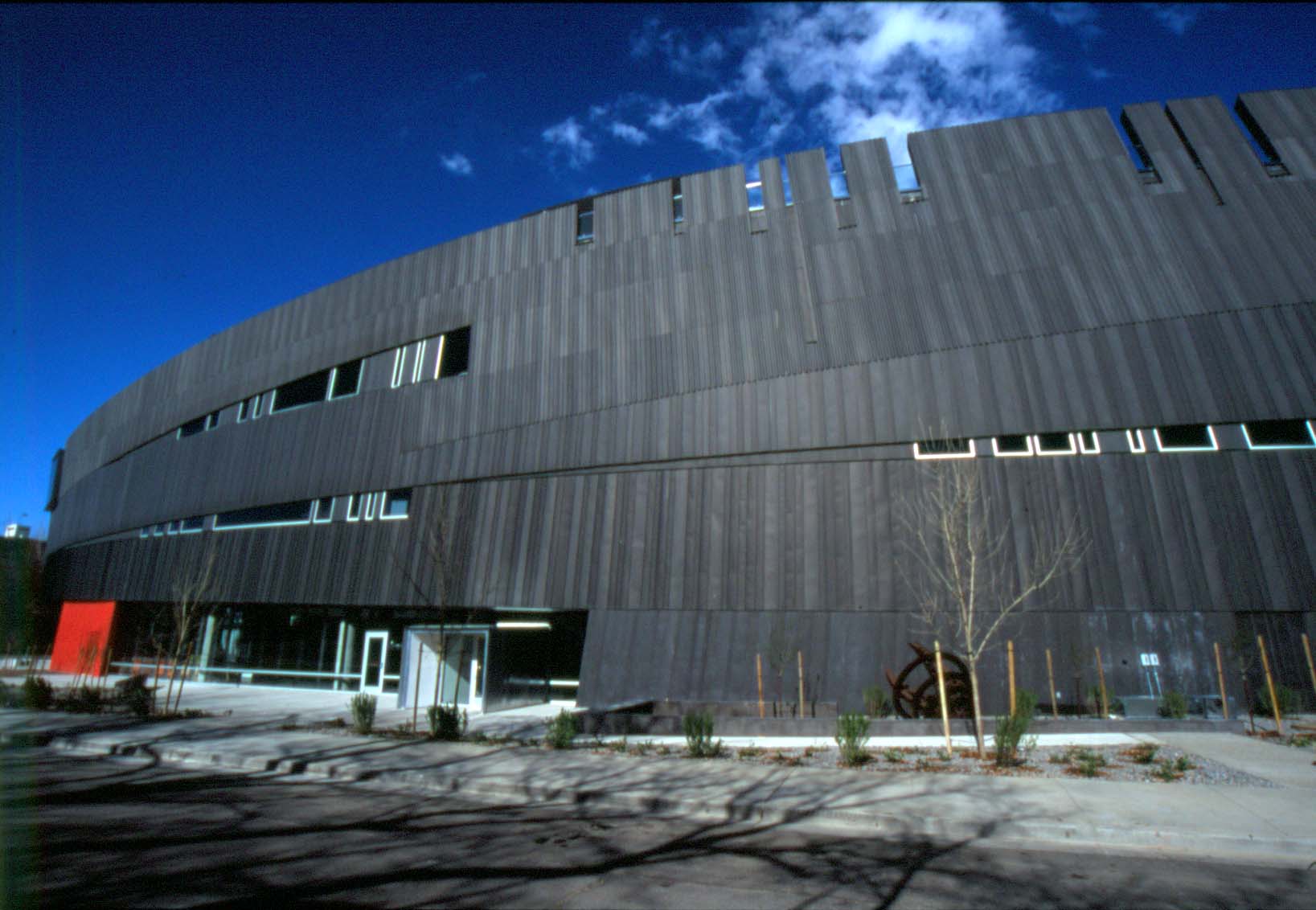
Nevada Museum of Art is a museum in Reno, United States. Contemporary art museum with rotating exhibitions, a permanent collection focused on Western and environmental art, and a striking modern building. Most visitors spend 1–2 hours here. The free Lokali audio guide runs 6 minutes.
✓ Verified August 2026 · how we write these guides
Visitor facts
| Time needed | 1–2 hours |
|---|---|
| Lokali audio guide | 6 min · free |
| Type | Museum |
| Best for | Editors' pick |
| Location | Reno, United States |
| Coordinates | 39.5607, -119.8384 |
| Languages | 45, in the Lokali app |
The story
Stand on West Liberty Street and look up. The wall in front of you is dark, almost black, and it folds and tilts like the side of a desert canyon. Run your eyes along its surface. It catches the light differently as clouds move overhead. This is the Nevada Museum of Art, and its outer skin is meant to remind you of the land beyond the city.
The building opened in 2003. The architect, Will Bruder, looked to the Black Rock Desert north of Reno for his ideas. The dark, layered facade echoes the worn rock and sharp shadows of that high desert. Before you even step inside, the architecture is already telling you a story about Nevada itself, a place of wide, open, sun-baked ground.
The museum is older than this building. It began in 1931 as a small collection kept by local people who wanted art in their growing town. Over the decades it moved and grew. Today it is the only art museum in Nevada accredited by the American Alliance of Museums. That fact matters. It means this place meets the same standards as far larger museums across the country.
Step through the doors. The light changes. After the dark exterior, the inside feels open and pale. A sculptural staircase rises through the center of the building, connecting four floors. Take it slowly. The stair is designed as a kind of journey, pulling you upward past the galleries one level at a time.
The collections here change often, so what hangs on the walls during your visit may differ from last month. You might find paintings, photographs, sculpture, or large installations. Some visits you will catch a major touring exhibition; other times the focus is on works drawn from the museum's own holdings. Rather than chase a single famous work, let yourself wander. Notice which rooms are quiet and which draw a crowd. The museum is small enough to feel personal and large enough to surprise you.
One idea sits at the heart of this place: the relationship between people and their environment. The museum runs a research center devoted to art and the environment. It gathers materials from artists who work in deserts, oceans, ice, and other wild places around the world. This is fitting for a museum in Nevada, a state shaped by its landscape more than almost any other.
As you move through the galleries, think about where you are. Reno sits between the Sierra Nevada mountains to the west and open desert to the east. The art collected here often returns to those themes, land, water, light, and the marks humans leave behind. Keep that in mind, and the building and its contents start to feel like one connected thought.
Make your way up through the upper floors. Near the top, a space opens to a wide view. You can see the rooftops of downtown Reno and, beyond them, the mountains that ring the valley. After the enclosed galleries, the open sky is a welcome shift. Stand here for a moment and let your eyes rest on the distance.
Look back at the building's surface from up close. The dark panels are not flat. They lift and overlap, throwing thin lines of shadow. The architect wanted the wall to feel alive as the sun crosses the sky. Morning light and afternoon light give the same wall two different faces. If you have time, it is worth seeing more than once in a day.
The museum also holds talks, classes, and events. On many days you will share the space with students sketching in the galleries or families moving slowly from room to room. This is a working part of the city's cultural life, not a sealed monument. The quiet here is the easy quiet of a place where people come to look and think.
Pause on one of the landings as you climb or descend. The staircase is not only a way between floors; it is a place to stop. Light reaches in from unexpected angles, and the pale walls hold it softly. People slow down here without quite knowing why. A good building does that. It tells your body when to hurry and when to rest.
When you are ready to leave, pause again at the entrance. Notice how the architecture marks the line between the busy street and the calm interior. The dark wall does more than hold up the roof. It separates two moods, the everyday world outside and the slower, attentive one within.
Art museums ask only one thing of you: a little time and attention. Here, in a dark building shaped like the desert, that attention is rewarded twice, once by the work on the walls, and once by the land the building keeps reminding you of. Step back outside, and the mountains may look a little different than they did before.
Key facts
What to look for
Practical tips
Common questions
How long do you need at Nevada Museum of Art?
Plan 1–2 hours. That is the time most visitors spend at Nevada Museum of Art. The free Lokali audio guide adds about 6 minutes of narration you can listen to as you walk, so it fits inside your visit rather than adding to it.
Is there a free audio guide to Nevada Museum of Art?
Yes — the Lokali app narrates Nevada Museum of Art free of charge in 50+ languages. It covers the history, what to look for on site and practical tips, and it works offline once downloaded.
Where is Nevada Museum of Art?
Nevada Museum of Art is in Reno, United States, at 39.5607, -119.8384. Tap the map link on this page for directions from where you are.
What should you know before visiting Nevada Museum of Art?
Allow one to two hours for the four floors.
What is Nevada Museum of Art known for?
Will Bruder designed the building, which opened in 2003.
What is the best time to visit Nevada Museum of Art?
The building itself is the art — its angular design frames views of the mountains.
On the map
Opens directions to Nevada Museum of Art from your location.
More to see in Reno


Hear Nevada Museum of Art in your language
The full story, narrated, in 50+ languages. Download it before you go and it plays offline, at your own pace, with no ticket and no tour group.