Pioneer Center for the Performing Arts
39.5343° N · 119.8158° W · Theater
Pioneer Center for the Performing Arts is a theater in Reno, United States. Historic 1920s theater in downtown Reno hosting Broadway shows, concerts, ballet, and local performances. Most visitors spend 2–3 hours here. The free Lokali audio guide runs 5 minutes.
✓ Verified August 2026 · how we write these guides
Visitor facts
| Time needed | 2–3 hours |
|---|---|
| Lokali audio guide | 5 min · free |
| Type | Theater |
| Best for | Editors' pick |
| Location | Reno, United States |
| Coordinates | 39.5343, -119.8158 |
| Languages | 45, in the Lokali app |
The story
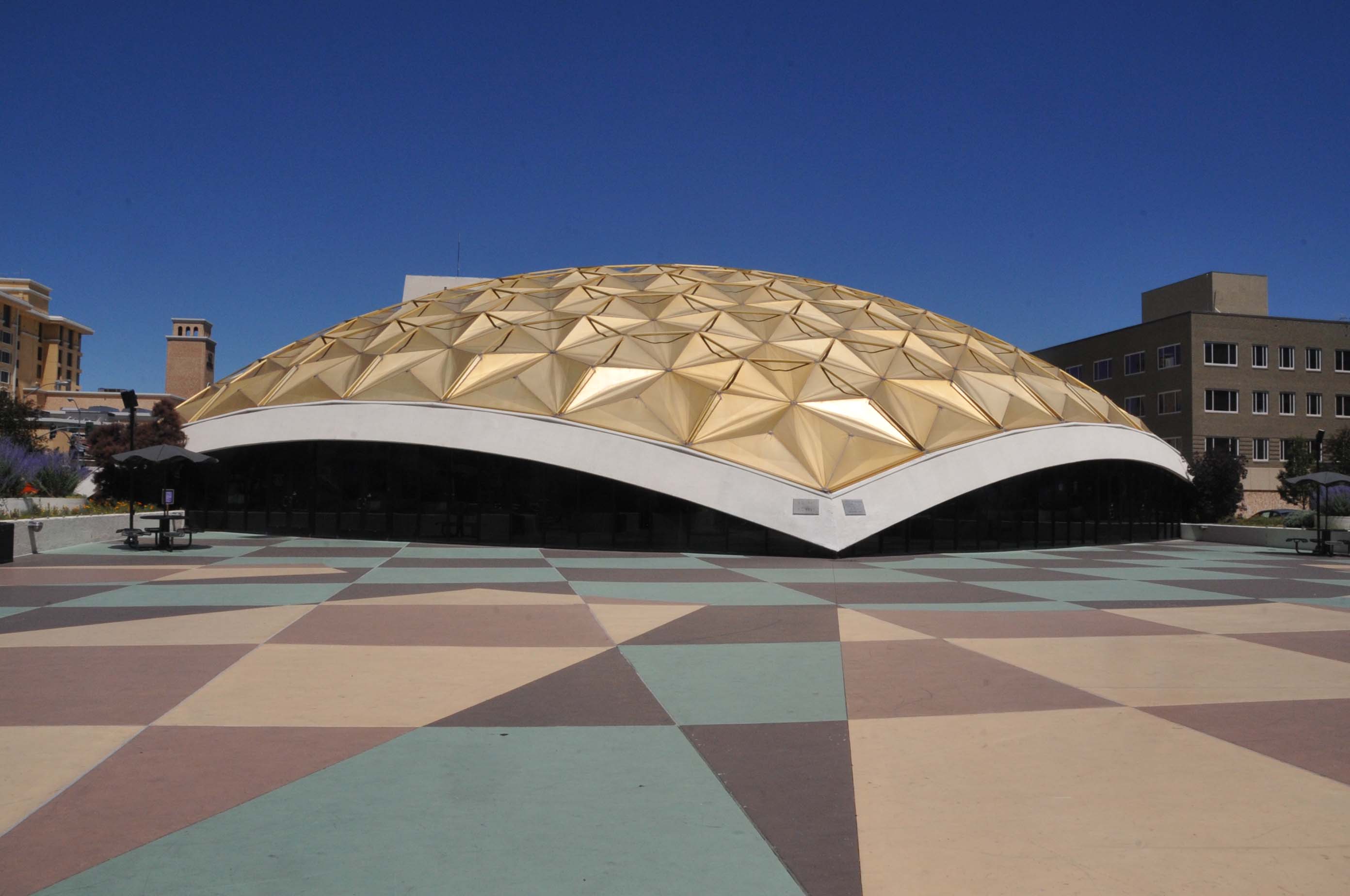
From a block away, it catches your eye, a great golden dome rising over downtown Reno, curved and gleaming above the square buildings around it. Walk toward it. The surface is made of many small panels fitted together, and the whole thing shines like a single piece of metal. This is the Pioneer Center for the Performing Arts.
The building was completed in 1967. Its golden dome was a bold choice for a city more often known for casinos and bright signs. The dome is a geodesic design, a sphere built from a web of short, straight pieces that together curve into a smooth shell. The idea was made famous by the inventor Buckminster Fuller in the middle of the twentieth century, and it spread to buildings across the country.
Stop and look at the panels. The gold skin is not one sheet but a grid of around five hundred flat shapes, each one fitted to its neighbors so the flat pieces add up to a curve. The dome stretches about 140 feet across. Step from side to side and watch the light slide over it. On a sunny day it can be seen from many points around downtown, a steady gold marker among the streets.
Locals have a fond nickname for the building. With its round gold shell sitting low over the plaza, some call it the Golden Turtle. Once you have seen it, the name is hard to forget. Look for the statue of a pioneer family in the plaza out front, the figures that gave the center its name.
Inside, the dome covers the theater. This is a working performance hall, home to touring shows, music, and dance. Walk into the auditorium when it is open and look up. The curve you admired from the street is now the ceiling above the stage and seats, sheltering everything in one wide span. The hall holds around fifteen hundred people across two levels.
The center hosts a wide range of performances. Touring productions of musicals come through on national routes. The local orchestra, the Reno Philharmonic, plays here. There is ballet and other dance. On a single season you might find a Broadway show one week and a symphony the next. Check what is playing during your visit. A live show is the truest way to experience this building.
Take your seat early if you have a ticket, and use the time to study the room. Performance halls are designed for sound. The shape of the walls, the slope of the floor, the materials on every surface, all of it is meant to carry music and voices clearly to where you sit. Notice how the space wraps around the stage to pull the audience close.
Think about the year this was finished. In 1967, building a grand gold-domed arts center was a statement. It said that Reno was more than its casinos, that it wanted a serious home for music, theater, and dance. For the people who pushed to build it, the dome was a kind of promise about the city's cultural life.
If there is no show during your visit, the building is still worth seeing from the outside. Walk a full circle around it if you can. The dome looks different from each side, sometimes framed by other buildings, sometimes standing almost alone against the sky. It is one of the most recognizable shapes in the city.
Geodesic domes have a strange quality. They are built entirely from straight lines, yet the eye reads them as a smooth ball. The longer you look, the more you can see both at once, the grid of flat panels and the single curved whole. It is a small lesson in how many simple pieces can make one large, graceful form.
Come back after dark if you can. At night the dome is often lit, and the gold turns warm against the black sky. From across the street it glows like a lamp set down in the middle of the city. The daytime shine is sharp and metallic; the nighttime glow is softer, almost gentle. The same shape gives you two different moods, hours apart.
A performance hall is a gathering place. On show nights, people arrive dressed for the occasion, meet friends in the lobby, and file in together. The shared experience of watching a live performance in a darkened room is very old and very human. This gold dome has held thousands of those evenings.
Step back outside after the show, or after your look around, and find the dome one more time against the sky. It has watched over downtown Reno for decades, a curve of gold above the straight lines of the streets, a reminder that a city makes room not only for business, but for music and light.
Key facts
What to look for
Practical tips
Common questions
How long do you need at Pioneer Center for the Performing Arts?
Plan 2–3 hours. That is the time most visitors spend at Pioneer Center for the Performing Arts. The free Lokali audio guide adds about 5 minutes of narration you can listen to as you walk, so it fits inside your visit rather than adding to it.
Is there a free audio guide to Pioneer Center for the Performing Arts?
Yes — the Lokali app narrates Pioneer Center for the Performing Arts free of charge in 50+ languages. It covers the history, what to look for on site and practical tips, and it works offline once downloaded.
Where is Pioneer Center for the Performing Arts?
Pioneer Center for the Performing Arts is in Reno, United States, at 39.5343, -119.8158. Tap the map link on this page for directions from where you are.
What should you know before visiting Pioneer Center for the Performing Arts?
Check the season schedule and book a live show.
What is Pioneer Center for the Performing Arts known for?
The gold-domed building was completed in 1967.
What is the best time to visit Pioneer Center for the Performing Arts?
Even if you don't catch a show, the lobby and balcony are worth seeing — ask an usher if you can peek at the main hall during off-hours.
On the map
Opens directions to Pioneer Center for the Performing Arts from your location.
More to see in Reno


Hear Pioneer Center for the Performing Arts in your language
The full story, narrated, in 50+ languages. Download it before you go and it plays offline, at your own pace, with no ticket and no tour group.