
Tijuca National Park
22.9594° S · 43.2778° W · National Park
Photo: Halley Pacheco de Oliveira · CC BY-SA 3.0 · Wikimedia Commons
Tijuca National Park is a Brazilian national park. It is in Rio de Janeiro, Brazil. Large-scale replanting began in the 1860s under Pedro the Second. The free Lokali audio guide runs 6 minutes.
✓ Published October 2026 · how we write these guides
Visitor facts
| Lokali audio guide | 6 min · free |
|---|---|
| Type | National Park |
| Location | Rio de Janeiro, Brazil |
| Coordinates | -22.9594, -43.2778 |
| Official website | icmbio.gov.br |
| Languages | 50+, in the Lokali app |
The story
Listen first. Under the canopy, the city goes quiet. Traffic fades into a low hum, and in its place you hear water running over stone, the rattle of insects, and somewhere above, a sharp whistle from a bird you probably cannot see. The air is cooler here, and heavier. It smells of wet leaves, moss, and soil that never quite dries out.
You are standing in Tijuca National Park, one of the largest forests inside any city on Earth. It covers the steep granite mountains that rise out of the middle of Rio de Janeiro. On one side, the beaches of the south zone. On the other, the dense neighbourhoods of the north. And in between, this green wall of trees, so thick that from the air it looks like it has always been here.
Here is the first surprise. Much of this forest was planted by hand. In the early nineteenth century, these slopes were cleared for coffee plantations and for charcoal. The trees came down, the soil washed away, and the streams that fed Rio began to fail. A city that depended on mountain water was suddenly running dry. The forest you see now is largely the answer to that crisis.
In the 1860s, under Emperor Pedro the Second, the imperial government began buying up the old farms and replanting them. The work was led by Major Manuel Gomes Archer. Historical accounts credit a very small crew, mostly enslaved workers, with planting tens of thousands of seedlings over the following years. Their names are mostly lost. But their labour is all around you, in every tall trunk on these slopes.
The replanting mixed native species of the Atlantic Forest with some trees brought from elsewhere. The Atlantic Forest is a separate rainforest from the Amazon. It once ran along much of Brazil's coast, and today only a small fraction of it survives. Over more than a century, nature filled in the gaps. Seeds arrived on the wind and in the droppings of birds and bats. Slowly, a planted woodland became something close to wild.
The park itself was created in 1961, and a few years later it took the name Tijuca. In 2012, the wider Rio landscape, including these mountains, was added to the UNESCO World Heritage list. The listing celebrates the meeting of city, mountain, and sea. That meeting is easy to feel here. Through a gap in the leaves, you can sometimes glimpse apartment towers and the ocean, almost close enough to touch.
Now look up into the branches. Small, quick shapes move along them. These are marmosets, tiny monkeys with tufted ears, and they are bold around people. You may also spot capuchin monkeys, coatis with long striped tails, and the flash of a toucan's bill. Please do not feed them. Human food makes them sick, and it teaches them to grab bags.
Here is the second surprise. Some animals here were brought back on purpose. Over centuries, hunting and isolation had stripped the forest of many species. In recent years, researchers have reintroduced animals such as the agouti, a rabbit-sized rodent that buries seeds. That habit matters. Many large forest trees depend on animals like this to plant the next generation. Rebuilding a forest, it turns out, means rebuilding its gardeners too.
The park is also full of small human landmarks from the imperial era. Near the main forest roads, a waterfall called Cascatinha Taunay drops over a smooth rock face. It is named after the Taunay family, French artists who settled here in the nineteenth century. Farther along, the small Mayrink Chapel sits among the trees. It once held painted panels by the Brazilian modernist Candido Portinari. The originals are now kept elsewhere, and copies hang in their place.
Then there are the viewpoints. Vista Chinesa is a pavilion built in an Asian style, with curved roofs and a wide view over the lagoon and the sea. The Emperor's Table, or Mesa do Imperador, is a stone table where, according to tradition, the imperial family stopped for picnics. Whether or not that tale is exact, the view explains why anyone would choose this spot to eat.
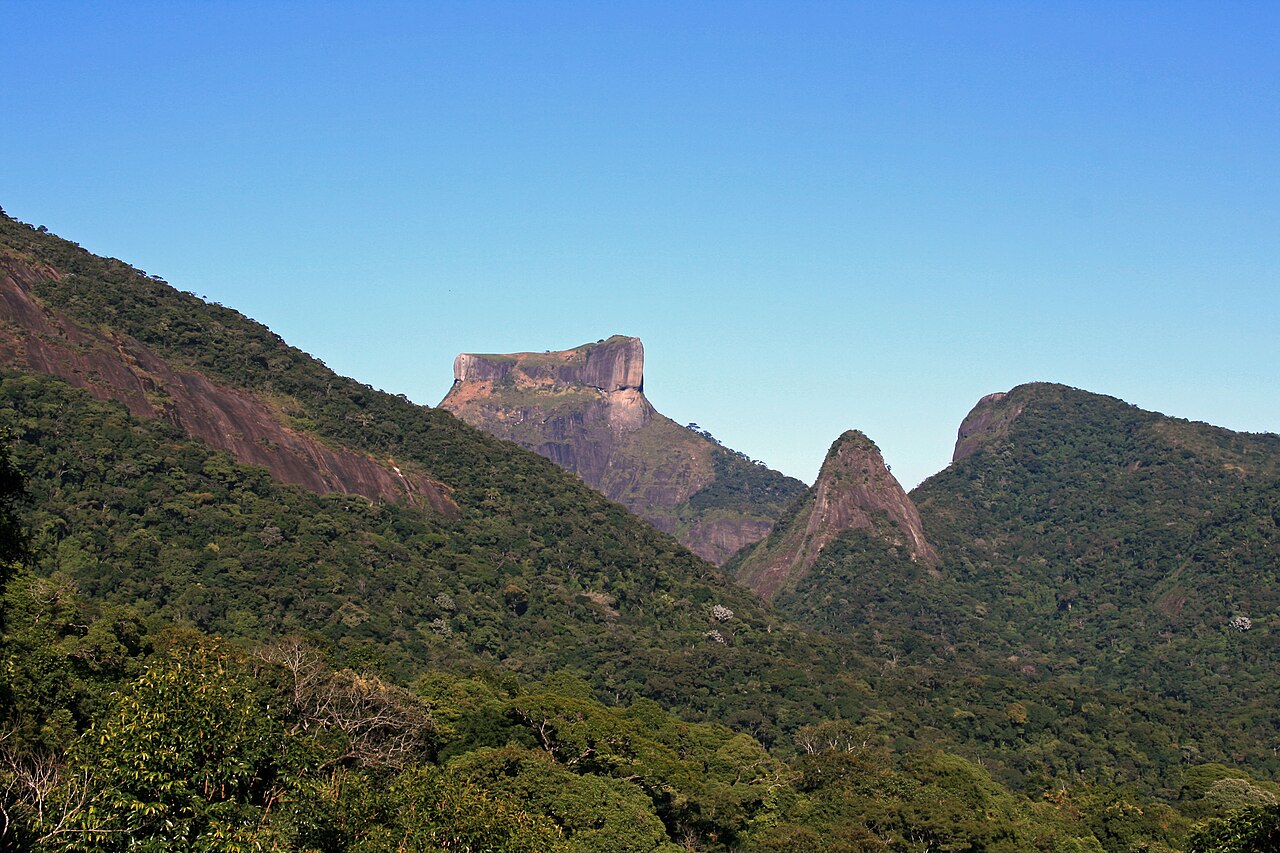
The park also takes in some of Rio's most famous peaks. Corcovado, the mountain topped by the statue of Christ the Redeemer, lies within its boundaries. So does Pedra da Gavea, a huge granite block above the sea. Tijuca Peak, the park's highest point, rises just over a thousand metres. The trail to the top ends with steps cut into the rock. From there, on a clear day, the whole city lies below you like a map.
For many people in Rio, this forest is not a tourist sight. It is a weekend habit. Runners climb the winding roads before the heat arrives. Families carry cool boxes to the waterfalls. Hang gliders launch from Pedra Bonita and drift down towards the beach. On rainy days, the trails turn slick and red with mud, and the streams grow loud. The forest changes its mood quickly, so it pays to stay alert.
Before you move on, take a moment. Put a hand on the bark of the nearest tree. It may be older than anyone you know, and it may have been planted by a person whose name history forgot. Breathe in the damp air once more. As you walk back towards the city, notice the exact moment the sound of water fades and the traffic returns. That line is where the forest ends... for now.
Key facts
What to look for
Practical tips
Common questions
Is there a free audio guide to Tijuca National Park?
Yes — the Lokali app narrates Tijuca National Park free of charge in 50+ languages. The guide runs about 6 minutes, covers the history, what to look for on site and practical tips, and works offline once downloaded.
Where is Tijuca National Park?
Tijuca National Park is in Rio de Janeiro, Brazil, at -22.9594, -43.2778. Tap the map link on this page for directions from where you are.
What is Tijuca National Park known for?
Large-scale replanting began in the 1860s under Pedro the Second. Coffee farms had stripped these slopes, threatening Rio's water supply.
What should you look for at Tijuca National Park?
Marmosets with tufted white ears moving through low branches. The smooth rock face of the Cascatinha Taunay waterfall. Curved Asian-style roofs on the Vista Chinesa pavilion.
What should you know before visiting Tijuca National Park?
Start early to avoid midday heat and afternoon storms. Wear shoes with good grip; trails turn slippery after rain.
When is the best time to visit Tijuca National Park?
Start early to avoid midday heat and afternoon storms.
On the map
Opens directions to Tijuca National Park from your location.
More to see in Rio de Janeiro


Hear Tijuca National Park in your language
The full story, narrated, in 50+ languages. Download it before you go and it plays offline, at your own pace, with no ticket and no tour group.