
Arch of Constantine
41.8898° N · 12.4906° E · Archaeological Site
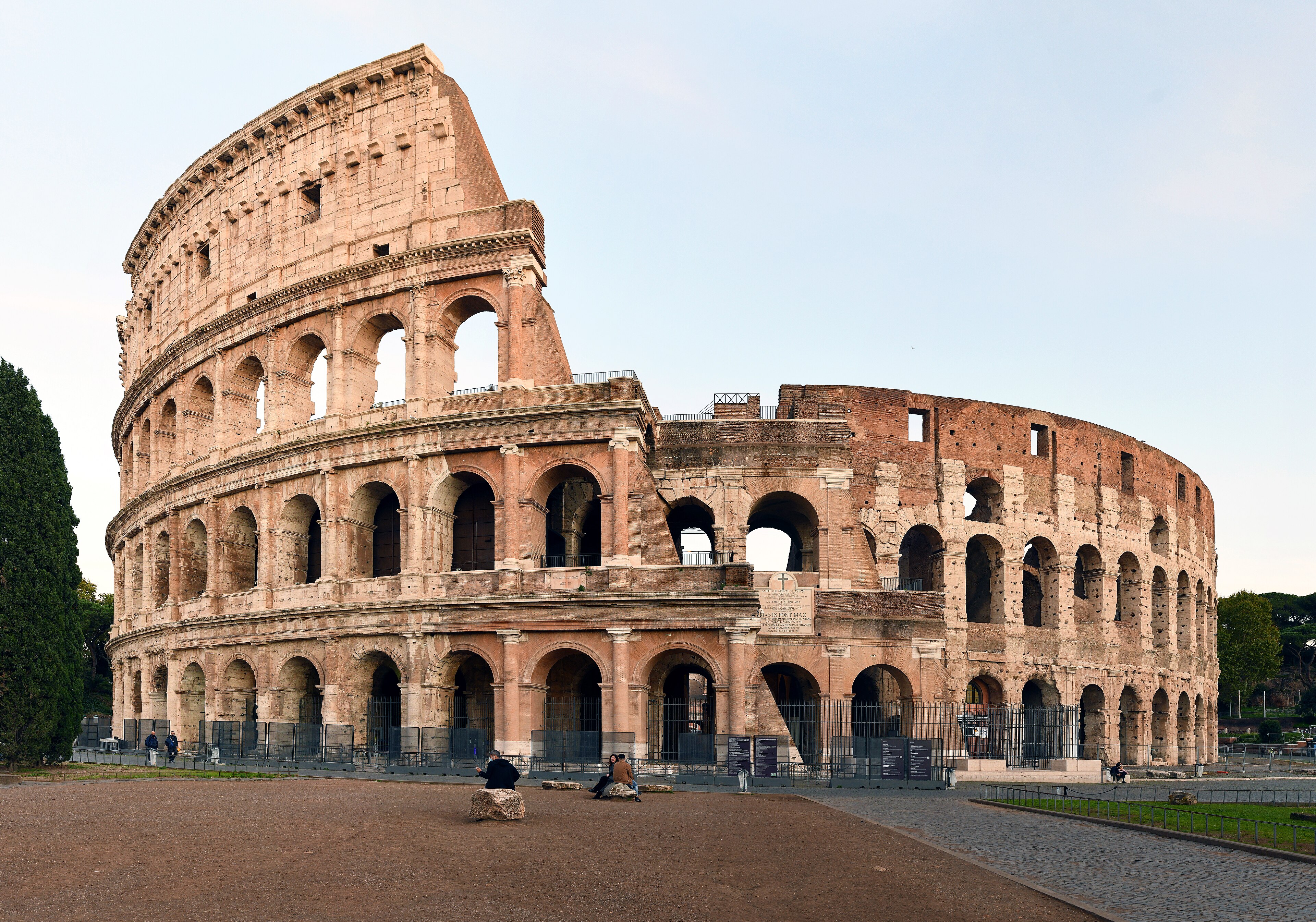
Photo: NikonZ7II (Paris Orlando) · CC BY-SA 4.0 · Wikimedia Commons
Arch of Constantine is a triumphal arch in Rome. Dedicated in 315 by the Senate and People of Rome. The free Lokali audio guide runs 7 minutes.
✓ Published October 2026 · how we write these guides
Visitor facts
| Lokali audio guide | 7 min · free |
|---|---|
| Type | Archaeological Site |
| Location | Rome, Italy |
| Coordinates | 41.8898, 12.4906 |
| Official website | colosseo.beniculturali.it |
| Languages | 50+, in the Lokali app |
The story
Stand still for a moment and listen. Traffic hums along the road behind you, and scooters buzz past the Colosseum. Then your eye settles on pale marble, warm and slightly yellow in the sun, stained grey where centuries of rain have run down it. This is the Arch of Constantine. It rises between the Colosseum and the green slope of the Palatine Hill, and it has stood on this spot for well over 1,700 years.
The arch was dedicated in 315, by the Senate and People of Rome. It honours the emperor Constantine and his victory over a rival emperor, Maxentius, in 312. That battle took place at the Milvian Bridge, on the northern edge of the city. Maxentius drowned in the Tiber River during the retreat. Constantine entered Rome as its sole master in the West. Within a generation, his choices would change the religious direction of the empire.
Look at the shape first. There are three passages: a tall central opening and two smaller ones on either side. Each face carries four tall columns, and above them runs a heavy upper section called the attic. The attic is the flat block that carries the large inscription. Of the triumphal arches that survive in Rome, this is the largest. It stands more than twenty metres tall, and it feels even taller when you stand close to its base.
The location is not an accident. This stretch of ground lay on the route that Roman victory processions often followed on their way toward the Forum. Generals and emperors passed here with soldiers, captives, and wagons of treasure. A Roman watching from the roadside would have seen the arch as part of that theatre of power. It was a permanent stage set for a moment of glory.
Now comes the first surprise. Much of the sculpture on this arch is older than the arch itself. The builders took carved panels from monuments of earlier emperors and set them into the new structure. Scholars call this reused material spolia. Here it comes from the reigns of three admired rulers: Trajan, Hadrian, and Marcus Aurelius. Each had governed during the second century, a time that later Romans remembered as a golden age.
Look up at the attic. The eight large rectangular panels there come from a monument to Marcus Aurelius. They show the emperor addressing troops, receiving prisoners, and making sacrifices. Between and beside them stand tall statues of bearded men in trousers and cloaks. They are Dacians, a people from the region of present-day Romania. Trajan defeated them in hard wars, and these figures of captives first served his monuments.
Below the attic, above the side passages, you will see round carved medallions. These eight roundels date from the time of Hadrian. They show hunting scenes, a boar, a bear, a lion, and sacrifices to gods after the hunt. Look closely at the faces of the emperor in these scenes. The heads were recut so that the hunter became Constantine, or a member of his circle. The old emperor's body received a new emperor's face.
Walk to the central passage, as close as the fence allows. On the inner walls are large battle panels from a frieze made under Trajan. Roman cavalry charges, and enemies fall beneath the hooves. Here too, the emperor's head was reworked. This borrowing was more than thrift. It linked Constantine to the best emperors of the past. The message was simple: the good old days have returned, and their heir stands here.
Now find the long, narrow band of carving that runs just above the side passages. This frieze was made for this arch, in Constantine's own time. It tells his campaign as a story: the march from the north, the siege of a city, the battle at the bridge, and soldiers struggling in the river. Then the emperor speaks to the people in the Forum and hands out money. The style looks very different from the older panels.
The figures in the Constantinian frieze are short and stocky. They stand in tight rows, often facing straight out at you. The emperor sits at the centre, larger than everyone else. For a long time, critics saw this as a decline in skill. Today many historians read it differently. It shows a new way of seeing, closer to the art of the Middle Ages, where meaning matters more than natural proportion.
Read the inscription on the attic. The Latin says that Constantine won his victory, in one key phrase, by the inspiration of the divinity and the greatness of his mind. Which divinity? The text does not say. Constantine later supported Christianity, and Christian writers linked his victory to a vision of their God. Yet the arch carries traditional Roman images, including sun imagery. The wording leaves room for both pagan and Christian readers.
Here is a second surprise, from much more recent history. During the 1960 Rome Olympics, the marathon finished near this arch, in the evening. The winner was Abebe Bikila of Ethiopia. He ran the whole race barefoot. He became the first athlete from sub-Saharan Africa to win Olympic gold. Some people saw a sharp irony in that moment, because Italy had occupied Ethiopia only a generation before. An ancient monument of victory saw a very modern one.
Before you leave, look at the ground near the arch, toward the Colosseum. You may see the low round foundations of an ancient fountain called the Meta Sudans. Then walk slowly around the arch and compare its two main faces. Notice how the morning or evening light moves across the carving. The shadows deepen in the roundels, and the Dacians on top stand dark against the sky.
So take one last look. Three emperors' carvings, recut faces, and a frieze from a new age, all held together in one block of marble. Behind you, the Colosseum fills the view. Ahead, the road runs toward the Forum, as the old procession route once did. As you walk on, notice how many old stones in this city have found second lives in newer walls. This arch was one of the first to do it so openly.
Key facts
What to look for
Practical tips
Common questions
Is there a free audio guide to Arch of Constantine?
Yes — the Lokali app narrates Arch of Constantine free of charge in 50+ languages. The guide runs about 7 minutes, covers the history, what to look for on site and practical tips, and works offline once downloaded.
Where is Arch of Constantine?
Arch of Constantine is in Rome, Italy, at 41.8898, 12.4906. Tap the map link on this page for directions from where you are.
What is Arch of Constantine known for?
Dedicated in 315 by the Senate and People of Rome. Celebrates victory over Maxentius at the Milvian Bridge, 312.
What should you look for at Arch of Constantine?
Dacian prisoner statues standing along the top attic. Eight round Hadrianic hunting medallions above side passages. Recut emperor heads that look out of proportion.
What should you know before visiting Arch of Constantine?
Visit early morning for softer light and fewer crowds. Walk all the way around to compare both faces.
When is the best time to visit Arch of Constantine?
Visit early morning for softer light and fewer crowds.
On the map
Opens directions to Arch of Constantine from your location.
More to see in Rome



Hear Arch of Constantine in your language
The full story, narrated, in 50+ languages. Download it before you go and it plays offline, at your own pace, with no ticket and no tour group.