
Temple of Venus and Roma
41.8909° N · 12.4898° E · Archaeological Site
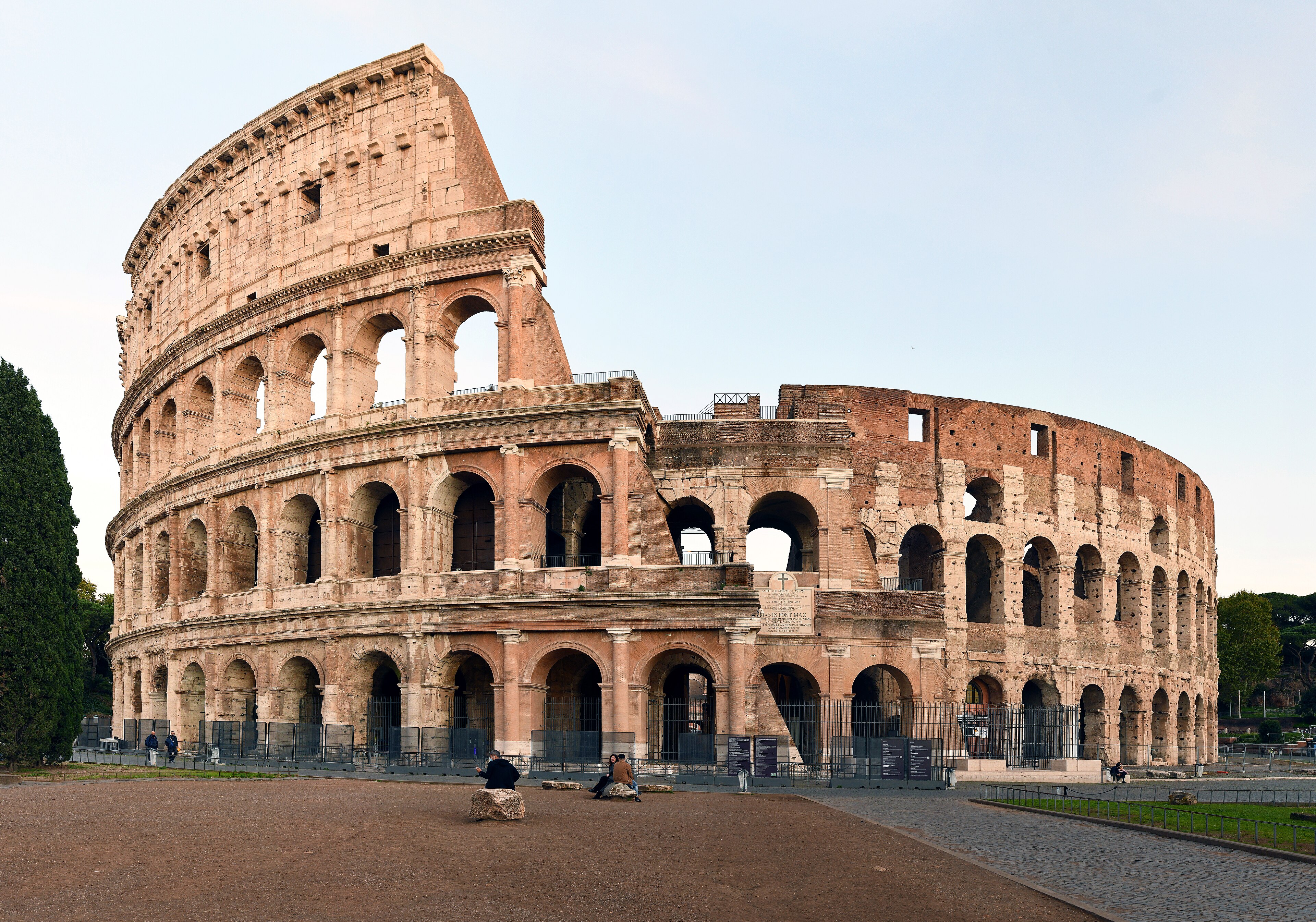
Photo: daryl_mitchell from Saskatoon, Saskatchewan, Canada · CC BY-SA 2.0 · Wikimedia Commons
Temple of Venus and Roma is a Located on the Velian Hill, between the eastern edge of the Forum Romanum and the Colosseum, in Rome, it was dedicated to the goddesses Venus Felix ("Venus the Bringer of Good Fortune") and Roma Aeterna ("Eternal Rome"). Largest temple ever built in ancient Rome. The free Lokali audio guide runs 7 minutes.
✓ Published October 2026 · how we write these guides
Visitor facts
| Lokali audio guide | 7 min · free |
|---|---|
| Type | Archaeological Site |
| Location | Rome, Italy |
| Coordinates | 41.8909, 12.4898 |
| Languages | 50+, in the Lokali app |
The story
Stand still for a moment and feel the ground under your feet. It is a raised platform of old concrete and stone, warm in the sun and scattered with broken column drums. To one side, the curved wall of the Colosseum fills the sky. To the other, the Roman Forum falls away in a jumble of brick and marble. You are standing on what was once the largest temple in ancient Rome.
This is the Temple of Venus and Roma. It sits on a low rise called the Velian Hill, right between the arena and the Forum. Today it looks like an open terrace with a few columns and a pair of curved walls. But in the second century, a visitor arriving here would have faced a forest of columns. Above them rose a huge roof that people could see from across the city.
The man behind it was not a professional architect. He was an emperor. Hadrian, who ruled in the early second century, was famous for his interest in architecture. He travelled widely and loved Greek culture. Ancient writers say he drew plans himself. This temple was his personal project, and it shows his taste. It was broad and low, ringed with columns on every side, closer to a Greek temple than a typical Roman one.
Here is the first surprise. This ground was not empty when Hadrian began. It had been the grand entrance area of Nero's Golden House, the vast palace Nero built after the great fire of Rome. In that entrance stood a giant bronze statue of Nero, known as the Colossus. To clear the site, Hadrian had the statue moved. One ancient source claims the job needed twenty-four elephants. The statue later gave its name to the arena next door... the Colosseum.
The design held a clever idea. The temple was really two temples back to back. One chamber, or cella, faced east toward the Colosseum. It held the goddess Venus, the divine mother of the Roman people. The other chamber faced west toward the Forum. It held Roma, the goddess who stood for the city itself. The two goddesses sat on thrones, back to back, under one roof, each looking out over her own part of Rome.
Many visitors miss a small piece of wordplay hidden in this pairing. In Latin, the city is Roma. Read that word backwards and you get amor, the Latin word for love. And Venus was the goddess of love. Some scholars think Hadrian enjoyed this mirror image. Nobody can prove he planned it. But standing between the two chambers, it is hard not to think of it.
There is also a darker story. The historian Cassius Dio wrote that Hadrian showed his plans to Apollodorus of Damascus, the great architect of the previous emperor, Trajan. Apollodorus was not impressed. According to the tale, he joked that the seated goddesses were too big for their rooms. If they stood up, he said, they would hit their heads. Dio claims Hadrian banished the architect and later had him killed. Many historians doubt the story. Still, it has followed this temple for nearly two thousand years.
The temple also had a strong link to the calendar. Its official foundation was tied to the twenty-first of April, the day Romans celebrated as the birthday of their city. Romans still mark that date today. So this was not only a building for two goddesses. It was a statement about Rome itself, about its origins and its future. Roma here was given the title Aeterna, meaning eternal. This is one of the places where the idea of the Eternal City took solid form.
Now look at the curved walls in front of you. These are apses, half-round niches where the cult statues once stood. They are not from Hadrian's time. In the early fourth century, a fire badly damaged the temple. The emperor Maxentius rebuilt it, and he gave the two chambers these rounded ends with vaulted ceilings. Look up into the best preserved one. You can still see the pattern of sunken square panels, called coffers, cut into the vault.
After the empire faded, the temple slowly came apart. Its bronze roof tiles were valuable metal. Tradition says a seventh-century pope took them to cover the old basilica of Saint Peter. Later, a church was built into the ruins. Its successor is the church of Santa Francesca Romana, with its tall bell tower, beside the Arch of Titus. That church and its convent swallowed part of the western chamber. This is one reason the eastern side looks so different from the western side.
Here is the second surprise. Look at the low green hedges on the platform. They are not decoration. In the 1930s, when the modern avenue to the Colosseum was cut through this area, restorers planted hedges and small trees to mark where the vanished columns once stood. Walk along them and you can trace the outline of the colonnade. Each bush stands where a column rose. It is a quiet way to rebuild a temple without adding a single stone.
The site was closed for many years for restoration and has only been open again more recently. Now you can walk across the platform and look in both directions. To the east, the Colosseum fills the view. To the west, the Forum spreads out with its arches and temple fronts. Few places in the city show you both at once. The noise of traffic and voices rises from below, but up here it feels oddly calm.
Before you go, take one last look at the two curved walls, standing back to back. Imagine the two goddesses on their thrones, one facing the arena and one facing the old heart of the city. Then turn slowly and follow the line of hedges with your eyes. As you walk away, look back once from the path below. From there, the platform looks small. But for a time, nothing in Rome was bigger.
Key facts
What to look for
Practical tips
Common questions
Is there a free audio guide to Temple of Venus and Roma?
Yes — the Lokali app narrates Temple of Venus and Roma free of charge in 50+ languages. The guide runs about 7 minutes, covers the history, what to look for on site and practical tips, and works offline once downloaded.
Where is Temple of Venus and Roma?
Temple of Venus and Roma is in Rome, Italy, at 41.8909, 12.4898. Tap the map link on this page for directions from where you are.
What is Temple of Venus and Roma known for?
Largest temple ever built in ancient Rome. Designed by Emperor Hadrian in the second century.
What should you look for at Temple of Venus and Roma?
Coffered square panels inside the surviving curved vault. Green hedges marking positions of the vanished columns. Broken grey column drums lying across the platform.
What should you know before visiting Temple of Venus and Roma?
Visit using your Colosseum archaeological park ticket. Come in late afternoon for softer light on the Colosseum.
When is the best time to visit Temple of Venus and Roma?
Come in late afternoon for softer light on the Colosseum.
On the map
Opens directions to Temple of Venus and Roma from your location.
More to see in Rome


Hear Temple of Venus and Roma in your language
The full story, narrated, in 50+ languages. Download it before you go and it plays offline, at your own pace, with no ticket and no tour group.