
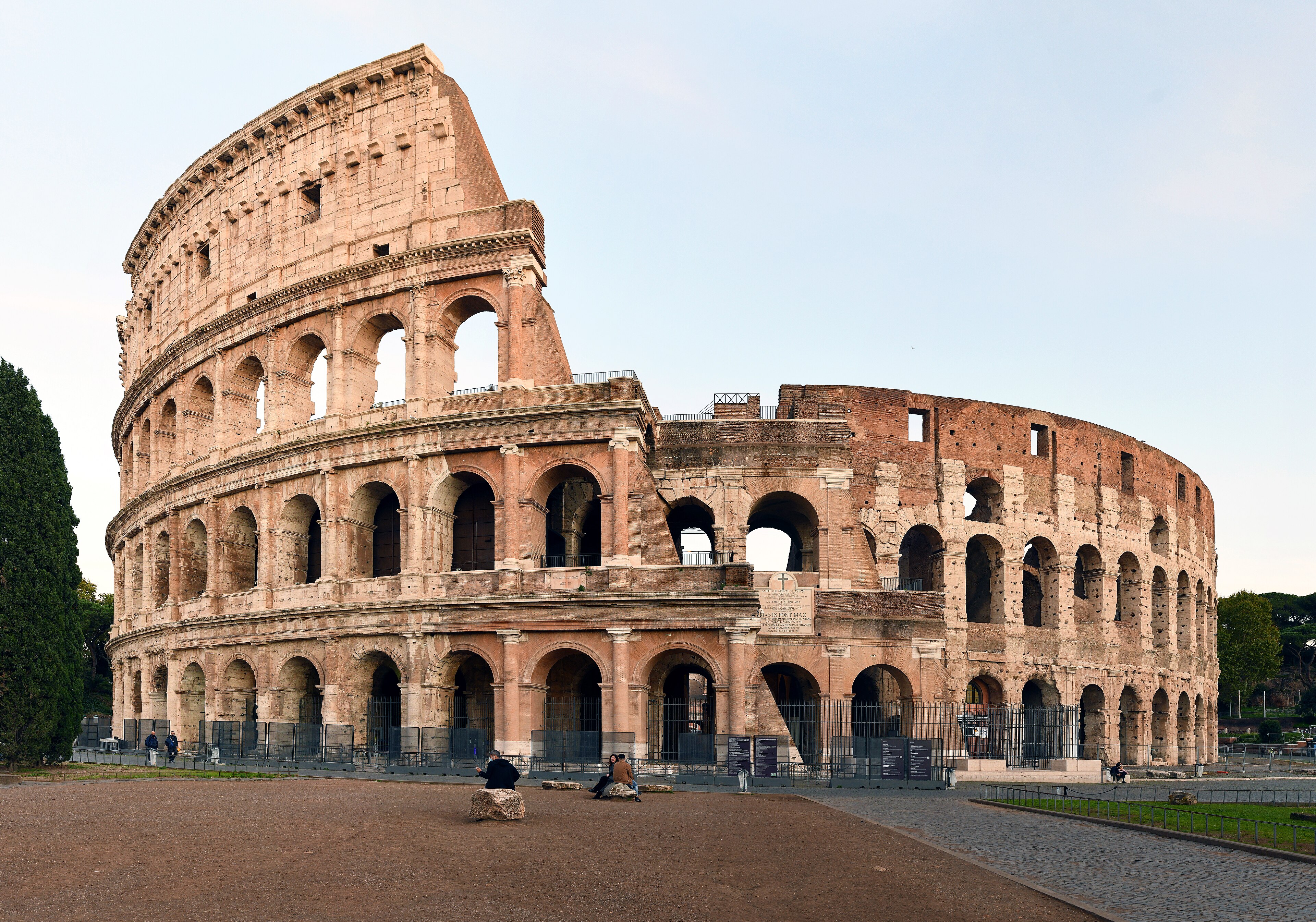
Photo: Jastrow · Public domain · Wikimedia Commons
Ludus Magnus is an arena. It is in Rome, Italy. Largest gladiator training school in ancient Rome. The free Lokali audio guide runs 7 minutes.
✓ Published October 2026 · how we write these guides
Visitor facts
| Lokali audio guide | 7 min · free |
|---|---|
| Type | Archaeological Site |
| Location | Rome, Italy |
| Coordinates | 41.8900, 12.4950 |
| Languages | 50+, in the Lokali app |
The story
Stand at the railing and look down. Below the level of the modern street, a curve of old Roman brick bends away from you, warm orange in the sun and darker where the shadows sit. Traffic hums along the road behind you. Somewhere a scooter climbs the hill toward the Lateran. But down there, in that sunken oval, the city is quiet. This is the Ludus Magnus, the Great School, and it was once full of the sound of wooden swords.
The name tells you a lot. In Latin, a ludus could mean a game, but it also meant a school. This was the largest training school for gladiators in ancient Rome. Men lived here, ate here, slept here, and practised here, day after day, for the fights in the great amphitheatre just behind you. Turn your head and you can see the curved wall of the Colosseum. The two buildings were neighbours by design.
The school was built under the emperor Domitian, who ruled Rome in the last decades of the first century. He was the younger son of Vespasian, the emperor who started the Colosseum. Domitian finished and expanded his family's great project, and he also built the support system around it. The school was later rebuilt under the emperor Trajan in the early second century. What you see today is mostly brickwork from those Roman phases, laid in neat horizontal courses.
Now look at the shape below you. It is a small oval arena, a kind of miniature Colosseum. Around it, the stumps of walls show where tiers of seating once rose. Here is the first surprise. Training was not private. Spectators could sit and watch the gladiators practise, the way modern fans might watch a team at a training ground. A good view here could help a person judge which fighter to cheer for, or bet on, in the real games.
Only part of the school is visible. The northern half lies open to the sky, while the rest still runs under the modern buildings and the street. Excavators uncovered these remains in the twentieth century, in the 1930s and again in later decades. So when you look at the arena, imagine it continuing beneath your feet, under the asphalt and the apartment blocks. Rome often works like this. The present sits directly on top of the past.
Around the arena stood a courtyard lined with columns. Behind the columns were small rooms, the living quarters of the gladiators. Archaeologists have identified fountains at the corners of this courtyard. The fighters lived in a closed world. They followed strict rules, ate a careful diet, and trained under experienced instructors, often former gladiators themselves. Their life was hard and dangerous, but a skilled fighter was also a valuable investment for his owner.
Who were these men? Many were slaves, prisoners of war, or condemned criminals. But some were free men who chose this life. They signed a contract and swore an oath to accept beatings, chains, and even death. Why would anyone do that? For money, for fame, or to escape debt. A winning gladiator could become a celebrity. Graffiti found in other Roman cities shows that some gladiators had admirers, much like sports stars today.
Training followed a pattern. Roman writers describe recruits striking at a tall wooden post, practising their blows again and again. They used heavy wooden weapons, often heavier than real ones, to build strength. Different fighters learned different styles. One type carried a net and a trident. Another carried a large shield and a short sword. Each style had its own techniques, and the arena below you was the place where those techniques were tested before the real crowds arrived.
Here is the second surprise. Scholars believe a passage ran underground from this school toward the Colosseum. Gladiators could move between the two buildings without walking through the crowded streets above. Picture it on a day of games. The roar of tens of thousands of people next door. Men in this courtyard checking their armour, waiting for their turn. Then a walk through the dark, toward the light and the sand of the great arena.
The Ludus Magnus was not alone. Ancient sources mention several other schools nearby, forming a small district devoted to the games. One school trained the men who fought wild animals in the morning shows. Others are linked by name to particular regions or styles of fighter. Around them stood workshops, storerooms, and spaces for the people who kept the spectacle running. The area around the Colosseum was, in effect, an industrial zone for entertainment.
Today, most visitors walk straight past. The site sits on a busy corner, and from the road it can look like just another patch of ruins. Usually you view it from the street, looking down over the railings, rather than walking inside. That is not a loss. From above, the oval shape is easiest to read. Walk slowly along the railing, and the curve of the arena and the stubs of the seating come into focus.
As you stand here, think about scale. The Colosseum could hold a huge crowd. This arena held a small audience, close enough to hear the breathing of the fighters and the shouts of the trainers. It was a working space, not a showpiece. The bricks below were walked on by real people with real fears. Some of them left here and never came back. Others returned, bruised and alive, to train again the next morning.
Before you go, look once more at the bricks. Notice how they sit in layers, thin and even, with lines of mortar between them. Notice the green of the grass that now grows on the old arena floor. Listen to the traffic, and then to the quiet just beneath it. When you walk on toward the Colosseum, you follow, in a small way, the same short route these fighters once took — from the school to the great arena next door.
Key facts
What to look for
Practical tips
Common questions
Is there a free audio guide to Ludus Magnus?
Yes — the Lokali app narrates Ludus Magnus free of charge in 50+ languages. The guide runs about 7 minutes, covers the history, what to look for on site and practical tips, and works offline once downloaded.
Where is Ludus Magnus?
Ludus Magnus is in Rome, Italy, at 41.8900, 12.4950. Tap the map link on this page for directions from where you are.
What is Ludus Magnus known for?
Largest gladiator training school in ancient Rome. Built under Emperor Domitian in the first century.
What should you look for at Ludus Magnus?
Curved brick wall marking the edge of the arena. Stubs of walls where spectator seating once rose. Thin horizontal layers of Roman brick and mortar.
What should you know before visiting Ludus Magnus?
Walk the full railing to read the oval shape. Combine with the Colosseum, just steps away.
When is the best time to visit Ludus Magnus?
Come in morning light for clearer views into the pit.
On the map
Opens directions to Ludus Magnus from your location.
More to see in Rome



Hear Ludus Magnus in your language
The full story, narrated, in 50+ languages. Download it before you go and it plays offline, at your own pace, with no ticket and no tour group.