
Photo: Joris · CC BY-SA 3.0 · Wikimedia Commons
Saepta Julia is an archaeological site in Rome. Julius Caesar first planned the marble voting enclosure. The free Lokali audio guide runs 7 minutes.
✓ Published October 2026 · how we write these guides
Visitor facts
| Lokali audio guide | 7 min · free |
|---|---|
| Type | Archaeological Site |
| Location | Rome, Italy |
| Coordinates | 41.8983, 12.4780 |
| Languages | 50+, in the Lokali app |
The story
Stand for a moment and listen. Scooters buzz down narrow lanes. Footsteps echo off ochre walls. A café cup clinks on a saucer somewhere behind you. Under your feet, the paving stones are worn smooth and uneven. And below them, out of sight, lies one of the largest public buildings ancient Rome ever raised. This was the Saepta Julia, the great voting enclosure of the Roman Republic. Today it lives almost entirely underground, and in the street plan of the old city.
To understand why it was here, picture this area two thousand years ago. This was the Campus Martius, the Field of Mars. It was flat, open land in a bend of the Tiber, outside the oldest heart of the city. Romans came here to drill soldiers, exercise horses, and gather in large numbers. Above all, they came here to vote. For centuries, citizens assembled in simple wooden pens, sorted into their voting groups, and filed past to cast their choices.
The word saepta means enclosures, or fenced pens. The name comes from those humble wooden barriers. Voting in Rome was a physical act. Citizens moved through roped lanes, crossed narrow gangways, and handed over their tablets. It was slow, crowded, and very public. A space that could hold tens of thousands of people, all moving in order, was a real political tool. Whoever built a grander version would leave his name on the machinery of the state itself.
That man was Julius Caesar. In the mid-first century before Christ, Caesar planned to replace the old wooden pens with a monumental marble enclosure. His friend and sometimes rival Cicero mentioned the scheme in a letter, describing a vast structure ringed by a long portico. Caesar wanted the voters of Rome to gather in splendour, under his name. The irony is hard to miss. Caesar's own rise helped to end the free elections this building was meant to house.
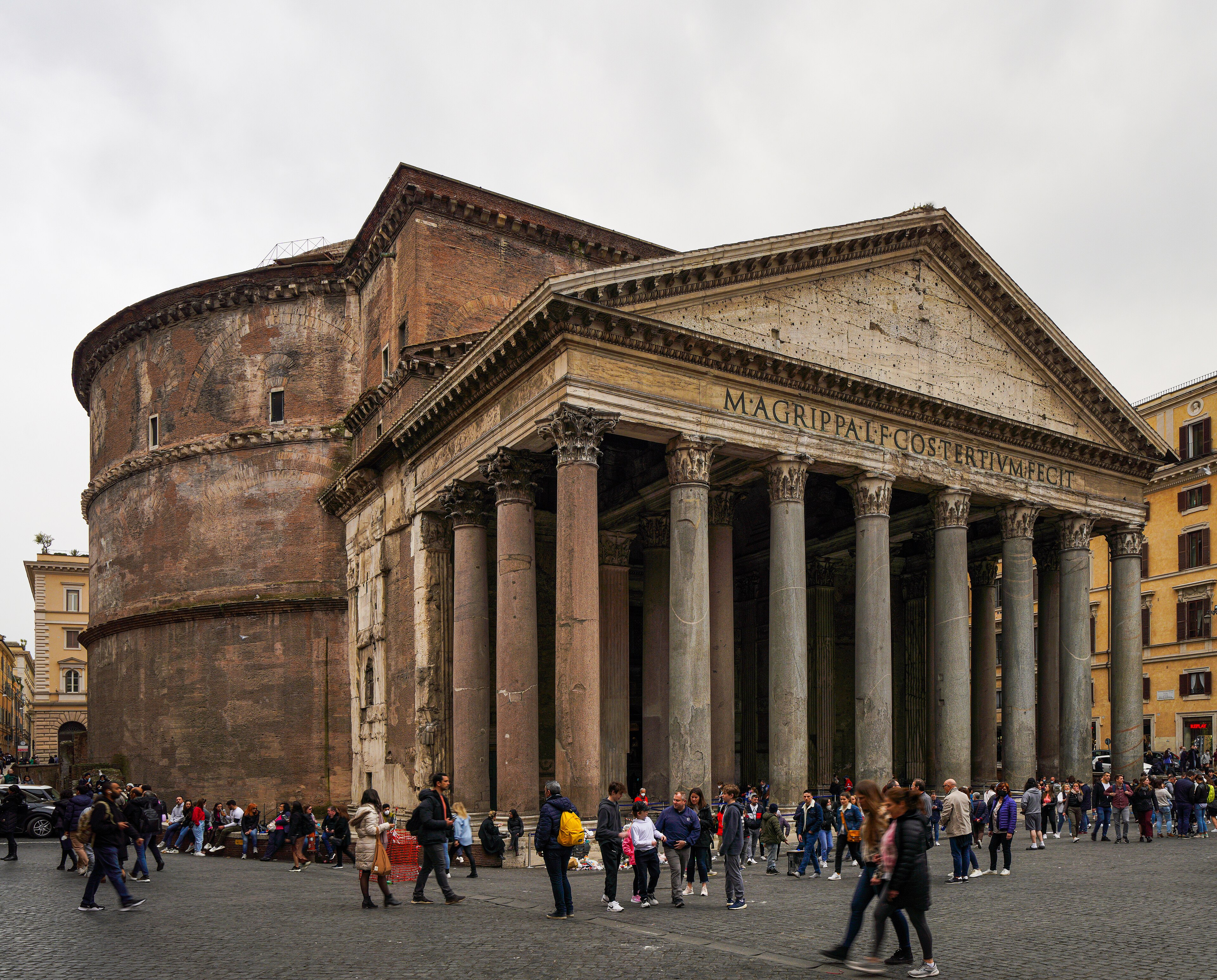
Caesar did not live to see it finished. After his murder, the project passed to the new regime of his adopted heir, Octavian, who became the emperor Augustus. The work was completed by Marcus Agrippa, Augustus's closest general and his great builder. Agrippa dedicated the finished enclosure in 26 BC. The same man shaped much of this neighbourhood. His name still stands in bronze letters on the front of the Pantheon, just a few minutes' walk from where you are.
So what did it look like? Picture a long rectangle of open ground, stretching for hundreds of metres from north to south. Long colonnades ran down its sides, giving shade and shelter. Marble and decorative stone covered the surfaces. Inside, the open floor could be divided into lanes for the voting groups. Next door stood a separate hall called the Diribitorium, where officials counted the votes. Ancient writers admired its roof, which was famous for its enormous span.
Here is the twist most visitors never hear. Almost as soon as the Saepta was finished, real elections began to fade. Under the emperors, the popular assemblies lost their power. The great voting hall slowly lost its purpose. So the Romans found new uses for it. Augustus staged gladiatorial shows here. Later emperors used the space for spectacles and public events. A building designed for democracy became a stage for entertainment paid for by one ruler.
Then the shopkeepers moved in. By the late first century, the porticoes of the Saepta had become a luxury market. The poet Martial wrote satirical verses about a showy buyer who wandered these colonnades, inspecting fine tables, crystal, bronzes, and expensive ornaments, then left with almost nothing. If you think of the high-end streets around the Pantheon and Via del Corso today, the idea will feel familiar. This part of Rome has been a place to browse and be seen for a very long time.
Fire struck the Campus Martius more than once. A major blaze in 80 under the emperor Titus damaged many buildings here, the Saepta among them. Repairs followed under later emperors, including Hadrian, who also rebuilt the Pantheon in the form we see today. The enclosure appears on fragments of the Severan Marble Plan, a huge map of Rome carved in marble around the start of the third century. That stone map is one of the main reasons scholars can place the Saepta with confidence.
So why can you not see it? After the fall of Rome, the low ground of the Campus Martius filled with homes, churches, and palaces. People reused the old walls, stripped the marble, and built on top of the foundations. The ground level rose by several metres over the centuries. Fragments of the ancient structure survive in cellars and inside the walls of later buildings. Above ground, the clearest trace is not a ruin. It is the long, straight grain of the streets around you.
Now for a second surprise, close by. Walk to the square in front of the church of Santa Maria sopra Minerva, near the Pantheon. There you will find a small stone elephant carrying an Egyptian obelisk on its back, a design linked to the sculptor Bernini. That obelisk was found in this district. It came from the great sanctuary of the Egyptian goddess Isis, which stood just east of the Saepta. Rome's voters once queued beside a temple to a goddess from the Nile.
Think about the scale of what once stood here. A crowd larger than most modern stadiums could gather on this ground. They came to choose magistrates, to pass laws, to argue and wait in the sun. Later crowds came for gladiators. Later still, they came to buy silver and fine furniture. Every age used the same space for something different. In a way, the neighbourhood still does that today, with offices, churches, cafés, and shops all pressed together.
Before you move on, look down the street in front of you. Notice how straight it runs, and how the old buildings line up along it. Try to imagine marble columns instead of shuttered windows, and open sky instead of rooftops. Then listen again. The scooters, the voices, the footsteps on stone. People still pass through here in their thousands, every day. They no longer come to vote. But they are still moving through a space that Caesar first imagined, and that Agrippa built.
Key facts
What to look for
Practical tips
Common questions
Is there a free audio guide to Saepta Julia?
Yes — the Lokali app narrates Saepta Julia free of charge in 50+ languages. The guide runs about 7 minutes, covers the history, what to look for on site and practical tips, and works offline once downloaded.
Where is Saepta Julia?
Saepta Julia is in Rome, Italy, at 41.8983, 12.4780. Tap the map link on this page for directions from where you are.
What is Saepta Julia known for?
Julius Caesar first planned the marble voting enclosure. Marcus Agrippa dedicated the finished Saepta in 26 BCE.
What should you look for at Saepta Julia?
Long straight street lines following the ancient enclosure. Agrippa's name in bronze letters on the Pantheon. Bernini's stone elephant carrying a small Egyptian obelisk.
What should you know before visiting Saepta Julia?
Combine this stop with the nearby Pantheon on foot. Walk early morning when the narrow lanes are quieter.
When is the best time to visit Saepta Julia?
Walk early morning when the narrow lanes are quieter.
On the map
Opens directions to Saepta Julia from your location.
More to see in Rome


Hear Saepta Julia in your language
The full story, narrated, in 50+ languages. Download it before you go and it plays offline, at your own pace, with no ticket and no tour group.