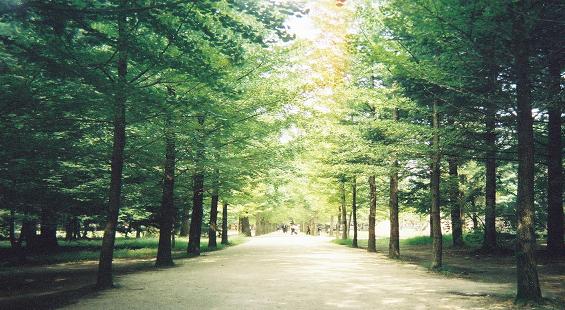
Nami Island is a crescent-shaped island in the Han River famous for tree-lined walking paths, seasonal gardens, and art installations. It is in Seoul, South Korea. Most visitors spend 2–4 hours here. The free Lokali audio guide runs 5 minutes.
✓ Verified August 2026 · how we write these guides
Visitor facts
| Time needed | 2–4 hours |
|---|---|
| Lokali audio guide | 5 min · free |
| Type | Park |
| Best for | Photography |
| Location | Seoul, South Korea |
| Coordinates | 37.7900, 127.5258 |
| Languages | 45, in the Lokali app |
The story
The ferry pushes off from the wharf, and the water of the river opens around you. Wind moves across the deck. Ahead, a low green island rests on the water, shaped like a half-moon. In a few minutes you will step onto it. The engine hums. The far shore slides away behind you.
This place is called Nami Island. It carries the name of a soldier named Nam I, a general of the Joseon period who lived in the fifteenth century. He died young, still in his twenties, after he was wrongly accused of treason. People say his grave rests here on the island, under a low mound of earth. The island took his name.
For a long time this was only a quiet hill beside the river. Then, in 1944, a dam was built downstream. The water rose. The land around the hill was covered, and the hill became an island. What had been a slope of farmland turned into a circle of green surrounded on every side by water.
The island stayed little known for years. That changed in 2002. A television drama called Winter Sonata was filmed here, among the trees. The story reached viewers across Korea and far beyond it, in Japan and across the rest of Asia. Visitors began to arrive, wanting to walk the same paths they had seen on their screens.
Walk inland and you meet the trees. Long straight lanes run across the island, each one lined with a single kind of tree. The most loved is the lane of tall, narrow metasequoia, standing in two rows like columns. In summer the leaves form a green roof above your head. In autumn they turn copper and fall in slow drifts.
There are other lanes as well. One holds ginkgo trees, which turn gold in the cooler months. Another holds pines that stay dark green all year. The paths between them are soft underfoot. Squirrels move along the branches. Birds call from the high cover. The river is never far, glinting through the trunks as you walk.
In 2006 the island declared itself a small make-believe nation. It calls itself Naminara Republic. You can receive a paper passport at the entrance, and you will see its own stamps, its own flag, and its own playful money. None of this is a real country. It is a piece of imagination, made to welcome the visitor into a world set apart.
The island is also a place for art. Small galleries and workshops sit among the trees. Sculptures rest in the clearings. Pottery, painting, and music all have a home here. The owners built the island around a simple idea, that nature and culture can share the same ground, and that both should be gentle on the eye.
You can cross to the island in more than one way. Most people take the short ferry from the Gapyeong wharf, a ride of only a few minutes. The braver visitor can ride a zip line that runs high above the water, arriving on the island through the open air. Either way, the crossing is part of the visit.
Food and rest are easy to find. Cafes and small restaurants sit among the trees, many of them built from wood and recycled materials. You can sit with a warm drink and watch the light move on the river. Couples walk slowly. Families let their children run ahead on the wide paths. The pace here is unhurried.
Each season gives the island a different face. Spring brings soft new leaves and cherry blossom. Summer is deep green and full of shade. Autumn is the most famous time, when the lanes turn red and gold. Winter strips the trees bare and lays snow along the paths, quiet and white and still.
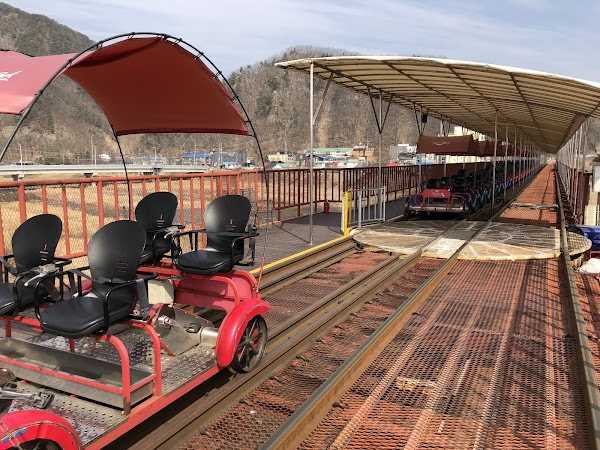
The island is bigger than it first looks, and there are easy ways to get around. You can rent a bicycle and follow the outer path along the shore. A small road train carries those who would rather ride. As you go, you may meet the animals that live here. Rabbits sit on the open grass. Squirrels dart across the path in front of you. In places there are deer and birds kept in open pens, and children stop often to watch them.
Before you leave, stand once more under the tall trees and look up. The branches meet far above your head. The river waits beyond them, patient and slow. This island was made by water, named for a man who died too young, and given back to anyone who walks here. Take the quiet with you when you go.
Key facts
What to look for
Practical tips
Common questions
How long do you need at Nami Island?
Plan 2–4 hours. That is the time most visitors spend at Nami Island. The free Lokali audio guide adds about 5 minutes of narration you can listen to as you walk, so it fits inside your visit rather than adding to it.
Is there a free audio guide to Nami Island?
Yes — the Lokali app narrates Nami Island free of charge in 50+ languages. It covers the history, what to look for on site and practical tips, and it works offline once downloaded.
Where is Nami Island?
Nami Island is in Seoul, South Korea, at 37.7900, 127.5258 Tap the map link on this page for directions from where you are.
What should you know before visiting Nami Island?
Take the short ferry from the Gapyeong wharf.
What is Nami Island known for?
Named after General Nam I of the fifteenth century.
What is the best time to visit Nami Island?
Visit at dawn or dusk to avoid crowds.
On the map
Opens directions to Nami Island from your location.
More to see in Seoul


Hear Nami Island in your language
The full story, narrated, in 50+ languages. Download it before you go and it plays offline, at your own pace, with no ticket and no tour group.