Abanotubani District
41.7135° N · 44.8005° E · Neighborhood
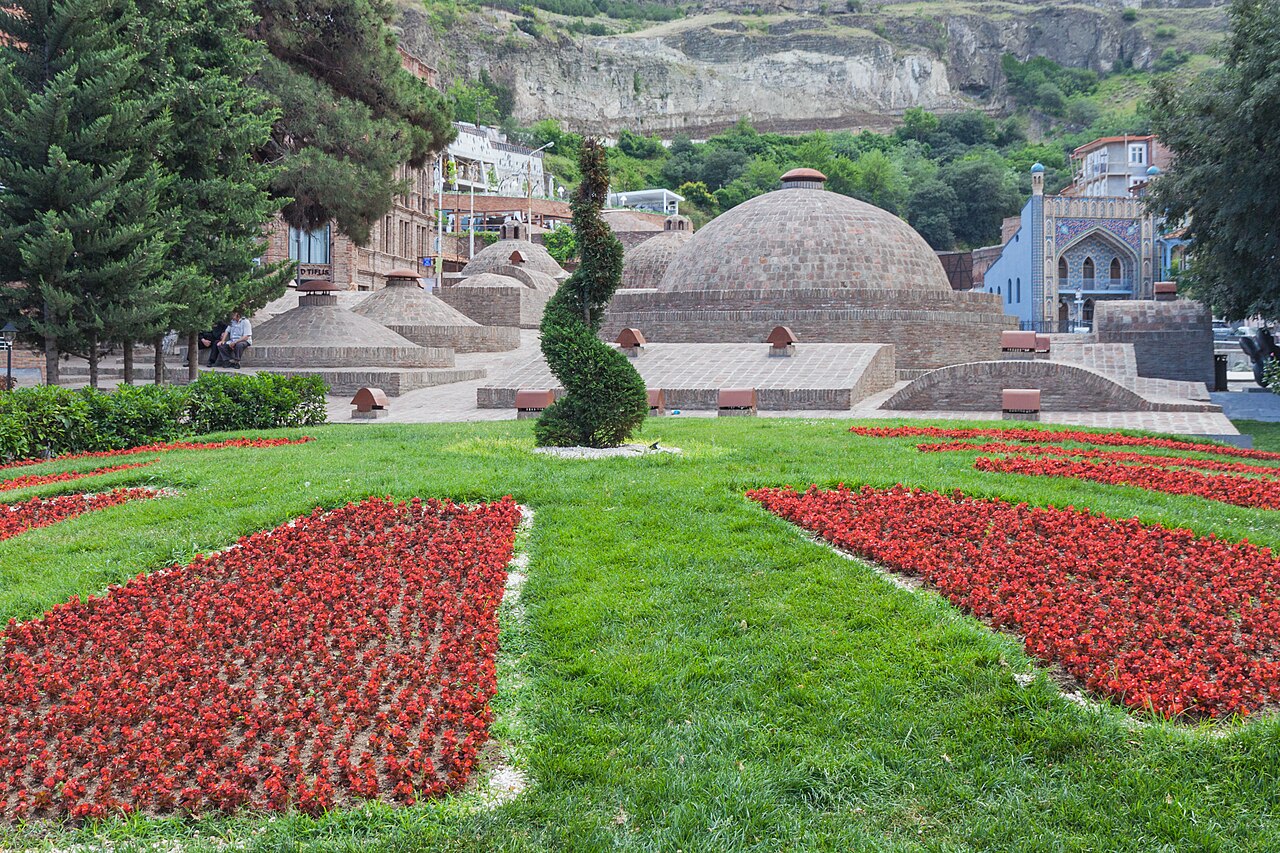
Abanotubani District is a historic quarter nestled below Narikala Fortress, known for its traditional sulphur baths housed in low-domed stone buildings. It is in Tbilisi, Georgia. Most visitors spend 45–60 min here. The free Lokali audio guide runs 5 minutes.
✓ Verified August 2026 · how we write these guides
Visitor facts
| Time needed | 45–60 min |
|---|---|
| Lokali audio guide | 5 min · free |
| Type | Neighborhood |
| Best for | Local life |
| Location | Tbilisi, Georgia |
| Coordinates | 41.7135, 44.8005 |
| Languages | 45, in the Lokali app |
The story
A few steps off the busier old-town lanes, the ground dips into a small valley of brick domes, rising steam, and narrow passages. This is the Abanotubani district, the oldest working corner of Tbilisi, built around the natural hot springs that gave the city its name. It rewards slow wandering at least as much as a visit to any single building inside it.
The quarter is small enough to cross in a few minutes and dense enough to hold you far longer. Low domed bathhouses sit half-sunk into the ground, their roofs at the level of your feet. Between and above them run lanes of old houses with carved wooden balconies, some leaning and weathered, some freshly restored, climbing the slope toward the fortress wall.
Walk to the head of the valley and the lanes narrow into a little gorge where a waterfall drops over dark rock into a pool. It is an easy five-minute walk from the domes and a genuine surprise: cool spray, green growth, and the sound of falling water, all tucked behind the bathhouses in the middle of a capital city.
Read the buildings as you go, because the quarter is a record of who passed through. Persian, Ottoman, and Georgian influences sit side by side in the brickwork, the pointed arches, and the tilework. The blue-tiled Orbeliani bathhouse is the showpiece, but smaller doorways, carved lintels, and hidden courtyards repay a slower look.
This is, by tradition, where the city began. The founding story places King Vakhtang Gorgasali's hunt right here in the fifth century, his falcon leading him to a hot spring, and the new capital named for the warmth of the water. Whatever the truth behind the legend, the springs are real, they still rise beneath your feet, and the city genuinely grew up around them.
The bathhouses themselves are only part of it. For centuries this was a place of ritual and routine — somewhere to wash before a wedding, to mark a holiday, to make a match, to close a deal in the heat. That social weight is hard to see directly, but it is the reason the quarter feels older and denser than the streets around it.
Today the district mixes its working past with a tourist present. Cafes, souvenir shops, and carpet sellers have moved into the lanes, and on a busy afternoon the photo-takers cluster around the tiled facade. Yet people still come to bathe as they always did, and the steam and mineral smell keep the place honest rather than staged.
If you plan to explore on foot, wear shoes with grip, because the lanes are steep and the stone near the baths stays wet. Mornings are quiet and best for photographs of the domes and the blue tiles. From here you can climb to the fortress, drop down to the river, or step into the heart of the old town, all within minutes.
The quarter changes with the light and the season. Early sun warms the brick; evening floodlights pick out the fortress on the cliff above; winter sharpens the contrast between the cold air and the rising steam. Any of these is a good time to come, and each gives the valley a slightly different mood.
Build the district into a wider old-town walk rather than treating it as a single stop. Sioni cathedral, the river, the cliffside churches, and the lanes of Leselidze are all close, and Abanotubani works best as the warm, low heart that the rest of the old town wraps around.
The houses above the baths reward a slow look in their own right. Many are old family homes with deep wooden balconies, carved railings, and vines or small shrines in their courtyards, and some are being restored while others still wear their age openly. They give the quarter its lived-in texture.
Because the district is compact, it is easy to lose and find your way more than once, and that is part of the pleasure. Short flights of steps, dead-end courtyards, and sudden views of the cliff turn a simple walk into a small exploration.
Find a spot where you can see the domes, the cliff, and the balconies all at once, and let the scale of the place settle on you. This small valley has been the warm centre of Tbilisi for more than fifteen centuries. When you walk on, the rest of the old town reads differently — like a city that grew outward, street by street, from right here.
Key facts
What to look for
Practical tips
Common questions
How long do you need at Abanotubani District?
Plan 45–60 min. That is the time most visitors spend at Abanotubani District. The free Lokali audio guide adds about 5 minutes of narration you can listen to as you walk, so it fits inside your visit rather than adding to it.
Is there a free audio guide to Abanotubani District?
Yes — the Lokali app narrates Abanotubani District free of charge in 50+ languages. It covers the history, what to look for on site and practical tips, and it works offline once downloaded.
Where is Abanotubani District?
Abanotubani District is in Tbilisi, Georgia, at 41.7135, 44.8005. Tap the map link on this page for directions from where you are.
What should you know before visiting Abanotubani District?
Wear shoes with grip for wet, steep lanes.
What is Abanotubani District known for?
The oldest working quarter of Tbilisi.
What is the best time to visit Abanotubani District?
Explore the quieter alleys away from the main bath entrances.
On the map
Opens directions to Abanotubani District from your location.
More to see in Tbilisi


Hear Abanotubani District in your language
The full story, narrated, in 50+ languages. Download it before you go and it plays offline, at your own pace, with no ticket and no tour group.