Leselidze Street is a street in Tbilisi, Georgia. Narrow medieval lane in the Old Town, lined with traditional wooden-balconied houses, small galleries, and antique shops. Most visitors spend 30–40 min here. The free Lokali audio guide runs 5 minutes.
✓ Verified August 2026 · how we write these guides
Visitor facts
| Time needed | 30–40 min |
|---|---|
| Lokali audio guide | 5 min · free |
| Type | Street |
| Best for | Photography |
| Location | Tbilisi, Georgia |
| Coordinates | 41.7135, 44.7990 |
| Languages | 45, in the Lokali app |
The story
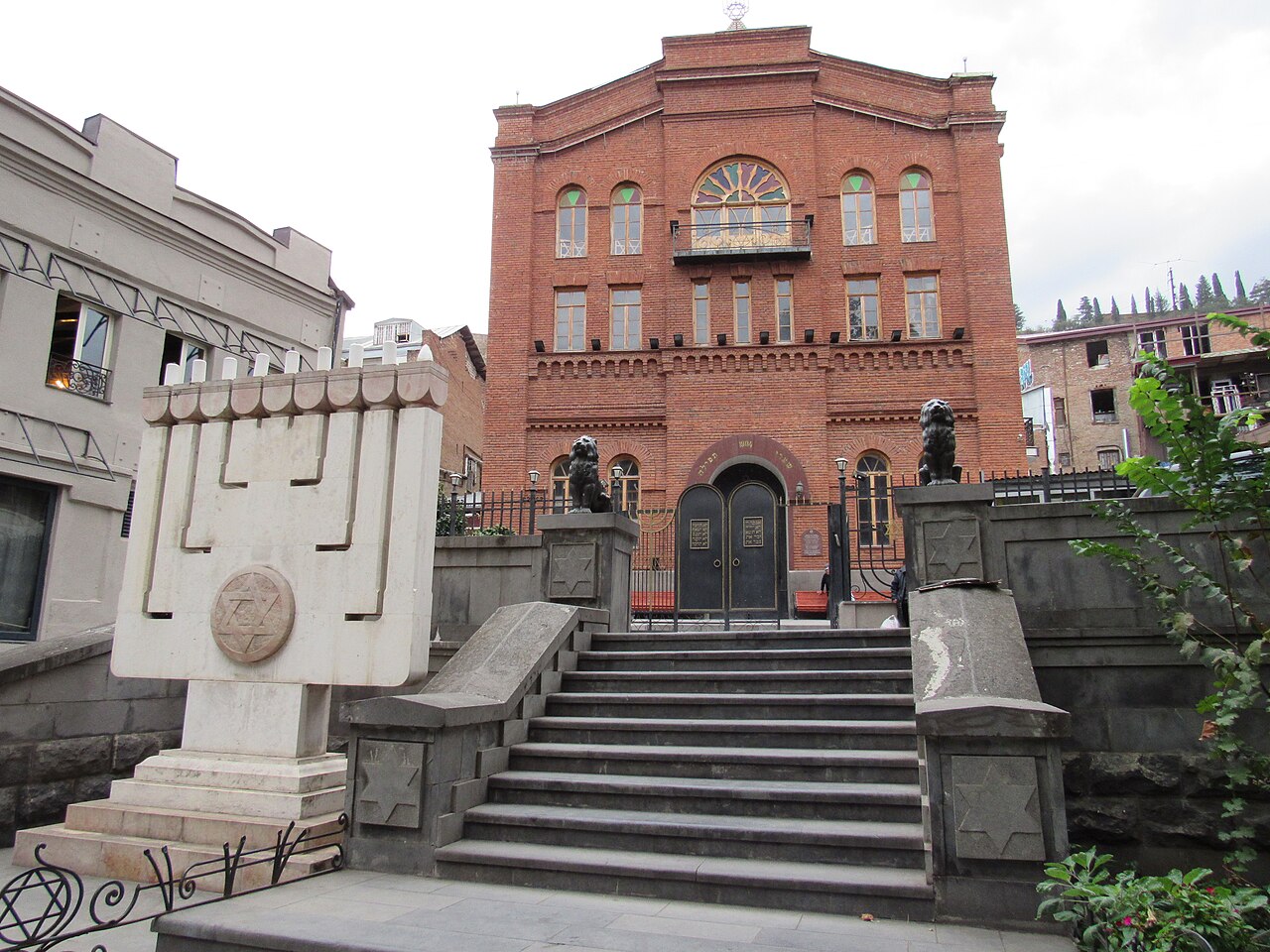
One narrow street runs like a seam through the heart of the old town, and within a few hundred metres it passes a Georgian church, an Armenian church, and a mosque, with a synagogue a short step away. This is the street most people still call Leselidze, though its official name today is Kote Apkhazi Street. It is the old town's main spine and its quiet lesson in living together.
The street runs from near Freedom Square down toward the Maidan square and the bathhouse district, curving gently between two- and three-storey houses. Following it from end to end is the simplest way to walk the length of the old town without losing yourself in the tangle of side lanes, and almost everything worth seeing in the historic centre sits within a block or two of it.
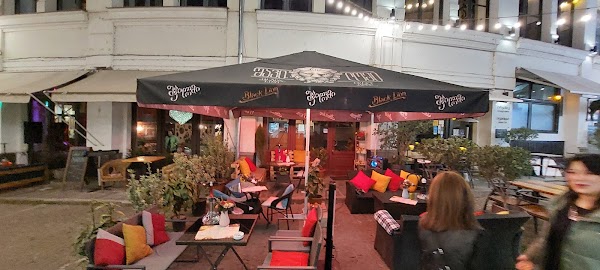
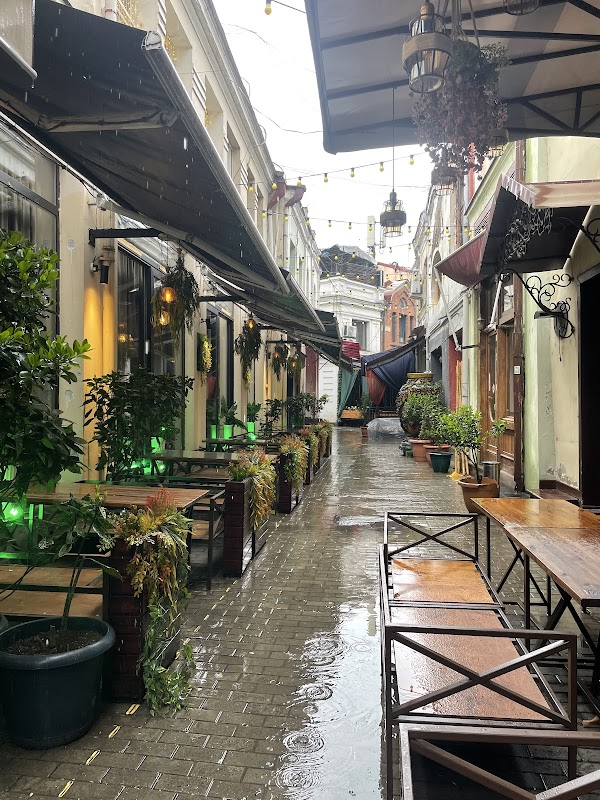
Many of the buildings are old merchant houses, some carefully restored, some still peeling and patched, with carved wooden balconies leaning out over the pavement. The ground floors hold cafes, wine shops, bakeries, and small stores selling crafts and souvenirs. It is a working street rather than a museum piece, and the mix of polish and wear is part of its character.
The most striking thing about it is religious rather than architectural. Within a short walk you pass the places of worship of several faiths standing almost shoulder to shoulder. For centuries Georgians, Armenians, Azeris, Jews, and others lived and traded along this street, and the survival of their churches, mosque, and synagogue so close together is the clearest sign of the mixed, tolerant character the old town is known for.
That coexistence was not an abstract ideal but a daily fact of a trading city at a crossroads of empires. Goods, languages, and faiths moved through here together, and the street learned to hold them side by side. Walking it, you are following a route that merchants, pilgrims, and neighbours of half a dozen backgrounds have shared for generations.
The street keeps its own daily rhythm. Mornings are quiet, with shutters going up and the smell of fresh bread; by late afternoon the cafes fill; in the evening people stroll between the squares and the lane comes properly alive. Step through an open gate at almost any hour and you often find a quiet, plant-filled courtyard hidden behind the street wall.
To get the most from it, walk slowly and look up. The best details — the carved balconies, the old doors, the faded painted signs, the brackets and railings — sit above eye level, and hurrying past at street level misses them. The street is the trunk; the narrow alleys branching off it are where the real surprises wait.
It also works as a practical thread through a day of sightseeing. Sioni cathedral, the Anchiskhati basilica, the cliffside churches, the river, and the bathhouse domes are all close to the line of the street, so you can use it as a backbone and detour off it whenever something catches your eye.
Like much of the old town, the street is slowly being restored, and you will see scaffolding and fresh paint next to buildings still waiting their turn. It gives the lane a half-finished, lived-in quality, caught between its trading past and a tidied-up future, which is honestly part of its present charm.
The street has changed its name more than once, which is itself a small history lesson. Generations have called it Leselidze, while the official name has shifted with the politics of the day to the current Kote Apkhazi Street. Locals tend to keep using the older name, so you will hear both.
Food is one of the easiest pleasures here. Bakeries sell fresh khachapuri and other Georgian staples straight from the oven, wine shops pour local wines by the glass, and small restaurants tuck into the old houses along the lane. Eating your way slowly down the street is a perfectly good way to see it.
By the time you reach the far end, near the bathhouse domes, you will have crossed most of the old town and passed the worship places of several faiths along one short street. That mix, held together so casually that residents barely remark on it, is a large part of what makes Tbilisi feel like itself, and the street is the easiest place to feel it directly. Carry the thought with you as the lane opens onto the next square.
Key facts
What to look for
Practical tips
Common questions
How long do you need at Leselidze Street?
Plan 30–40 min. That is the time most visitors spend at Leselidze Street. The free Lokali audio guide adds about 5 minutes of narration you can listen to as you walk, so it fits inside your visit rather than adding to it.
Is there a free audio guide to Leselidze Street?
Yes — the Lokali app narrates Leselidze Street free of charge in 50+ languages. It covers the history, what to look for on site and practical tips, and it works offline once downloaded.
Where is Leselidze Street?
Leselidze Street is in Tbilisi, Georgia, at 41.7135, 44.7990. Tap the map link on this page for directions from where you are.
What should you know before visiting Leselidze Street?
Walk the whole length to cross the old town.
What is Leselidze Street known for?
The main spine of the old town.
What is the best time to visit Leselidze Street?
The street is steep and winding; carved wooden screens create shifting patterns of shadow and light.
On the map
Opens directions to Leselidze Street from your location.
More to see in Tbilisi


Hear Leselidze Street in your language
The full story, narrated, in 50+ languages. Download it before you go and it plays offline, at your own pace, with no ticket and no tour group.