Abanotubani (Sulfur Baths)
41.7143° N · 44.8065° E · Bathhouse
Abanotubani (Sulfur Baths) is a bathhouse in Tbilisi, Georgia. Traditional Georgian hammam district in a ravine below Narikala, fed by natural sulfurous hot springs. Most visitors spend 1–2 hours here. The free Lokali audio guide runs 5 minutes.
✓ Verified August 2026 · how we write these guides
Visitor facts
| Time needed | 1–2 hours |
|---|---|
| Lokali audio guide | 5 min · free |
| Type | Bathhouse |
| Best for | Local life |
| Location | Tbilisi, Georgia |
| Coordinates | 41.7143, 44.8065 |
| Languages | 45, in the Lokali app |
The story
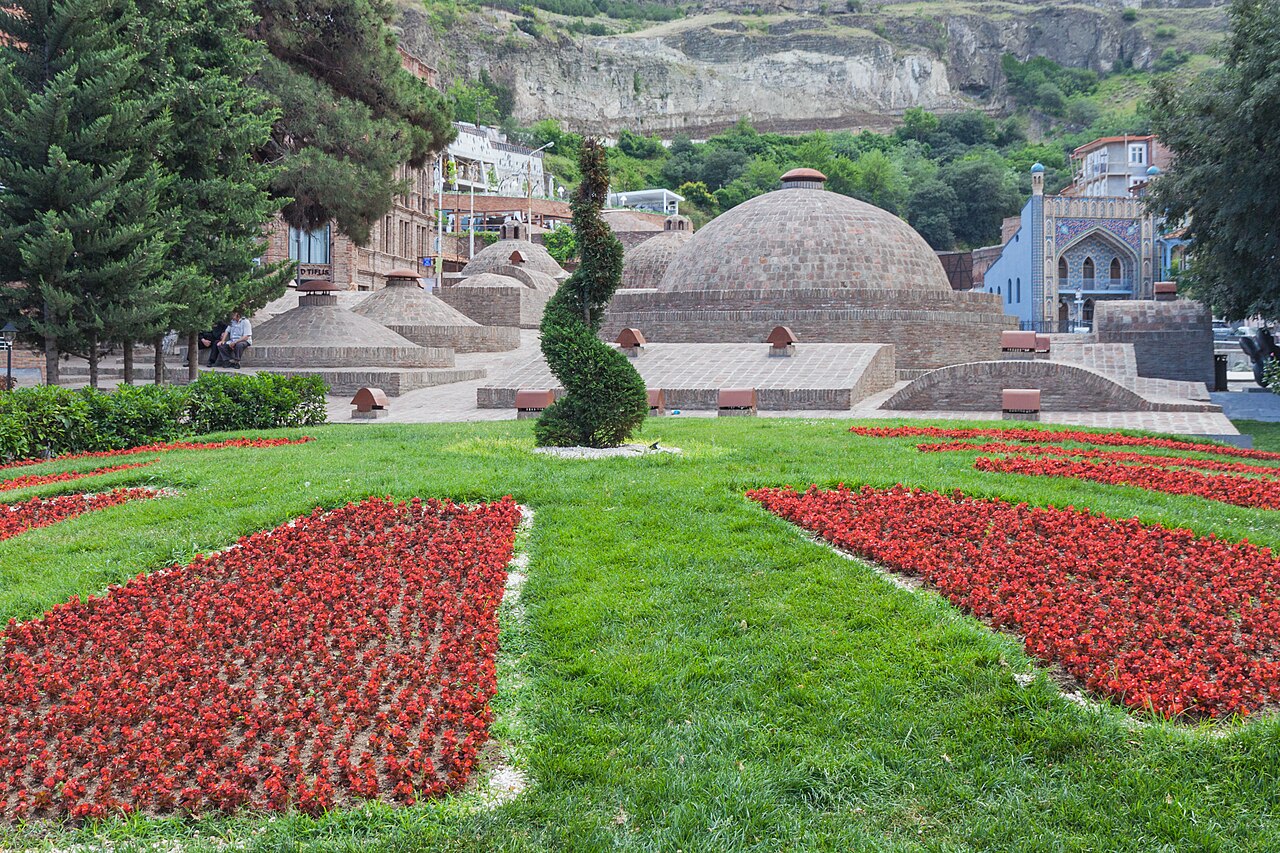
Round brick domes push up out of the ground like a row of low, half-buried shells, each with a small glass eye at the top to let the steam out. This is Abanotubani, the bath quarter of Tbilisi, where the city's hot sulfur springs surface in a narrow valley beneath the fortress. What you see at street level are the roofs; the pools themselves lie below, built down into the ground around the springs.
The name could not be plainer. Abano means bath, and Abanotubani is simply the district of baths. For as long as Tbilisi has existed this has been its washing place and its meeting place at once, somewhere people came to clean up, to ease their bones, to gossip, and to settle weddings and agreements. The faces have changed over the centuries; the purpose has barely moved.
One building here refuses to blend in. The Orbeliani bathhouse wears a facade of deep blue patterned tiles and twin pointed turrets, looking as though it wandered in from Persia or Central Asia and sat down among the plain brick domes. It marks the head of the little valley and is the most photographed corner of the quarter, so you will know it when you see it.
Inside any of them the draw is the same. Naturally hot, sulfur-rich water runs straight from the ground into the pools, with no heating and a strong mineral smell that fades from your notice within minutes. You can take a private room with its own pool or use the cheaper shared sections, and either way the attendant's scrub and foam wash is the local ritual worth adding.
This valley is where the city's story begins. The legend says a fifth-century king was hunting here when his bird dropped into a steaming spring; he read the warm water as a sign and founded Tbilisi on the spot, naming it for the heat. You do not have to believe the falcon to feel the weight of standing where a capital chose to put down its roots.
Look up as you move between the domes. The cliff above carries the Narikala fortress, floodlit at night, and the lanes around the baths climb steeply toward it, lined with old balconied houses. At the head of the gorge a thin waterfall drops over dark rock, an easy few minutes on foot and a surprising scrap of wilderness inside the city.
The quarter has softened around the edges. Cafes, carpet sellers, and souvenir shops have filled the spaces between the bathhouses, and parts of it are clearly dressed for visitors. But the steam still rises, the smell still hangs in the air, and locals still come to bathe as they always have, which keeps the place from tipping into pure spectacle.
To make the most of a soak, bring or rent a towel and flip-flops, and come early or late to dodge the busiest hours. Prices vary sharply between the plain public halls and the smarter private rooms, so ask first. If it is your first time, a private room with a scrub booked ahead is the gentlest introduction.
The baths reward a slow visit in any season, but winter is when they make the most sense, when the contrast between the cold lanes outside and the heavy warmth inside is sharpest. Summer works too, especially early in the day before the valley heats up and the crowds arrive.
Give the quarter time beyond the water itself. Wander the lanes, find a courtyard, walk up to the waterfall, and look back at the domes with the fortress above them. The whole of Tbilisi grew outward from this valley, and you can still read that origin in the cramped, steaming, much-used streets.
If you have time for only one bathhouse, the choice comes down to budget and mood. The grander rooms offer marble, quiet, and privacy; the plain public halls offer a cheaper, more communal soak. Neither is wrong, and the water is the same in both, drawn from the same springs beneath the valley.
The quarter is at its most photogenic in the soft light of early morning, before the cafes open and the day visitors arrive. The domes, the blue tiles, and the cliff behind them line up cleanly then, and the rising steam shows best against the cool air.
Stand for a moment among the domes before you leave, the steam curling up into the cool air and the fortress watching from the cliff. Few city centres keep a working ritual this old in daily use. When you climb back up to the lanes of the old town, you carry the warmth with you, and a faint trace of the mineral scent that named the city.
Key facts
What to look for
Practical tips
Common questions
How long do you need at Abanotubani (Sulfur Baths)?
Plan 1–2 hours. That is the time most visitors spend at Abanotubani (Sulfur Baths). The free Lokali audio guide adds about 5 minutes of narration you can listen to as you walk, so it fits inside your visit rather than adding to it.
Is there a free audio guide to Abanotubani (Sulfur Baths)?
Yes — the Lokali app narrates Abanotubani (Sulfur Baths) free of charge in 50+ languages. It covers the history, what to look for on site and practical tips, and it works offline once downloaded.
Where is Abanotubani (Sulfur Baths)?
Abanotubani (Sulfur Baths) is in Tbilisi, Georgia, at 41.7143, 44.8065. Tap the map link on this page for directions from where you are.
What should you know before visiting Abanotubani (Sulfur Baths)?
Visit early or late for the quietest baths.
What is Abanotubani (Sulfur Baths) known for?
Abanotubani means the district of baths.
What is the best time to visit Abanotubani (Sulfur Baths)?
The baths are busiest at midday.
On the map
Opens directions to Abanotubani (Sulfur Baths) from your location.
More to see in Tbilisi


Hear Abanotubani (Sulfur Baths) in your language
The full story, narrated, in 50+ languages. Download it before you go and it plays offline, at your own pace, with no ticket and no tour group.