Gino Chitadze Art Center
41.7089° N · 44.7693° E · Museum
Gino Chitadze Art Center is a museum in Tbilisi, Georgia. Contemporary art museum in a converted 19th-century mansion in Vake, showcasing Georgian and international modern works. Most visitors spend 1–1.5 hours here. The free Lokali audio guide runs 9 minutes.
✓ Verified August 2026 · how we write these guides
Visitor facts
| Time needed | 1–1.5 hours |
|---|---|
| Lokali audio guide | 9 min · free |
| Type | Museum |
| Best for | Editors' pick |
| Location | Tbilisi, Georgia |
| Coordinates | 41.7089, 44.7693 |
| Languages | 45, in the Lokali app |
The story
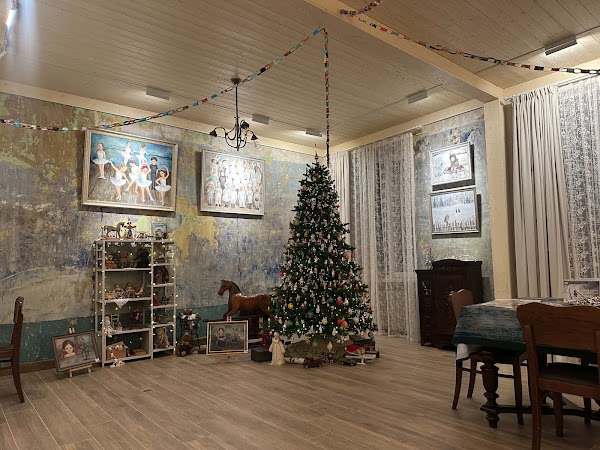
The light here falls differently than elsewhere in Tbilisi — filtered through tall windows, it pools on polished floors and catches the edges of canvases in a way that makes you slow down. This is the Gino Chitadze Art Center, a space where contemporary Georgian art finds room to breathe, where local painters and sculptors exhibit work that speaks to the country's present rather than its past.
Gino Chitadze himself was a Georgian artist whose career spanned much of the twentieth century, working through periods of Soviet censorship and the turbulent independence years that followed. His legacy lives on in this center, which carries his name and his commitment to creating space for artists outside the rigid academies. The building itself is modest — no grand neoclassical facade, no marble columns — but that simplicity serves the art well. White walls, good natural light, rooms that let the work command attention.
The exhibitions rotate regularly, so what you encounter today might be abstract paintings next month, installations the month after. Georgian contemporary art often walks a line between Western influences and deeply local themes — family, landscape, memory, the weight of history rendered in unexpected materials. You might see canvases layered with Georgian script, sculptures made from reclaimed Soviet-era metal, photography that captures Tbilisi's crumbling courtyards or the faces of mountain villagers.
One thing worth noting as you move through the galleries: Georgian artists often embed texture into their work in ways that reward close looking. Paint applied thick enough to cast shadows. Fabric stitched into canvas. Wood grain left visible beneath thin washes of color. Step close to the pieces — the surfaces tell stories that photographs miss.
The center also hosts artist talks and workshops, though schedules vary. If you happen to visit during an opening, you will find the rooms filled with Tbilisi's art community — painters, gallerists, students, collectors — all speaking rapid Georgian over wine in plastic cups. It is one of the few places in the city where contemporary creative work takes center stage, where the conversation is not about medieval frescoes or nineteenth-century poetry but about what Georgian artists are making right now.
The neighborhood around the center is quieter than the tourist-heavy old town. You are likely to pass residential buildings with their characteristic wooden balconies, small grocers selling churchkhela and fresh herbs, elderly women sitting on benches in the shade. This is Tbilisi as locals live it — less polished, more lived-in, the kind of streetscape that does not make postcards but feels more honest for it.
Inside, the galleries are not vast. You can walk through the entire center in twenty minutes if you rush, though that would miss the point. The art here asks for attention, for the kind of slow looking that lets a piece unfold. A painting that seems simple at first glance reveals layers of meaning when you stand with it for a minute or two. A sculpture's materials — rusted iron, old rope, cracked ceramic — carry weight beyond their forms.
If you are used to major international museums, this will feel intimate by comparison. There are no audio guides, no wall texts in five languages, no gift shop selling branded tote bags. What you get instead is direct access to the work, unmediated and unpackaged. The art speaks for itself, and the silence in the galleries gives it room to do so.
Before you leave, take a moment to look out the windows. The view is not dramatic — rooftops, a slice of hillside, perhaps a church dome in the middle distance — but it grounds you in the city. This is the Tbilisi that artists see, the one they paint and photograph and sculpt. Not the postcard version, but the real thing, with all its contradictions and rough edges and stubborn beauty.
As you step back onto the street, you might notice details you walked past on the way in — the way afternoon light hits a stucco wall, the pattern of cracks in the pavement, the faded paint on a metal gate. The center does that, sharpens your eye for the small things. Art has a way of making you see the world a little differently, even after you have left the gallery behind.
Key facts
What to look for
Practical tips
Common questions
How long do you need at Gino Chitadze Art Center?
Plan 1–1.5 hours. That is the time most visitors spend at Gino Chitadze Art Center. The free Lokali audio guide adds about 9 minutes of narration you can listen to as you walk, so it fits inside your visit rather than adding to it.
Is there a free audio guide to Gino Chitadze Art Center?
Yes — the Lokali app narrates Gino Chitadze Art Center free of charge in 50+ languages. It covers the history, what to look for on site and practical tips, and it works offline once downloaded.
Where is Gino Chitadze Art Center?
Gino Chitadze Art Center is in Tbilisi, Georgia, at 41.7089, 44.7693. Tap the map link on this page for directions from where you are.
What should you know before visiting Gino Chitadze Art Center?
Check current exhibition schedule before visiting.
What is Gino Chitadze Art Center known for?
Named after twentieth-century Georgian artist Gino Chitadze.
What is the best time to visit Gino Chitadze Art Center?
The courtyard garden offers quiet respite from the street.
On the map
Opens directions to Gino Chitadze Art Center from your location.
More to see in Tbilisi



Hear Gino Chitadze Art Center in your language
The full story, narrated, in 50+ languages. Download it before you go and it plays offline, at your own pace, with no ticket and no tour group.