
Tehran Museum of Contemporary Art
35.7114° N · 51.3906° E · Museum
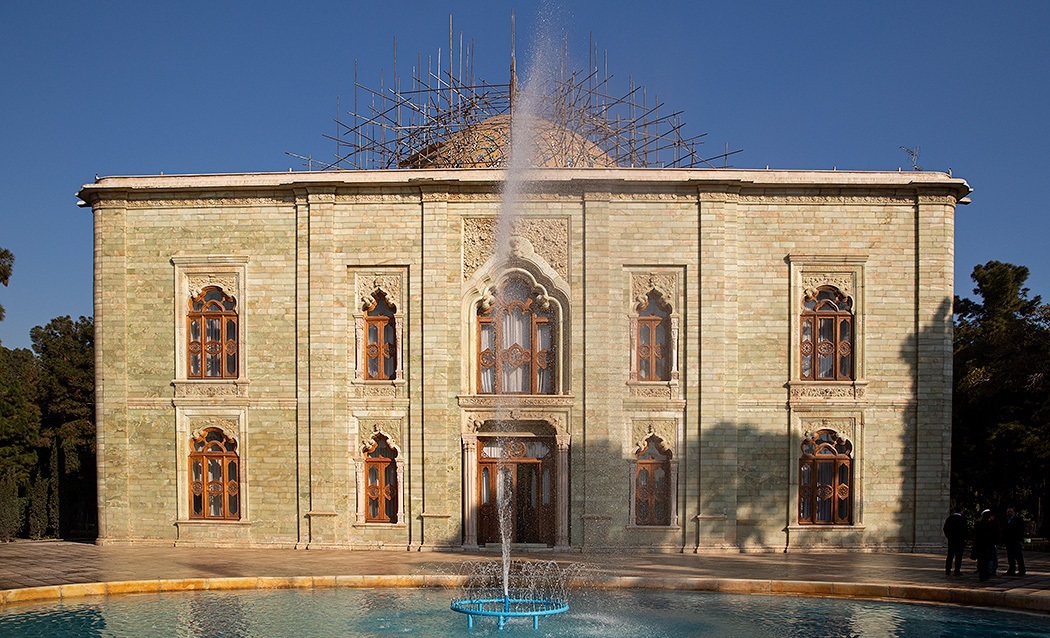
Photo: Photo by Zereshk. · CC BY-SA 3.0 · Wikimedia Commons
Tehran Museum of Contemporary Art is an art museum in Tehran, Iran. The museum opened to the public in 1977. The free Lokali audio guide runs 6 minutes.
✓ Published October 2026 · how we write these guides
Visitor facts
| Lokali audio guide | 6 min · free |
|---|---|
| Type | Museum |
| Location | Tehran, Iran |
| Coordinates | 35.7114, 51.3906 |
| Official website | tmoca.com |
| Languages | 50+, in the Lokali app |
The story
Start outside, on the paved path at the edge of the park. The air here is a little cooler under the plane trees. Ahead of you, a cluster of pale concrete towers rises from the ground. Each one has a curved, hooded top, like a scoop turned to face the sky. At first the building does not look like a museum at all. It looks like part of an old desert town.
That resemblance is deliberate. This is the Tehran Museum of Contemporary Art, and it opened in 1977. Its architect was Kamran Diba, an Iranian designer trained abroad. He looked back to the badgir, the traditional Persian windcatcher. For centuries, windcatchers caught breezes high above the rooftops and sent cool air down into homes in hot cities like Yazd. Here, the same shape brings soft daylight down into the galleries below.
Notice how low the museum sits. Much of it is set into the ground, so it does not tower over the park. Diba wanted it to feel like part of the landscape, not a monument placed on top of it. The rough, ribbed concrete has weathered to a warm grey. In strong afternoon sun, the shadows in its texture turn almost blue. It is modern architecture, but it speaks in a local accent.
The museum grew out of an ambitious idea from the 1970s. Iran had new oil wealth, and the court of the Shah wanted Tehran to stand beside Paris and New York as a cultural capital. Empress Farah Pahlavi, who had studied architecture herself, championed the project. Advisers travelled to galleries and auction houses in Europe and America. They bought quickly, and they bought well.
Here is the first surprise for many visitors. The collection gathered in those few years is often described as the most important group of Western modern art outside Europe and North America. It includes names that most people know from art books — Pablo Picasso, Claude Monet, Vincent van Gogh, Jackson Pollock, Mark Rothko, Andy Warhol, Francis Bacon. Many of these works were bought just before their prices climbed to the levels we see today.
Now step inside. The galleries are arranged around a central space, and you move through them on a long, gently sloping ramp. It spirals down rather than up. If you know the Guggenheim Museum in New York, the idea will feel familiar, but the mood is different. Here, you descend slowly into the earth, and the light changes with every turn. Take your time on the ramp. It is part of the experience.
In 1979, the Islamic Revolution changed Iran completely. Much of the Western art in the collection no longer fitted the new official culture. Some works with nudity or political themes could not be shown. So the museum did something unusual. It did not sell the collection, and it did not destroy it. For years, many of the most famous pieces stayed in the basement storerooms, carefully kept but rarely seen.
That long silence created a strange reputation. Art lovers around the world spoke of a hidden treasure under Tehran. Over the decades, the museum has brought parts of the collection back into the light. Some exhibitions have shown well-known works next to Iranian art, and those shows drew long queues. What you see today depends on the current exhibition, so every visit can be a little different.
The second surprise is closer to home. This is not only a museum of Western art. It also holds an important collection of modern Iranian work. Look for artists connected to the Saqqakhaneh movement of the 1960s. Those painters and sculptors took old Persian elements — calligraphy, talismans, the metal grilles of shrines — and used them in a modern way. Parviz Tanavoli and Charles Hossein Zenderoudi are two of its best-known names.
Tanavoli is famous for a sculpture form he calls Heech. Heech is the Persian word for nothing. He shapes the letters of the word into a curving, almost human figure. It is playful and philosophical at the same time. In a building that blends Persian tradition with modern form, his work feels completely at home. If his pieces are on display during your visit, they are worth a slow look.
When you leave the galleries, walk into the sculpture garden. The garden is open, green, and quieter than the street beyond the walls. Bronze and stone pieces stand among the paths and lawns, and the planting changes with the seasons. Watch how the figures look different as the light moves. In the morning they are sharp and cool. Later in the day, they cast long shadows across the grass.
The museum also sits beside Laleh Park, one of central Tehran's best-loved green spaces. Families walk here, students sit on benches with books, and older men play chess or talk over tea. The city traffic is never far away, but the trees soften it. This setting matters. It reminds you that the museum was built as part of daily city life, not as a distant temple of art.
Before you go, stand once more near the windcatcher towers. Look up at their curved tops against the sky. They carry an old Persian idea of shade and cool air into the twentieth century, and they still work as you walk below them. As you head back into the city, listen for the traffic, the birds in the plane trees, the voices in the park... and remember the paintings resting in the quiet spaces under your feet.
Key facts
What to look for
Practical tips
Common questions
Is there a free audio guide to Tehran Museum of Contemporary Art?
Yes — the Lokali app narrates Tehran Museum of Contemporary Art free of charge in 50+ languages. The guide runs about 6 minutes, covers the history, what to look for on site and practical tips, and works offline once downloaded.
Where is Tehran Museum of Contemporary Art?
Tehran Museum of Contemporary Art is in Tehran, Iran, at 35.7114, 51.3906. Tap the map link on this page for directions from where you are.
What is Tehran Museum of Contemporary Art known for?
The museum opened to the public in 1977. Architect Kamran Diba designed the concrete building.
What should you look for at Tehran Museum of Contemporary Art?
Curved windcatcher-style towers rising above the roofline. Ribbed texture in the weathered grey concrete walls. Daylight falling through the towers into the galleries.
What should you know before visiting Tehran Museum of Contemporary Art?
Check the current exhibition before visiting; displays rotate. Walk the spiral ramp slowly from top to bottom.
When is the best time to visit Tehran Museum of Contemporary Art?
Visit the sculpture garden in late afternoon light.
On the map
Opens directions to Tehran Museum of Contemporary Art from your location.
More to see in Tehran



Hear Tehran Museum of Contemporary Art in your language
The full story, narrated, in 50+ languages. Download it before you go and it plays offline, at your own pace, with no ticket and no tour group.