
Hadrian's Villa
41.9419° N · 12.7753° E · Archaeological Site
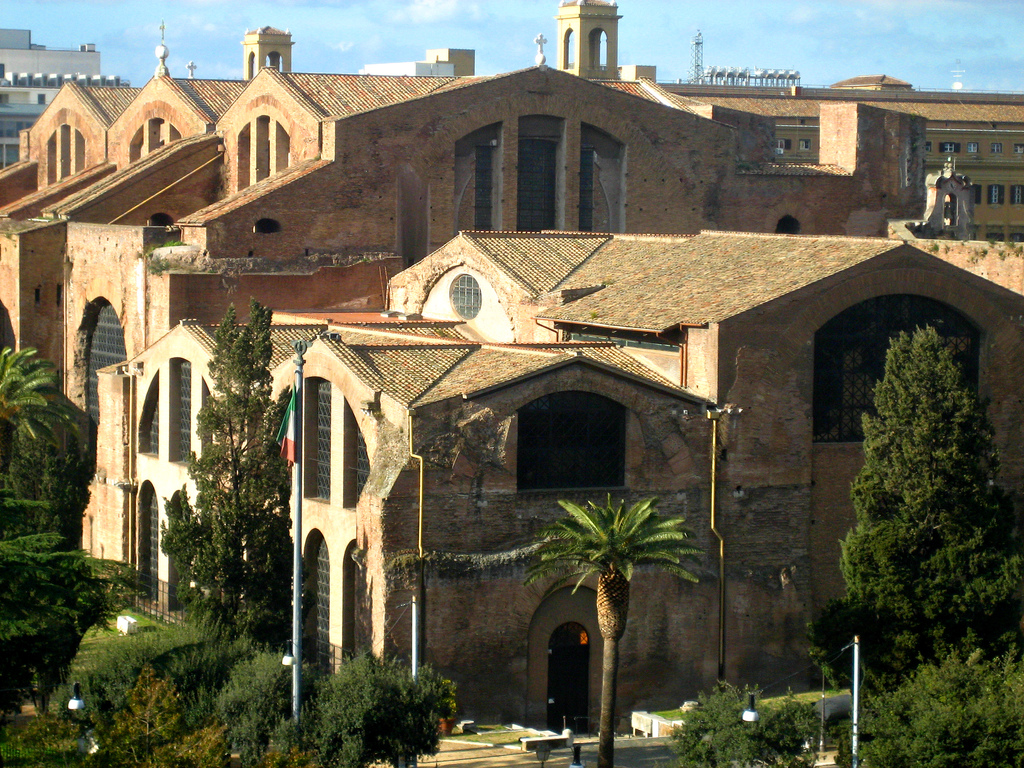
Photo: Zh0rz at Dutch Wikipedia · CC BY-SA 3.0 · Wikimedia Commons
Hadrian's Villa is an archaeological complex in Tivoli, Italy. Built by Emperor Hadrian in the early second century. The free Lokali audio guide runs 6 minutes.
✓ Published October 2026 · how we write these guides
Visitor facts
| Lokali audio guide | 6 min · free |
|---|---|
| Type | Archaeological Site |
| Location | Tivoli, Italy |
| Coordinates | 41.9419, 12.7753 |
| Official website | villae.cultura.gov.it |
| Languages | 50+, in the Lokali app |
The story
Listen first. Under the umbrella pines, the gravel crunches softly. Cicadas buzz in the olive trees. Somewhere ahead, water lies still in a long pool, and the old brick walls give back the warmth of the sun. You are standing on the plain below Tivoli, in the private world of one of Rome's most restless emperors.
This was the country retreat of the Emperor Hadrian, who ruled Rome in the early second century. He began building here soon after he came to power. Over the years, the estate grew into something far larger than a single house. Palaces, baths, libraries, theatres, gardens and pools spread across the land. Today the ruins cover a vast area, and a full visit can easily fill a day.
Why build here, and not in Rome itself? The city was about thirty kilometres away. It was close enough for messengers and officials to reach, yet far enough to escape the noise and politics of the capital. The land offered water, building stone and gentle slopes. In time, Hadrian seems to have spent long periods here, and parts of the imperial government probably moved with him.
To understand the villa, it helps to understand the man. Hadrian was a traveller. He spent years touring the provinces of his empire, from Britain to Egypt. He loved Greek culture deeply, so much that some Romans mocked him for it. He also took a real interest in architecture. Ancient writers suggest he had strong opinions on design and liked to sketch his own ideas.
Here is the first surprise. A late Roman biography of Hadrian says he named parts of this estate after famous places he had seen. It lists names such as the Lyceum and the Academy, linked with the philosophers of Athens, and the Canopus, a town in Egypt. So the villa was partly a kind of travel album in stone. Scholars still debate which ruin matches which name, so treat the labels on today's map as educated guesses.
The most famous of these spaces is the Canopus. A long, narrow pool stretches through a shallow valley. Columns and statues line its curved northern end. Among them stand female figures used as columns, called caryatids, copied from a temple in Athens. The statues you see now along the pool are mostly replicas. Several originals are kept in the small museum nearby, protected from weather.
At the far end of the pool sits a great half-domed hall, often called the Serapeum, after an Egyptian god. Archaeologists believe it served as an outdoor dining room. Picture the emperor and his guests reclining on couches in the shade. Water once ran down from the back of the hall, cooling the air. In front of them, the long pool reflected the evening sky.
Now for one of the strangest buildings in the whole Roman world. The so-called Maritime Theatre is a small round island inside a ring of water, all enclosed by a circular wall and colonnade. On the island stood a miniature house, with its own rooms and tiny bath. In ancient times, small bridges could be removed. Many think it was Hadrian's private hideaway — a retreat within a retreat.
Another surprise lies beneath your feet. The villa had a network of underground tunnels and service passages. Carts, slaves and servants could move supplies across the estate without being seen. Above ground, the emperor and his guests walked through calm gardens and quiet courtyards. Below, an entire hidden workforce kept the baths heated, the kitchens running and the fountains flowing.
The baths themselves are worth a slow look. Hadrian's Villa has more than one bath complex, including the Large Baths and the Small Baths. Look up at the broken vaults and domes. The Romans built them with concrete faced with brick and stone. Where the marble has gone, you can see the bare structure. It shows how bold Roman engineers were with curves and open space.
After the empire faded, the villa slowly fell into ruin. Its marble was burned for lime, and its stones were carried away. In the Renaissance, artists and collectors came here to study and to dig. Many statues from this site now stand in museums across Europe. Some decorative marble was even reused nearby, at the grand Villa d'Este in Tivoli, built for a powerful cardinal in the sixteenth century.
There is also a sadder story woven into this place. Hadrian had a young companion named Antinous, who drowned in the Nile around the year 130. The emperor grieved deeply. He founded a city in Egypt in his name and spread statues of him across the empire. Several images of Antinous were found at this villa. Some scholars think a site here was linked with his memory, though this remains debated.
Today, the site was listed as a UNESCO World Heritage Site in 1999. Walking it, you notice how the buildings do not follow one straight grid. Instead, they turn at different angles, following the land and the views. This makes the place feel personal, almost improvised. It is less like a single palace and more like the inside of one man's imagination.
Before you move on, pause for a moment. Look at the light on the brick, the shadows under the pines, the stillness of the water. Nearly two thousand years ago, an emperor walked these same paths, perhaps thinking of Athens or the Nile. As you leave, listen again to the crunch of gravel underfoot. It is a small sound, but here, it connects you to him.
Key facts
What to look for
Practical tips
Common questions
Is there a free audio guide to Hadrian's Villa?
Yes — the Lokali app narrates Hadrian's Villa free of charge in 50+ languages. The guide runs about 6 minutes, covers the history, what to look for on site and practical tips, and works offline once downloaded.
Where is Hadrian's Villa?
Hadrian's Villa is in Tivoli, Italy, at 41.9419, 12.7753. Tap the map link on this page for directions from where you are.
What is Hadrian's Villa known for?
Built by Emperor Hadrian in the early second century. Listed as a UNESCO World Heritage Site in 1999.
What should you look for at Hadrian's Villa?
Caryatid figures standing beside the long Canopus pool. The ring of water around the Maritime Theatre island. Bare brick and concrete inside the broken bath vaults.
What should you know before visiting Hadrian's Villa?
Wear sturdy shoes for long walks on gravel and grass. Bring water and a hat; shade is limited in summer.
When is the best time to visit Hadrian's Villa?
Bring water and a hat; shade is limited in summer.
On the map
Opens directions to Hadrian's Villa from your location.
More to see near Hadrian's Villa


Hear Hadrian's Villa in your language
The full story, narrated, in 50+ languages. Download it before you go and it plays offline, at your own pace, with no ticket and no tour group.