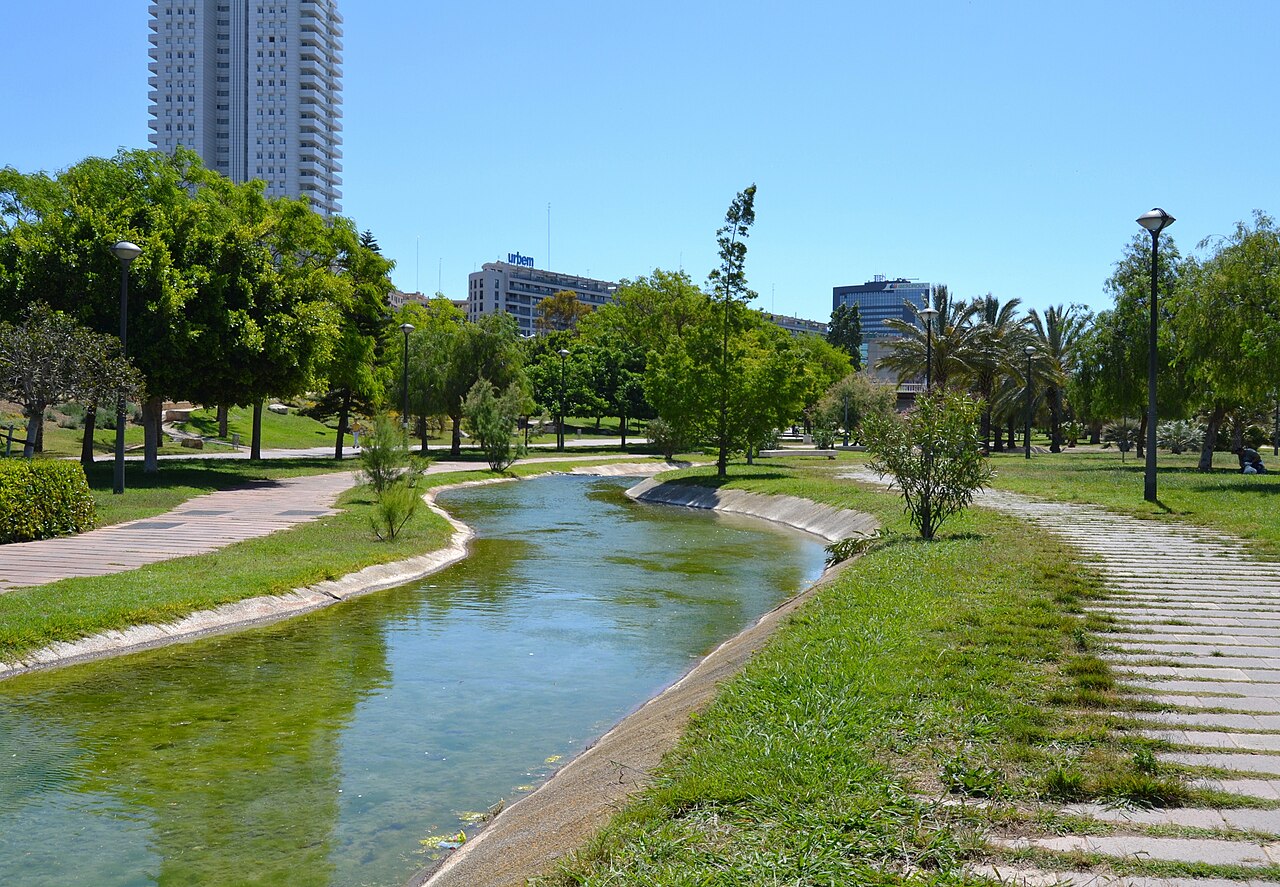
Turia Gardens is a park in Valencia, Spain. Nine-kilometre linear park built on a former riverbed, running through the heart of Valencia. Most visitors spend 1–3 hours here. The free Lokali audio guide runs 5 minutes.
✓ Verified August 2026 · how we write these guides
Visitor facts
| Time needed | 1–3 hours |
|---|---|
| Lokali audio guide | 5 min · free |
| Type | Park |
| Best for | Photography |
| Location | Valencia, Spain |
| Coordinates | 39.4667, -0.3667 |
| Languages | 45, in the Lokali app |
The story
A long, green park winds through the middle of the city, dipping below the level of the streets, crossed by old stone bridges, running for miles from the old town to the sea. This is the Turia Gardens, a park laid out in the bed of a river that no longer flows here, and the green spine of Valencia.
The story behind it is dramatic. The river that once ran through the city flooded disastrously in the middle of the twentieth century, and rather than risk it again, the city diverted the river around the edge of town, leaving its old bed empty through the centre.
Instead of filling the dry riverbed with a motorway, as was once planned, the city turned it into a great park, a ribbon of green that follows the old course of the water for many kilometres, one of the largest urban parks in the country.
The result is a sunken garden below the streets, sheltered from the traffic, planted with lawns, palms, orange trees, fountains, and play areas, and crossed overhead by the historic bridges that once spanned the river.
The park is the city's playground and exercise ground, full of joggers, cyclists, families, and footballers, a place where Valencia comes to relax, and a green route that lets you cross much of the city without touching a road.
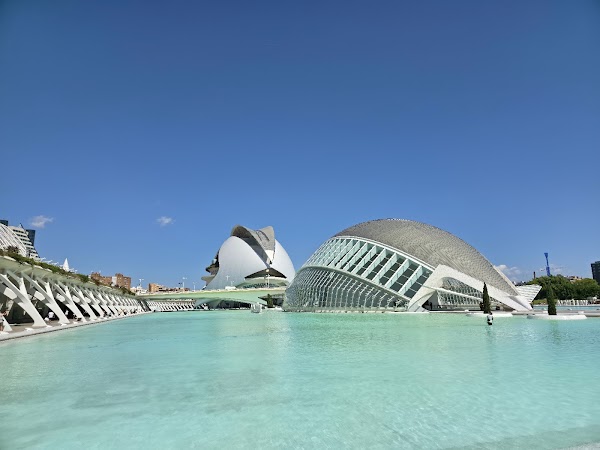
Cycling or walking its length is one of the best ways to see Valencia, leading from the towers and gates of the old town at one end down to the white shells of the modern arts complex at the other, the city's history laid out along the way.
Along the route are gardens of different characters, sports grounds, and even a giant reclining figure of a storybook giant that children climb over, so the park keeps surprising you as you move along it.
Because it is sunken and shaded, the park is noticeably cooler than the streets above, a welcome refuge in the heat of a Valencian summer, and pleasant in the soft light of morning and evening.
The old bridges crossing overhead are part of the charm, their stone arches now spanning grass and trees instead of water, a constant reminder of the river that shaped the city and then was moved.
The park ties the whole city together, so rather than a single destination it is best used as a route and a refuge, dipped into between the sights of the old town and the modern district.
A few practical notes. The gardens are free and open, best explored on foot or by hired bike along their length; come in the cooler hours, and use them to travel between the old town and the arts complex car-free.
Walk or ride the green riverbed from the old gates to the modern shells, under the old bridges and among the palms, and the clever reinvention of a flood into a park becomes clear. When you climb the steps back up to street level, the city closes in again around its hidden green river.
Key facts
What to look for
Practical tips
Common questions
How long do you need at Turia Gardens?
Plan 1–3 hours. That is the time most visitors spend at Turia Gardens. The free Lokali audio guide adds about 5 minutes of narration you can listen to as you walk, so it fits inside your visit rather than adding to it.
Is there a free audio guide to Turia Gardens?
Yes — the Lokali app narrates Turia Gardens free of charge in 50+ languages. It covers the history, what to look for on site and practical tips, and it works offline once downloaded.
Where is Turia Gardens?
Turia Gardens is in Valencia, Spain, at 39.4667, -0.3667. Tap the map link on this page for directions from where you are.
What should you know before visiting Turia Gardens?
Walk or cycle its length across the city.
What is Turia Gardens known for?
A long park in a diverted river's old bed.
What is the best time to visit Turia Gardens?
Rent a bike or walk the full length for free.
On the map
Opens directions to Turia Gardens from your location.
Reference
More to see in Valencia



Hear Turia Gardens in your language
The full story, narrated, in 50+ languages. Download it before you go and it plays offline, at your own pace, with no ticket and no tour group.