
Capilano Suspension Bridge
49.3428° N · 123.1120° W · Bridge
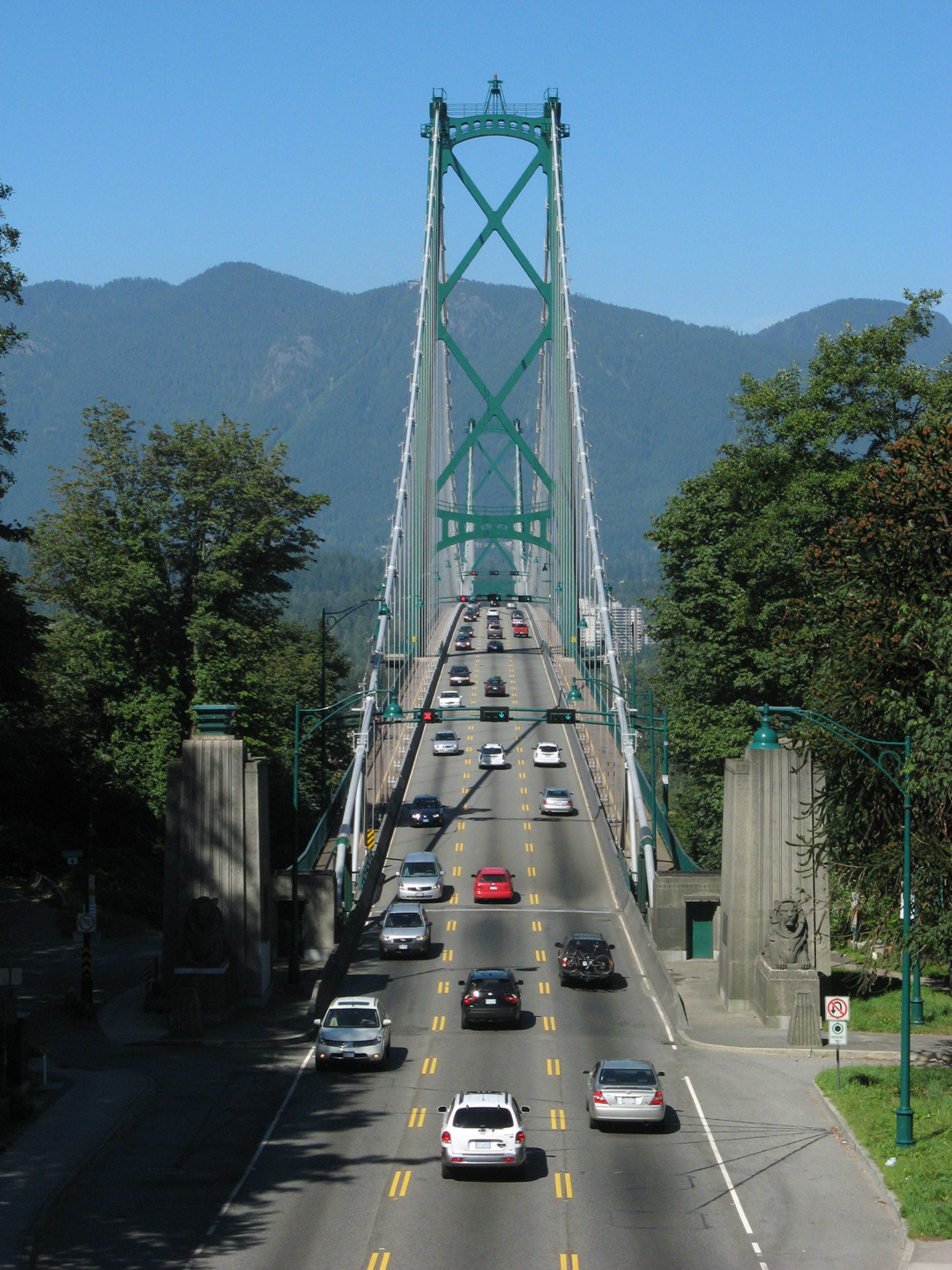
Photo: Markus Säynevirta · CC BY-SA 4.0 · Wikimedia Commons
Capilano Suspension Bridge is a suspension bridge in North Vancouver, British Columbia, Canada. First bridge built in 1889 by George Grant Mackay. The free Lokali audio guide runs 8 minutes.
✓ Published October 2026 · how we write these guides
Visitor facts
| Lokali audio guide | 8 min · free |
|---|---|
| Type | Bridge |
| Location | Vancouver, Canada |
| Coordinates | 49.3428, -123.1120 |
| Official website | capbridge.com |
| Languages | 50+, in the Lokali app |
The story
Listen first. Before you see the bridge, you hear the canyon. Water runs somewhere far below, a low and steady roar that never stops. The air is cool and damp, even in summer. It smells of wet cedar bark, moss and fern. Ahead, a narrow walkway of planks and steel cable stretches into green shadow. When you step onto it, you will feel it move under your feet. That movement is the whole point of this place.
You are standing at the Capilano Suspension Bridge, in North Vancouver. The city's towers are only a short drive south, across Burrard Inlet, but here the forest closes in completely. The bridge spans the Capilano River canyon. It runs about 140 metres from one side to the other. It hangs roughly seventy metres above the water. Those two numbers sound modest on paper. On the planks, with the deck swaying gently, they feel much bigger.
The story begins in 1889. A Scottish civil engineer named George Grant Mackay had bought a large piece of forest land on both sides of the canyon. He built a small cabin on the edge of the cliff. To reach the far bank, he needed a crossing. With help from local Indigenous men, he hung a bridge made of hemp rope, with cedar planks laid across it. It was a practical solution for a man who simply wanted to walk to the other side of his property.
There is a well-known story about that first bridge. According to the popular tale, the local Squamish people gave it a nickname. They called it the laughing bridge. The name came from the sound it made. The hemp ropes creaked, and the planks rattled and knocked together whenever the wind blew through the canyon. Whether the nickname is exact history or a fond legend, it is easy to believe. Listen as you cross, and you may hear your own version of that laughter.
Hemp rope does not last long in a wet rainforest. In the early 1900s, the rope was replaced with wire cable, a far stronger material. Later owners rebuilt and strengthened the bridge again in the 1950s. Today the deck hangs from heavy steel cables, anchored deep into concrete blocks on each side of the canyon. The modern structure is built to carry large crowds at once. Even so, the designers kept the movement. A suspension bridge that did not sway would feel like an ordinary footpath.
Here is something many visitors do not realise. Over the years, the bridge has been a private business, not a public park. It changed hands several times. Each owner added something new to attract visitors from the city. A teahouse, a gift shop, carved figures, forest trails. It became one of the earliest tourist attractions in the Vancouver area. People came by ferry and then by horse-drawn coach, long before there was a bridge across the inlet for cars.
The name Capilano itself carries a deeper history. It comes from a Squamish chief, often written in English as Kiapilano, who led his people in this area in the nineteenth century. The Squamish Nation, together with other Coast Salish peoples, has lived along these rivers and shores for thousands of years. Coast Salish is the name for a family of Indigenous peoples of the Pacific Northwest coast. Long before any bridge, the river and the forest here were part of their homeland.
Near the entrance, look for the collection of totem poles. These tall carved cedar poles show figures from Indigenous family histories and stories. Animals, birds and human faces are stacked one above another, painted in black, red, white and blue-green. The collection began in the twentieth century, when an owner of the park invited Indigenous carvers to work here. Inside the park, there is also a space where you can learn about local Indigenous culture. Take a moment there. It changes how you see the forest around you.
Now, the trees. This canyon sits inside a temperate rainforest. That means a forest with mild temperatures and very heavy rainfall, not tropical heat. The giants here are mostly Douglas fir and western red cedar. Some of these trees are several hundred years old. Their trunks are wide enough that several people could join hands around them. Look closely at the bark. On the Douglas fir it is thick, dark and deeply grooved. On the cedar it is reddish, stringy and soft to the touch.
On the far side of the main bridge is a second surprise. A network of smaller suspension bridges runs between the trunks of the old Douglas firs. This is Treetops Adventure. The walkways are attached to the trees with a special collar system that holds the platforms without nails or bolts driven into the wood. As the trees grow, the collars can be adjusted. So you walk among living trees, high above the forest floor, and the trees are not harmed. From up here, the light changes. It comes down in narrow green beams.
The third experience is Cliffwalk. It was built to give visitors a completely different view of the canyon. Here, a narrow walkway is bolted to the side of a granite cliff. Some sections stick out over the river, with only glass or open grating between you and the drop. It is not a bridge in the normal sense. It follows the curve of the rock. The granite face is dark grey and wet, with ferns and small plants growing from every crack. Below, the river is a band of white and green water.
A few practical thoughts as you explore. The main bridge moves more when many people walk at once. If you want a calmer crossing, wait for a gap in the crowd. Hold the side cables if you need to, but try letting go for a moment. Stop in the middle. Look upstream, then downstream. The canyon walls drop almost straight down. In winter, the park is often lit with thousands of small lights, and the whole canyon glows after dark.
Before you leave, stand for a moment at the edge of the canyon, away from the main path. Feel the cool air rising from the water. Notice the drops falling from the branches above you, long after the rain has stopped. Notice how small the bridge looks from the side, a thin line of cable and plank across a deep green gap. More than a century ago, one man wanted only to reach the other side of his land. Today you have crossed the same canyon. As you walk back toward the entrance, listen once more for the river. It is the same sound Mackay heard from his cabin on the cliff.
Key facts
What to look for
Practical tips
Common questions
Is there a free audio guide to Capilano Suspension Bridge?
Yes — the Lokali app narrates Capilano Suspension Bridge free of charge in 50+ languages. The guide runs about 8 minutes, covers the history, what to look for on site and practical tips, and works offline once downloaded.
Where is Capilano Suspension Bridge?
Capilano Suspension Bridge is in Vancouver, Canada, at 49.3428, -123.1120. Tap the map link on this page for directions from where you are.
What is Capilano Suspension Bridge known for?
First bridge built in 1889 by George Grant Mackay. Original bridge used hemp rope and cedar planks.
What should you look for at Capilano Suspension Bridge?
Painted totem poles gathered near the park entrance. Deep grooves in the thick Douglas fir bark. Reddish, stringy bark on the western red cedars.
What should you know before visiting Capilano Suspension Bridge?
Wait for a gap in crowds for a calmer crossing. Wear shoes with good grip for damp planks.
When is the best time to visit Capilano Suspension Bridge?
Come after dark in winter to see the lights.
On the map
Opens directions to Capilano Suspension Bridge from your location.
More to see in Vancouver


Hear Capilano Suspension Bridge in your language
The full story, narrated, in 50+ languages. Download it before you go and it plays offline, at your own pace, with no ticket and no tour group.