
Photo: Didier Descouens · CC BY-SA 4.0 · Wikimedia Commons
Gallerie dell'Accademia is an art museum in Venice, Italy. Largest collection of Venetian painting anywhere in the world. The free Lokali audio guide runs 7 minutes.
✓ Published October 2026 · how we write these guides
Visitor facts
| Lokali audio guide | 7 min · free |
|---|---|
| Type | Museum |
| Location | Venice, Italy |
| Coordinates | 45.4311, 12.3281 |
| Official website | gallerieaccademia.it |
| Languages | 50+, in the Lokali app |
The story
Listen first. Water slaps against stone. A vaporetto engine idles. Footsteps knock across the wooden boards of the Accademia Bridge above the Grand Canal. Then you push through the doors, and the city's noise drops away. Inside, the air is cool and still. The light is soft and filtered. All around you, on walls and ceilings, hangs five centuries of Venetian painting, gathered in one place.
You are standing in the Gallerie dell'Accademia, on the Dorsoduro side of the Grand Canal. Dorsoduro means hard back. It is a district of firmer ground, artists' studios and quiet canals. This gallery holds the largest collection of Venetian painting in the world. The works run from gold-ground altarpieces of the Middle Ages to the great canvases of the eighteenth century. For anyone who wants to understand how Venice saw itself, this is the place to start.
The building came before the museum. The complex joins three older structures. One is the church of Santa Maria della Carità. Another is the Scuola Grande della Carità, one of the oldest of the city's great lay confraternities. The third is a former monastery. A scuola in Venice was not a school. It was a brotherhood of citizens. Members paid dues, cared for the poor, marched in processions, and spent large sums on art to honour their patron saints.
The gallery itself was born in the Napoleonic period. In the early nineteenth century, French rule closed many churches, monasteries and confraternities across Venice. Their paintings had to go somewhere. The city's Academy of Fine Arts moved into these buildings, and the confiscated art came with it. The collection first served as a teaching tool for young painters. Students learned by copying the masters. Only later did the rooms open to the public as a full museum.
Now look up. In the first great hall, the old chapter room of the confraternity, the ceiling is a deep field of carved and gilded wood. Small angel faces look down from the panels. Below, the walls carry early altarpieces with flat gold backgrounds. In these pictures, saints stand stiffly, like figures in a mosaic. Venice traded closely with Byzantium, the eastern Roman Empire centred on Constantinople. You can see that eastern taste here, in the gold, the symmetry, and the solemn faces.
Walk on, and the gold slowly gives way to air and landscape. This is the work of the Bellini family and their circle. Giovanni Bellini painted many Madonnas, and several hang here. Look at the skies behind the Virgin. They fade from pale blue to warm cream at the horizon. Bellini helped Venetian painters move from tempera to oil paint. Oil let them build colour in thin, glowing layers. That shift changed the look of Venetian art for centuries.
Now for one of the gallery's great puzzles. Find a small painting by Giorgione called The Tempest. A young woman nurses a baby in a landscape. A man with a staff stands nearby. A bolt of lightning cuts across a stormy sky behind them. And no one agrees what it means. Scholars have proposed many readings, from myth to scripture to private allegory. Giorgione died young, and very few works are firmly his. Here, the mystery is part of the picture.
Some of the largest canvases in the building tell stories about Venice itself. Look for the cycles painted for the scuole by Vittore Carpaccio and Gentile Bellini. One scene shows a procession in Piazza San Marco. Another shows a miracle near the Rialto, and it records the old wooden Rialto Bridge, long before the stone bridge you know today. These paintings are almost documentary. Gondoliers, merchants, laundry and chimney pots fill the edges. Spend time in those corners.
Carpaccio also painted the Legend of Saint Ursula, a long series about a princess and her pilgrimage. It fills a room of its own. Find the scene of Ursula asleep in her bed. Her slippers sit neatly on the floor. A small dog rests nearby. Morning light enters the room as an angel arrives at the door. It is a holy scene, but it feels like a real Venetian bedroom, quiet and ordinary.
Here is a detail many visitors miss. Titian's Presentation of the Virgin at the Temple still hangs in the room it was painted for. That room was the meeting hall of the confraternity's officers. The young Mary climbs a broad staircase in a pale blue dress, small against the crowd. Look at how the painting fits around the doorways in the wall. The canvas was shaped for this space. You are seeing it exactly where its patrons first saw it.
Titian appears again near the end of his long life. His Pietà shows the dead Christ in the arms of his mother. The brushwork is rough and broken, close to raw. Titian intended it for his own tomb, but he died before he finished it. Another painter, Palma il Giovane, completed the work. An inscription on the canvas records this. Up close, the surface looks like fire. From a few steps back, the figures come together.
Then comes a painting that once brought its artist before the Inquisition. Paolo Veronese painted an enormous Last Supper, full of soldiers, servants, dwarfs, animals and a man with a bloody nose. Church officials questioned him in 1573 about these unholy details. Instead of repainting it, Veronese changed the title. It became The Feast in the House of Levi, a different story from the Gospels. The canvas stretches across the end wall. Stand back to see the whole marble stage.
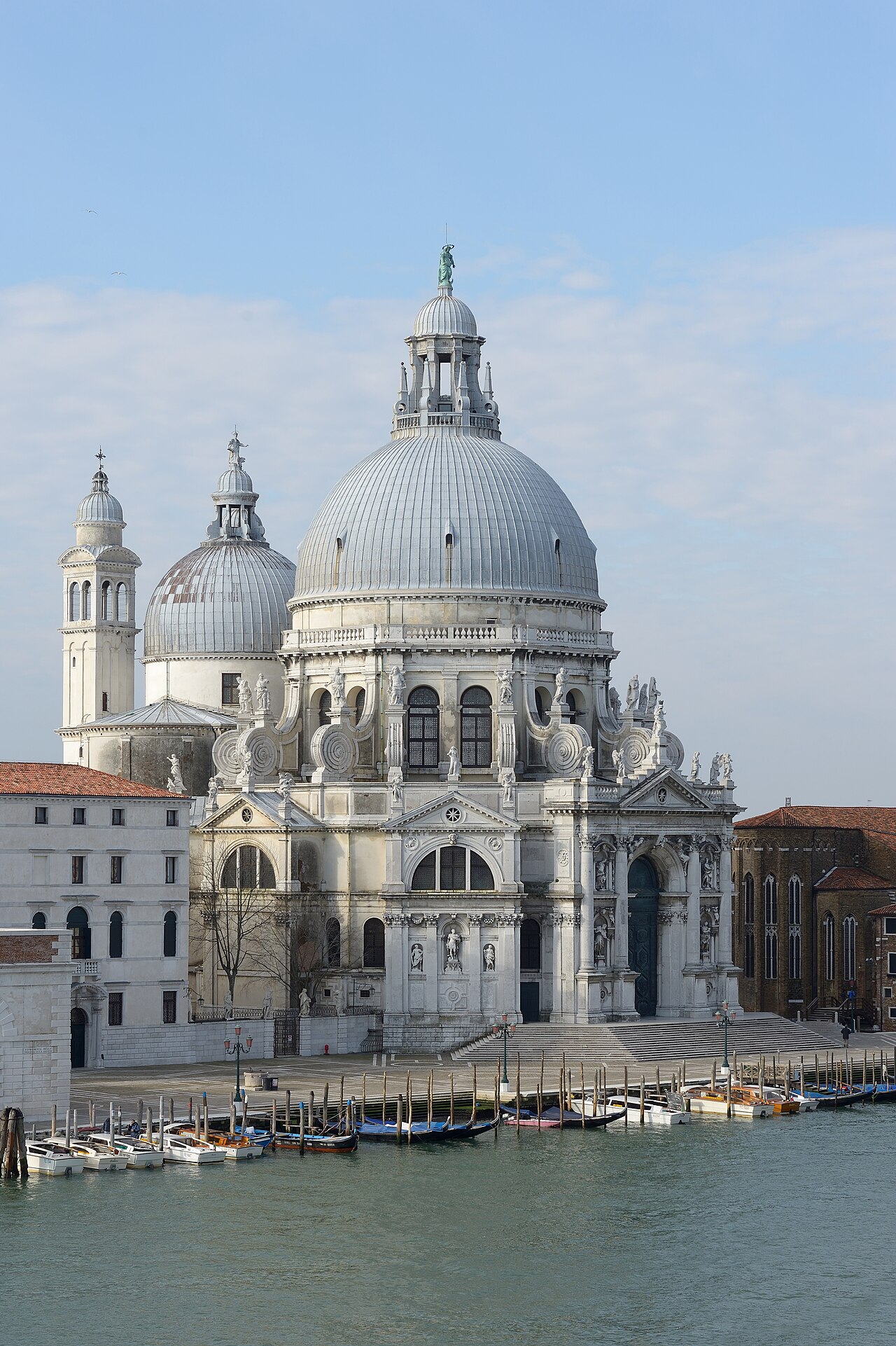
One more surprise. The gallery owns Leonardo da Vinci's famous drawing of the Vitruvian Man, the figure inside a circle and a square. It is very sensitive to light, so it is rarely shown and stays in storage most of the time. Now, as you leave, step back onto the bridge. Look down the Grand Canal toward the dome of the Salute. Notice the colours of the water, the brick and the sky. You have just seen them in paint.
Key facts
What to look for
Practical tips
Common questions
Is there a free audio guide to Gallerie dell'Accademia?
Yes — the Lokali app narrates Gallerie dell'Accademia free of charge in 50+ languages. The guide runs about 7 minutes, covers the history, what to look for on site and practical tips, and works offline once downloaded.
Where is Gallerie dell'Accademia?
Gallerie dell'Accademia is in Venice, Italy, at 45.4311, 12.3281. Tap the map link on this page for directions from where you are.
What is Gallerie dell'Accademia known for?
Largest collection of Venetian painting anywhere in the world. Housed in a former church, confraternity and monastery.
What should you look for at Gallerie dell'Accademia?
Gilded wooden ceiling with carved angel faces in first hall. Lightning bolt across the sky in Giorgione's Tempest. Old wooden Rialto Bridge in Carpaccio's miracle scene.
What should you know before visiting Gallerie dell'Accademia?
Visit early morning to see the large canvases quietly. Book ahead online during summer and holiday periods.
When is the best time to visit Gallerie dell'Accademia?
Visit early morning to see the large canvases quietly.
On the map
Opens directions to Gallerie dell'Accademia from your location.
More to see in Venice



Hear Gallerie dell'Accademia in your language
The full story, narrated, in 50+ languages. Download it before you go and it plays offline, at your own pace, with no ticket and no tour group.