
Austrian National Library
48.2061° N · 16.3663° E · Museum
Photo: Richard Hopkins · CC BY 2.0 · Wikimedia Commons
Austrian National Library is the largest library in Austria. It is in Vienna, Austria. Commissioned by Emperor Charles the Sixth in the early 1700s. The free Lokali audio guide runs 7 minutes.
✓ Published October 2026 · how we write these guides
Visitor facts
| Lokali audio guide | 7 min · free |
|---|---|
| Type | Museum |
| Location | Vienna, Austria |
| Coordinates | 48.2061, 16.3663 |
| Official website | onb.ac.at |
| Languages | 50+, in the Lokali app |
The story
Leather, old paper, and a faint trace of wood polish. That is the first thing many people notice inside the State Hall of the Austrian National Library. The air is cool and still. Footsteps soften on the floor. Then your eyes rise, past rows of gilded spines, toward a painted sky that seems to float above the room. For a moment, it is hard to know where to look first. Take that moment. This room was designed to make you stop.
You are standing inside the Hofburg, the vast palace complex where the Habsburg dynasty ruled for centuries. This library began as the private book collection of that family. Its roots are usually traced to the late Middle Ages, when Habsburg dukes started gathering manuscripts. Over generations, the collection grew with every emperor. For most of its life it was called the Court Library. Only after the empire collapsed, in the years after the First World War, did it take its present name as the national library of Austria.
The great hall around you is the heart of that old Court Library. It was commissioned by Emperor Charles the Sixth in the early eighteenth century. The design came from Johann Bernhard Fischer von Erlach, one of the leading architects of Austrian Baroque — the ornate, theatrical style of that era. He died before the work was finished. His son, Joseph Emanuel, completed it. So this room is a quiet family story: one generation drew the plan, and the next generation built it.
Now look at the shape of the space. The hall is long, close to eighty metres, and divided into wings that meet under a central oval dome. Each part has its own character. The two side wings feel almost like streets of books. The central oval opens up and lifts the eye. Marble columns frame the shelves. Walnut bookcases climb toward galleries that you can see, but cannot reach. Everything here is built to guide your gaze upward.
And upward is where the ceiling waits. The frescoes are the work of the painter Daniel Gran. They are full of allegorical figures — personifications of virtues, sciences, and the glory of the emperor. Under the dome, the painting celebrates Charles the Sixth and his rule. Do not worry about decoding every figure. Even art historians debate some of them. Simply notice how the painted architecture seems to continue the real architecture, so the room appears taller than it truly is.
Directly beneath the dome stands a marble statue of Charles the Sixth himself. He is dressed in the style of an ancient Roman ruler. Around him, other statues of Habsburg rulers line the hall. This is a library, yes, but it is also a political statement. Books meant knowledge, and knowledge meant power. By surrounding his own image with learning, the emperor presented himself as a patron of wisdom, not only a ruler of lands.
Here is the first detail that many visitors miss. Look closely at the bookcases. Some of them are not quite what they seem. Hidden among the shelves are concealed doors, disguised with rows of book spines. They once allowed staff to move between spaces without breaking the visual rhythm of the room. If you scan the walls slowly, you may spot one. It is a small piece of stagecraft inside a very grand stage.
The second surprise is in the central oval. Many of the books here came from Prince Eugene of Savoy, the celebrated military commander who served the Habsburgs. He was also a passionate collector. After his death, his library entered the imperial collection. His books are known for their fine leather bindings, and the colour of the leather is often linked to subject. Look for clusters of red, blue, and yellow spines. That pattern was a way to sort knowledge by sight.
You will also see globes standing in the hall. Some of them are the work of Vincenzo Coronelli, an Italian cartographer of the late seventeenth century who was famous for large, richly detailed globes. Lean in if you can. The coastlines are not quite right. Some regions are guessed, and some are missing. These globes show the world as educated Europeans imagined it at the time. That gap between their map and ours is part of the fascination.
The State Hall is only one face of this institution. The library holds millions of items today, and much of its working collection lives in other parts of the Hofburg. It also runs several small museums. There is a Papyrus Museum, a Globe Museum, a Literature Museum, and even a museum devoted to Esperanto, the constructed international language. If this hall makes you curious, those collections offer quieter, more focused visits nearby.
Among the library's treasures are some famous manuscripts. One is the Vienna Dioscurides, an illustrated book of medicinal plants made in the early Byzantine period. Another is the Tabula Peutingeriana, a long medieval copy of a Roman road map. These fragile pieces are not usually on open display. Light and air can damage them. Still, it is worth knowing that objects like these sit somewhere within these walls, carefully protected.
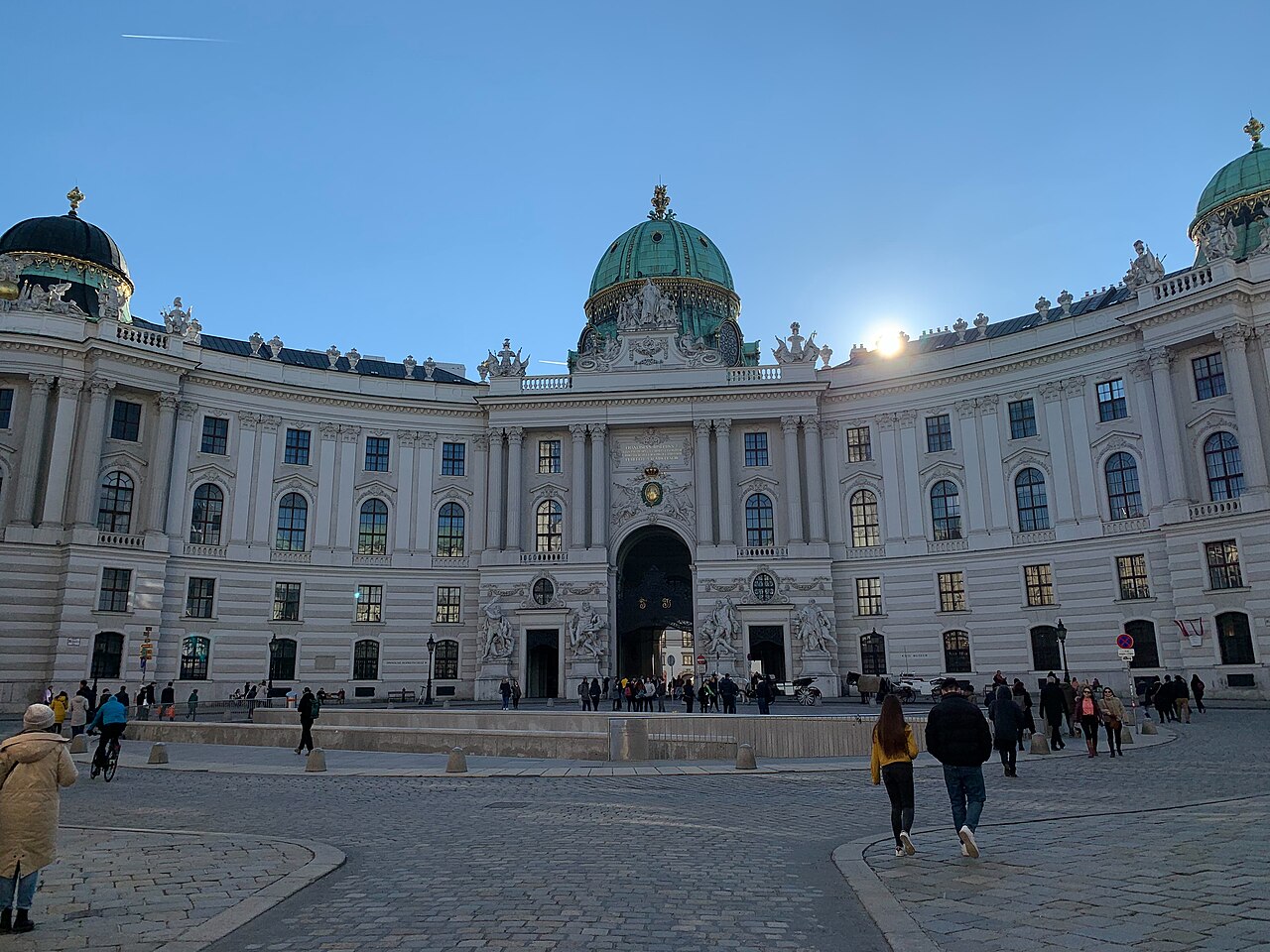
When you step back outside, you arrive at Josefsplatz, one of the calmest squares in central Vienna. The library's facade forms one side of it. In the middle stands an equestrian statue of Emperor Joseph the Second, a reforming ruler of the late eighteenth century. Notice how enclosed the square feels. Unlike the open plazas elsewhere in the Hofburg, this space has an intimate, almost private scale. Horse-drawn carriages sometimes pass, and the sound of hooves carries off the stone.
Before you leave the hall, find a spot near the dome and stand still for a minute. Listen to how voices fade into the height of the room. Watch how the daylight from the windows touches the gilt and the marble. Then look along the shelves once more. Every spine is a closed door to another world. As you walk out into Vienna, carry that quiet with you, and notice how the city sounds louder than it did before.
Key facts
What to look for
Practical tips
Common questions
Is there a free audio guide to Austrian National Library?
Yes — the Lokali app narrates Austrian National Library free of charge in 50+ languages. The guide runs about 7 minutes, covers the history, what to look for on site and practical tips, and works offline once downloaded.
Where is Austrian National Library?
Austrian National Library is in Vienna, Austria, at 48.2061, 16.3663. Tap the map link on this page for directions from where you are.
What is Austrian National Library known for?
Commissioned by Emperor Charles the Sixth in the early 1700s. Designed by Johann Bernhard Fischer von Erlach.
What should you look for at Austrian National Library?
Concealed doors disguised as rows of book spines. Marble statue of Charles the Sixth beneath the dome. Coronelli globes showing outdated coastlines.
What should you know before visiting Austrian National Library?
Arrive early to see the hall before crowds gather. Bring a wide-angle lens for the long central view.
When is the best time to visit Austrian National Library?
Arrive early to see the hall before crowds gather.
On the map
Opens directions to Austrian National Library from your location.
More to see in Vienna


Hear Austrian National Library in your language
The full story, narrated, in 50+ languages. Download it before you go and it plays offline, at your own pace, with no ticket and no tour group.