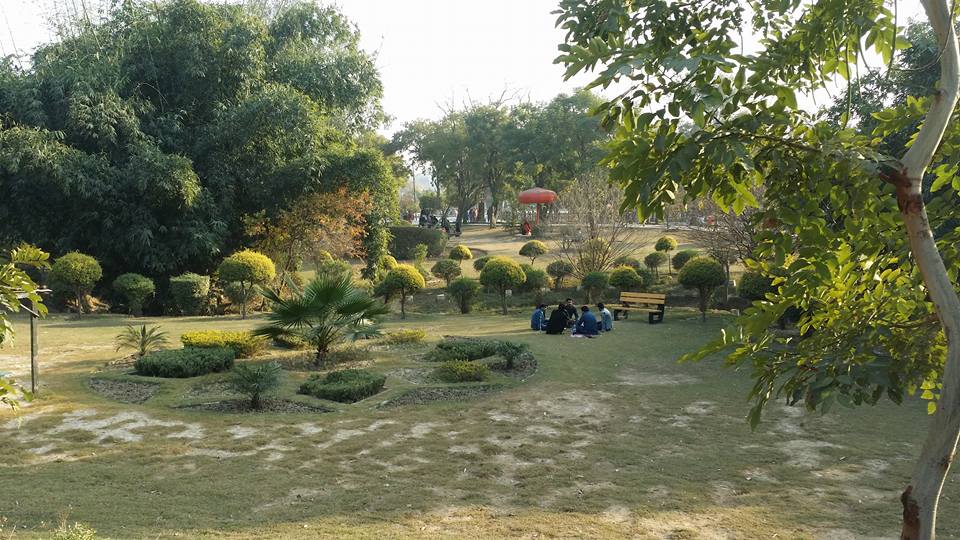
Ayub Park is a park in Zone V, Pakistan. Large public park with walking trails, gardens, and recreational facilities. Most visitors spend 1–1.5 hours here. The free Lokali audio guide runs 5 minutes.
✓ Verified August 2026 · how we write these guides
Visitor facts
| Time needed | 1–1.5 hours |
|---|---|
| Lokali audio guide | 5 min · free |
| Type | Park |
| Best for | Family |
| Location | Zone V, Pakistan |
| Coordinates | 33.5445, 73.2245 |
| Languages | 45, in the Lokali app |
The story
The air changes as you pass through the gate. The traffic noise fades behind you. Birdsong takes its place. Tall trees throw long shadows over wide lawns. Water shines somewhere ahead. This is Ayub National Park, the largest green space in the Rawalpindi and Islamabad area, and a favorite escape for families from across the twin cities.
The park sits on Jhelum Road, not far from the old presidency. It is easy to reach. The railway station lies about ten kilometers away. The Islamabad airport is around fifteen kilometers from the gates. For a place this large and this green, it sits surprisingly close to the center of everything. You can leave the city behind without going far. Many visitors arrive by local taxi or bus.
The land here is older than the country itself. The park was set aside before Pakistan was created. It covers around two thousand three hundred acres. That is a very large amount of space. You could walk for hours and still not see every corner of it. Bring comfortable shoes if you mean to explore. Maps near the gates help you choose a direction before you set off.
In 1959, the grounds became a national park. This happened during the years when Ayub Khan led the country, and the park carries his name to this day. The Rawalpindi Cantonment Board was given the task of caring for it. They have managed the grounds ever since, keeping the lawns green and the paths open. Their care is the reason the park still feels welcoming after so many decades.
Water is one of the park's great pleasures. There are lakes here where you can take a boat out onto the calm surface. The largest is a man-made lake covering around eighty acres. On a warm afternoon, the small boats drift slowly, and the water mirrors the wide sky above. The gentle dip of the oars is easy to lose yourself in.
Listen for the sounds of the park as you walk. Children laughing near the play areas. The soft splash of oars on the lake. The call of birds in the high branches. A train horn, far away. The park gathers many small sounds and softens them all into one gentle background hum. It is the kind of sound that makes your shoulders drop.
There is an aquarium here for those who want to see life beneath the water. Glass tanks hold fish of many shapes and colors. It is a cool, dim, quiet space, a welcome change from the bright open lawns outside. Children often press close to the glass, watching the fish turn and drift in the light.
The park also holds a wildlife area known as Jungle World. It spreads across about one hundred and fifty acres. Open enclosures hold a range of animals. It is a place to walk slowly and observe. Move with care and respect here, as you would in any place where animals make their home.
Families come here for simple reasons. To spread a cloth on the grass and share a meal. To let children run until they are tired. To sit in the shade and do very little at all. This is what the park is truly for. Rest, more than anything else, and time spent together away from screens and traffic. On weekends the lawns fill early, and the smell of cooking drifts on the breeze.
Find a bench near the water if you can. Sit for a while. The pace here is slow on purpose. People are not rushing anywhere. They have come to step out of the busy city, even if only for one afternoon, and to breathe a little more easily under the open sky.
The park is often described as one of the largest in Asia. Whether or not that claim holds exactly, the feeling of space here is real. After the tight lanes of the old city, the wide horizons come as a relief. Your eyes can rest on distance, on green, on water, instead of walls and signs. It is a simple pleasure, and an easy one to forget you needed.
Ayub National Park asks very little of you. There is no single thing you must rush to see. You can wander, or sit, or row a boat, or simply listen to the birds. In a region of crowded streets and constant motion, this green space offers something rare. Room to slow down. As you leave, try to carry a little of that calm back out with you.
Key facts
What to look for
Practical tips
Common questions
How long do you need at Ayub Park?
Plan 1–1.5 hours. That is the time most visitors spend at Ayub Park. The free Lokali audio guide adds about 5 minutes of narration you can listen to as you walk, so it fits inside your visit rather than adding to it.
Is there a free audio guide to Ayub Park?
Yes — the Lokali app narrates Ayub Park free of charge in 50+ languages. It covers the history, what to look for on site and practical tips, and it works offline once downloaded.
Where is Ayub Park?
Ayub Park is in Zone V, Pakistan, at 33.5445, 73.2245. Tap the map link on this page for directions from where you are.
What should you know before visiting Ayub Park?
Rent a boat for a ride on the lake.
What is Ayub Park known for?
Covers around 2,300 acres of parkland.
What is the best time to visit Ayub Park?
The sunrise walk from the eastern entrance offers views toward the Margalla Hills.
On the map
Opens directions to Ayub Park from your location.
More to see in Zone V


Hear Ayub Park in your language
The full story, narrated, in 50+ languages. Download it before you go and it plays offline, at your own pace, with no ticket and no tour group.