Liaquat Bagh is a park in Zone V, Pakistan. Public garden and memorial park dedicated to Pakistan's first Prime Minister, Muhammad Ali Jinnah. Most visitors spend 30–45 min here. The free Lokali audio guide runs 5 minutes.
✓ Verified August 2026 · how we write these guides
Visitor facts
| Time needed | 30–45 min |
|---|---|
| Lokali audio guide | 5 min · free |
| Type | Park |
| Best for | History |
| Location | Zone V, Pakistan |
| Coordinates | 33.5843, 73.2305 |
| Languages | 45, in the Lokali app |
The story
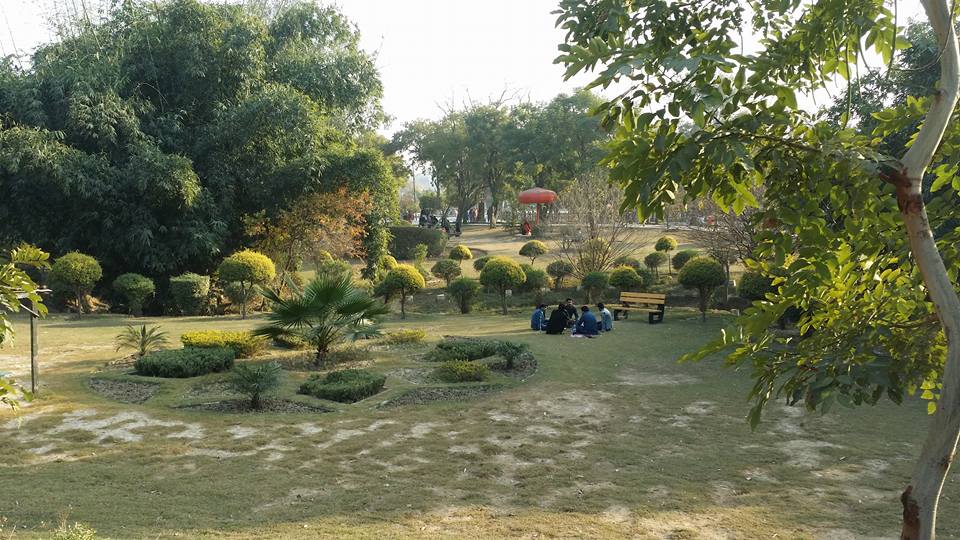
Green opens up in front of you. After the noise of Murree Road, the park feels like a held breath. Trees stand in long rows. Paths curve across the grass. People walk slowly, or sit, or talk in small groups. This is Liaquat Bagh, one of the oldest public parks in Rawalpindi. It is a calm place on most days. It is also a place that remembers two of the hardest days in the country's history.
The park was not always called Liaquat Bagh. For many years it carried the name Company Bagh. It was a public garden, a place for families and gatherings. People came here to rest, to meet, and to listen to speakers address the crowd. Open ground like this has always drawn people together, in good times and in hard ones. A park belongs to the whole city, and the whole city has passed through it.
The name changed because of one afternoon. On 16 October 1951, the prime minister of Pakistan came here to speak. His name was Liaquat Ali Khan. He was the country's first prime minister, a central figure in its founding. A very large crowd had gathered to hear him, said to number in the tens of thousands. The mood was one of expectation.
As he addressed the people, he was shot. He died from his wounds. The man who fired the shots was killed at the scene. The reasons behind the attack were never fully resolved, and historians still discuss them today. The garden where it happened was later renamed in his honor. From then on, it was known as Liaquat Bagh.
Stand on the open ground for a moment. Picture the size of that gathering. The speaker's raised voice. The sudden silence that must have followed. A place built for celebration became, in a single instant, a place of mourning. The park has carried that weight quietly ever since. It is a strange thing to stand somewhere so peaceful and know what once happened on it.
More than fifty years later, history returned to the same ground. On 27 December 2007, another former prime minister came here. Her name was Benazir Bhutto. She had led an election rally inside the park. As she was leaving, she was attacked and killed. The country, and much of the world, watched the news in shock and sorrow.
Two prime ministers. The same park. Fifty-six years apart. Few places anywhere carry a coincidence so heavy. People in Rawalpindi know this ground not only as a garden, but as a witness to their nation's deepest moments of grief. The memory is part of the soil here.
And yet, the park has not become a place of sadness alone. Children still play on the grass. Friends still meet under the trees. Vendors still sell snacks near the gates. Life continues here, gently, every single day. That, too, is part of the story, and perhaps the most hopeful part of it.
Walk the paths and you will find shaded corners and open lawns. The trees are old and tall. Some have stood far longer than the events that made this park widely known. They give cool shade in the warm months, when the city air turns heavy and still. Sit beneath them, and the noise of the road feels far away. Birds move in the branches above. The light falls in soft patches on the grass.
A memorial marks the connection to the events that took place here. Take a quiet moment near it if you wish. There is no need for many words. A place like this asks mainly to be noticed, and to be treated with care and respect by those who pass through.
Think about what a public park really means. It is open to everyone. It belongs to no single person. People come here to speak, to listen, and to feel part of something larger than themselves. That openness is a gift. It can also carry risk, as this very ground has shown more than once. A garden gives much, and asks for care in return.
Liaquat Bagh holds two stories at the same time. It is a simple green park, where ordinary days quietly unfold. And it is a marker of memory, where a country lost two of its leaders. Both stories are true together. As you leave, the everyday noise of the city returns at once. But the stillness of this place may stay with you a little longer than you expect.
Key facts
What to look for
Practical tips
Common questions
How long do you need at Liaquat Bagh?
Plan 30–45 min. That is the time most visitors spend at Liaquat Bagh. The free Lokali audio guide adds about 5 minutes of narration you can listen to as you walk, so it fits inside your visit rather than adding to it.
Is there a free audio guide to Liaquat Bagh?
Yes — the Lokali app narrates Liaquat Bagh free of charge in 50+ languages. It covers the history, what to look for on site and practical tips, and it works offline once downloaded.
Where is Liaquat Bagh?
Liaquat Bagh is in Zone V, Pakistan, at 33.5843, 73.2305. Tap the map link on this page for directions from where you are.
What should you know before visiting Liaquat Bagh?
Visit during the cooler morning or evening hours.
What is Liaquat Bagh known for?
Formerly named Company Bagh before being renamed.
What is the best time to visit Liaquat Bagh?
The memorial pavilion at the center is where Liaquat was assassinated in 1951 — a somber but important site.
On the map
Opens directions to Liaquat Bagh from your location.
More to see in Zone V


Hear Liaquat Bagh in your language
The full story, narrated, in 50+ languages. Download it before you go and it plays offline, at your own pace, with no ticket and no tour group.