
Erechtheion
37.9721° N · 23.7265° E · Archaeological Site
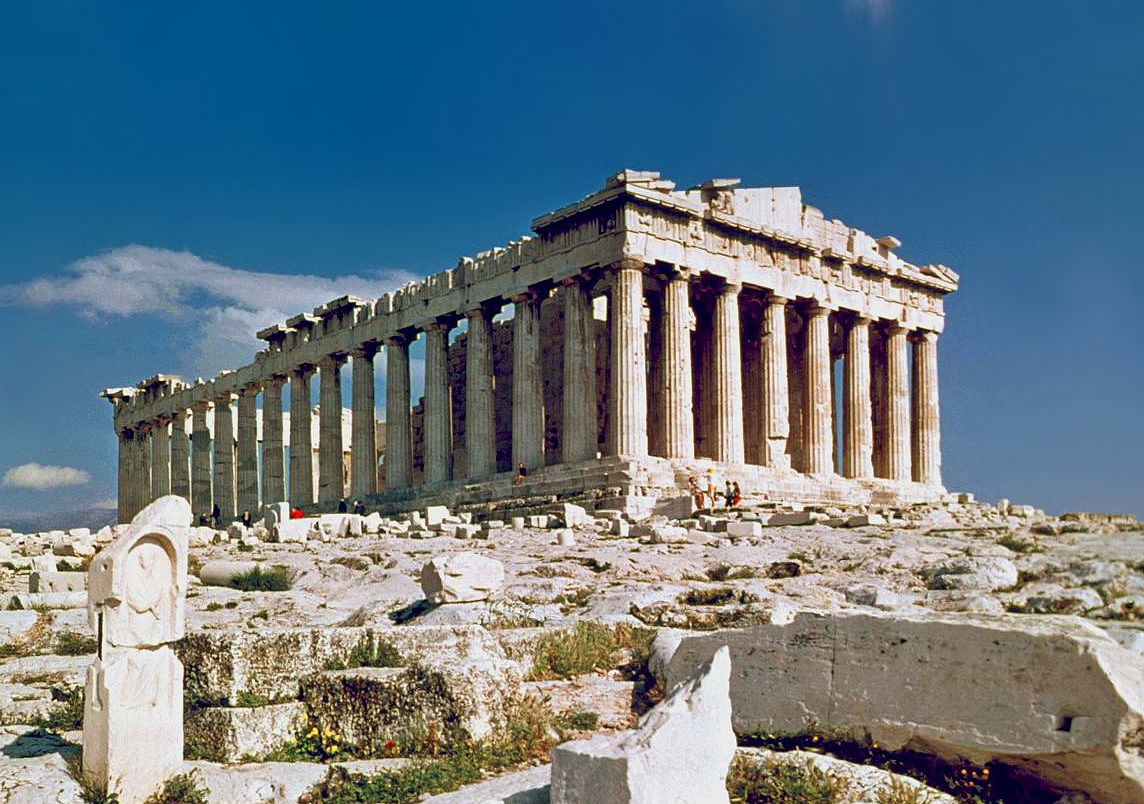
Photo: Chepry 💬 (Andrzej Barabasz) 📷 🇵🇱 · CC BY-SA 4.0 · Wikimedia Commons
Erechtheion is an ancient Greek temple on the north side of the Acropolis of Athens. Built in the late fifth century before Christ. The free Lokali audio guide runs 7 minutes.
✓ Published October 2026 · how we write these guides
Visitor facts
| Lokali audio guide | 7 min · free |
|---|---|
| Type | Archaeological Site |
| Location | Athens, Greece |
| Coordinates | 37.9721, 23.7265 |
| Languages | 50+, in the Lokali app |
The story
Feel the ground first. The marble underfoot is worn smooth, almost polished, by centuries of feet. It can be slippery, so slow down. Now look to the north side of the Acropolis, away from the great bulk of the Parthenon. There stands a smaller, stranger building. It has porches on different sides, at different heights, in different styles. On a sunny day, the white marble glows against the sky. This is the Erechtheion, and it is one of the most unusual temples the ancient Greeks ever built.
Most Greek temples follow a simple plan. A rectangle, columns all around, one main door, everything balanced. The Erechtheion breaks almost every one of those habits. Walk slowly around it and you will see that each side looks different. One porch is tall and open. Another is small and held up by stone women. The west wall has its own arrangement of columns and windows. It looks less like one temple and more like several buildings joined together... and in a way, that is exactly what it is.
The reason is the ground itself. The temple sits on uneven rock, with a drop of several metres between its eastern and western parts. But the builders could not simply level the site. This spot was already sacred long before the temple went up. It held old shrines, old altars, and marks that Athenians believed came from the gods. The architects had to fit one building over all of them, without moving or burying any. The odd shape is the answer to that puzzle.
Work on the temple began in the late fifth century before Christ, during the great building programme on the Acropolis. This was the same era that produced the Parthenon. But the timing was difficult. Athens was fighting the long Peloponnesian War against Sparta, and construction appears to have paused for a period before it was finished. Here is a detail many visitors miss. Inscriptions recording the building accounts survive. They list workers and their pay — citizens, foreign residents, and enslaved men, often doing the same jobs side by side.
To understand why this place mattered, you need the story the Athenians told about it. According to myth, two gods competed to become the patron of the city — Athena, goddess of wisdom, and Poseidon, god of the sea. Poseidon struck the rock with his trident, and salt water sprang out. Athena offered an olive tree. The city chose Athena's gift, and took her name. This is legend, not history, but the Athenians believed its traces were right here, on this rock.
Look for the north porch, the tall one with slender columns. Ancient writers said that beneath it were the marks of Poseidon's trident in the rock. Tradition says the roof above was left with an opening, so the sacred marks stayed open to the sky. Some accounts also link the spot to a salt spring, called the sea of Erechtheus. Whether or not you believe the tale, the builders clearly did. They designed the architecture around it.
And Athena's gift? Look near the western side of the temple. An olive tree grows there today. It is not the ancient tree, of course. It is a modern planting, placed to honour the legend. But it stands in the area where Athenians believed the first olive grew. The old story says that when the Persians burned the Acropolis, the sacred olive sprouted again the very next day. Locals still point to this tree with quiet affection.
The temple's name comes from Erechtheus, a legendary early king of Athens. The ancient sources blend him with gods and heroes, so his story is more myth than record. Inside, the building held several cults at once — for Athena, for Poseidon, for Erechtheus, and others. Most important was an ancient wooden statue of Athena, made of olive wood. Athenians considered it their holiest image. During the great Panathenaic festival, the city honoured her with a newly woven robe.
Now turn to the south side, and to the porch everyone comes to see. Six young women, carved in marble, stand in place of columns. They hold up the roof on their heads. These figures are called Caryatids. Notice how each one bends one knee slightly, as if she is shifting her weight. Their robes fall in deep folds, like real cloth. Their hair is braided down their backs. That braiding helps strengthen the neck — the thinnest point of each figure.
Here is the second surprise. The women you see in front of you are copies. The originals were moved to protect them from pollution and weathering. Five now stand inside the Acropolis Museum, just below this hill, where you can see them at eye level. The sixth is in the British Museum in London. It was removed in the early nineteenth century by agents working for Lord Elgin. Greece continues to ask for its return, and the question remains open.
The later life of the building is just as layered. Over the centuries, the Erechtheion was changed to fit new rulers and new faiths. It was converted into a Christian church. Under Ottoman rule, it was used as a residence connected to the household of the local commander. Then came the Greek War of Independence in the nineteenth century, and the Acropolis was besieged. The temple suffered heavy damage. Much of what you see today is the result of careful modern restoration.
Look closely at the stone and you can follow that repair work. Some blocks are bright and fresh. Others are darker, weathered, original. Restorers have tried to use ancient pieces where they could, and new marble only where they had to. Near the top of the building, there was once a frieze made of dark grey stone, with white marble figures fixed onto it. The contrast must have been striking. Only fragments of it survive, and most are kept in the museum.
Before you move on, step back and take in the whole building once more. Notice the sound around you — the wind across the hill, voices in many languages, the scrape of shoes on marble. Look again at the six women on the south porch, facing the Parthenon across the open rock. They have stood in that pose for a very long time. As you walk away, glance back over your shoulder. From a distance, they seem almost to be watching you go.
Key facts
What to look for
Practical tips
Common questions
Is there a free audio guide to Erechtheion?
Yes — the Lokali app narrates Erechtheion free of charge in 50+ languages. The guide runs about 7 minutes, covers the history, what to look for on site and practical tips, and works offline once downloaded.
Where is Erechtheion?
Erechtheion is in Athens, Greece, at 37.9721, 23.7265. Tap the map link on this page for directions from where you are.
What is Erechtheion known for?
Built in the late fifth century before Christ. Six Caryatid figures support the south porch roof.
What should you look for at Erechtheion?
The bent knee of each Caryatid on the south porch. Long braided hair down the backs of the stone women. The olive tree growing near the western wall.
What should you know before visiting Erechtheion?
Come early to avoid crowds and the midday heat. Wear shoes with good grip on the smooth marble.
When is the best time to visit Erechtheion?
Come early to avoid crowds and the midday heat.
On the map
Opens directions to Erechtheion from your location.
More to see in Athens



Hear Erechtheion in your language
The full story, narrated, in 50+ languages. Download it before you go and it plays offline, at your own pace, with no ticket and no tour group.