
Temple of Athena Nike
37.9715° N · 23.7249° E · Archaeological Site
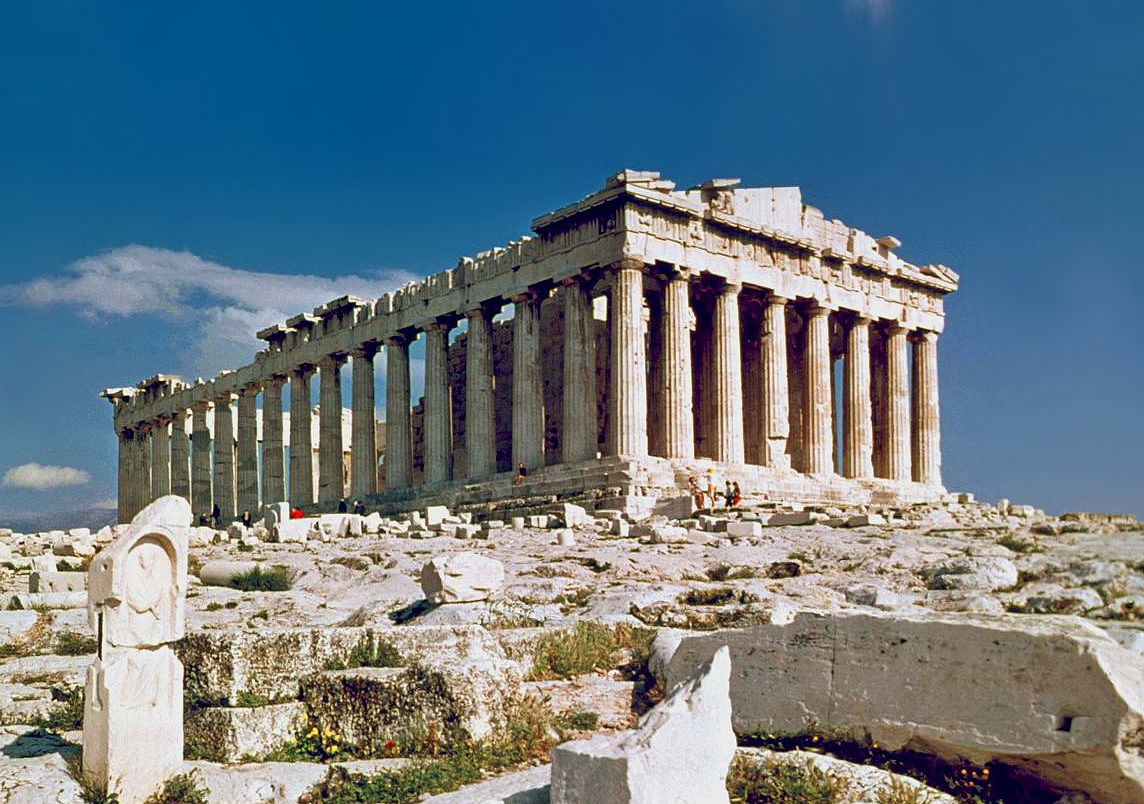
Photo: Jebulon · CC0 · Wikimedia Commons
Temple of Athena Nike is an ancient Greek temple built in the fifth century CE on the Acropolis of Athens in honor of Athena as the goddess of victory, located in Athens Municipality, Greece. Built in the Ionic order during the 420s BCE. The free Lokali audio guide runs 9 minutes.
✓ Published October 2026 · how we write these guides
Visitor facts
| Lokali audio guide | 9 min · free |
|---|---|
| Type | Archaeological Site |
| Location | Athens, Greece |
| Coordinates | 37.9715, 23.7249 |
| Languages | 50+, in the Lokali app |
The story
Pause on the marble steps for a moment. The stone underfoot is smooth and slightly slippery, polished by millions of shoes. Look to your right, toward the southwest corner of the rock. There, on a high stone platform, stands a small, bright temple. It is so compact that many visitors walk straight past it on their way to the Parthenon. That would be a mistake. This little building holds some of the finest carving in Athens, and one of the strangest histories on the whole Acropolis.
This is the Temple of Athena Nike. Nike is the Greek word for victory. Here, the Athenians honoured their patron goddess Athena in her role as the bringer of victory. The temple sits on a bastion that juts out from the main gateway, the Propylaia, like the prow of a ship. From that platform, the ground falls away steeply. The view stretches west across the city toward the sea. The position was deliberate. Anyone climbing the Acropolis had to pass beneath this goddess of victory first.
The spot was sacred long before this temple existed. The bastion stands on top of a much older fortification from the Mycenaean age, the Bronze Age culture of Greece. Those earlier builders used huge, roughly shaped blocks. Later Greeks believed only giants, the one-eyed Cyclopes, could have lifted them. That is why archaeologists still call this style Cyclopean masonry. In later centuries, a small shrine and altar to Athena Nike stood here. Classical Athens then wrapped the old stones in a neat new skin of marble.
The temple you see today belongs to the second half of the fifth century before Christ. It was the great building age of Pericles, the same era as the Parthenon. An Athenian decree called for a temple on this spot, and scholars usually link it to the architect Kallikrates. War with Sparta delayed the work for years. Most historians place the actual construction in the 420s before Christ. So this temple went up while Athens was fighting for its life. A temple to victory, built in wartime... that tells you something about the mood of the city.
Now look at the shape. The temple is built in the Ionic order. That is the more slender and decorative of the classical styles. You can recognise it by the scroll-shaped curls, called volutes, at the top of each column. There are four columns at the front and four at the back, with none along the sides. Here is a detail most visitors miss. Each column shaft is cut from a single block of marble. They are not stacked drums, as on the Parthenon. The white stone came from Mount Pentelikon, the mountain you can see northeast of the city.
Lift your eyes to the band of carving that runs around the top of the building. This is the frieze. On the east side, above the entrance, the gods of Olympus gather in calm assembly. The other three sides show something unusual for a Greek temple — real battles between human armies. Scholars believe some scenes show Greeks fighting Persians, perhaps a memory of the victory at Marathon or Plataea. Most temples showed myths. This one showed recent history. Many of the slabs on the building today are casts. Several originals are in the Acropolis Museum, and four are in the British Museum in London.
Inside the small room stood a wooden statue of Athena. She held a pomegranate in one hand and a helmet in the other. The pomegranate was a symbol of fertility and plenty, and the helmet a symbol of war. The statue had no wings, even though Nike was usually shown winged. Ancient writers called her Athena Apteros, which means wingless Athena. According to one popular tale, the Athenians made her wingless on purpose. A victory without wings could never fly away from Athens. It is a lovely story. Treat it as folklore rather than recorded fact.
This platform also holds one of the oldest legends of the city. The story says that King Aegeus waited here, watching the sea for the return of his son Theseus. Theseus had sailed to Crete to fight the Minotaur, the monster with a bull's head. He had promised to raise white sails if he survived. He forgot, and the ship came home under black sails. The king saw them, believed his son was dead, and threw himself from the rock. Some versions put his fall here, and some on a cliff by the sea. The legend gives the Aegean Sea its name.
Around the edge of the bastion there was once a marble parapet. It was a low wall, about waist height, that protected people from the steep drop. Its outer face was covered in relief carvings of winged victories. Some lead cattle to sacrifice. Others set up trophies of captured weapons. The most famous panel shows one victory bending down to adjust her sandal. The carved cloth seems to cling to her body like damp silk. That panel is now in the Acropolis Museum. It is worth the walk down the hill to see it in person.
Here comes the strangest part of the story. In the late seventeenth century, Athens was under Ottoman rule. Expecting an attack by Venetian forces in the 1680s, the Ottoman garrison took the temple apart. They used its blocks to build a gun position on this bastion. For about one hundred and fifty years, the temple of victory did not exist as a building. Its marble pieces lay buried inside a military wall. A visitor in the eighteenth century would have found only a cannon platform here.
After Greece won independence, archaeologists cleared the bastion in the 1830s. Piece by piece, they found the old blocks inside the fortifications. Then they put the temple back together, like a giant stone puzzle. It was one of the first major restorations of the new Greek state. But the work was not finished. The temple was dismantled and rebuilt again in the twentieth century. Then, in the early twenty-first century, it was taken apart once more. Engineers replaced rusting iron fittings and corrected earlier mistakes. The building in front of you has been rebuilt at least three times.
Look closely at the stone and you will see the evidence. Some blocks are warm and honey-coloured, aged by many centuries of sun. Others are brighter and whiter. These are newer pieces of marble that fill the gaps. Restorers choose this contrast on purpose, so that nobody confuses new stone with ancient stone. Below the platform, you can also see the rough grey face of the bastion itself. In some places, the older Mycenaean masonry is still visible beneath the classical walls.
Visitors are not allowed onto the bastion today, and the temple interior is closed. That is not a loss. This building was designed to be seen from below and from the side. It was a jewel on the approach to the Parthenon, not a place to linger. From the steps of the Propylaia, you see it the way an ancient worshipper did. You see four slim columns, a carved frieze, and a deep blue sky behind them.
Before you move on, turn once more toward the little temple. Notice how small it is against the huge gateway beside it. Notice the wind on this corner of the rock, and the city spreading out below toward the sea. People have stood on this spot for more than three thousand years — kings, soldiers, gunners, archaeologists. Now it is your turn. As you climb the last steps toward the Parthenon, listen to the gravel and the voices around you. You are walking past victory, just as every Athenian once did.
Key facts
What to look for
Practical tips
Common questions
Is there a free audio guide to Temple of Athena Nike?
Yes — the Lokali app narrates Temple of Athena Nike free of charge in 50+ languages. The guide runs about 9 minutes, covers the history, what to look for on site and practical tips, and works offline once downloaded.
Where is Temple of Athena Nike?
Temple of Athena Nike is in Athens, Greece, at 37.9715, 23.7249. Tap the map link on this page for directions from where you are.
What is Temple of Athena Nike known for?
Built in the Ionic order during the 420s BCE. Design usually attributed to the architect Kallikrates.
What should you look for at Temple of Athena Nike?
Scroll-shaped Ionic volutes topping the four front columns. Bright white new marble beside honey-toned ancient blocks. Battle scenes with human soldiers on the side friezes.
What should you know before visiting Temple of Athena Nike?
View the temple from the Propylaia steps for the classic angle. Visit the Acropolis Museum to see the sandal-binding Nike.
When is the best time to visit Temple of Athena Nike?
Come early in the day to avoid the heaviest crowds.
On the map
Opens directions to Temple of Athena Nike from your location.
More to see in Athens



Hear Temple of Athena Nike in your language
The full story, narrated, in 50+ languages. Download it before you go and it plays offline, at your own pace, with no ticket and no tour group.