
Old Temple of Athena
37.9719° N · 23.7264° E · Archaeological Site
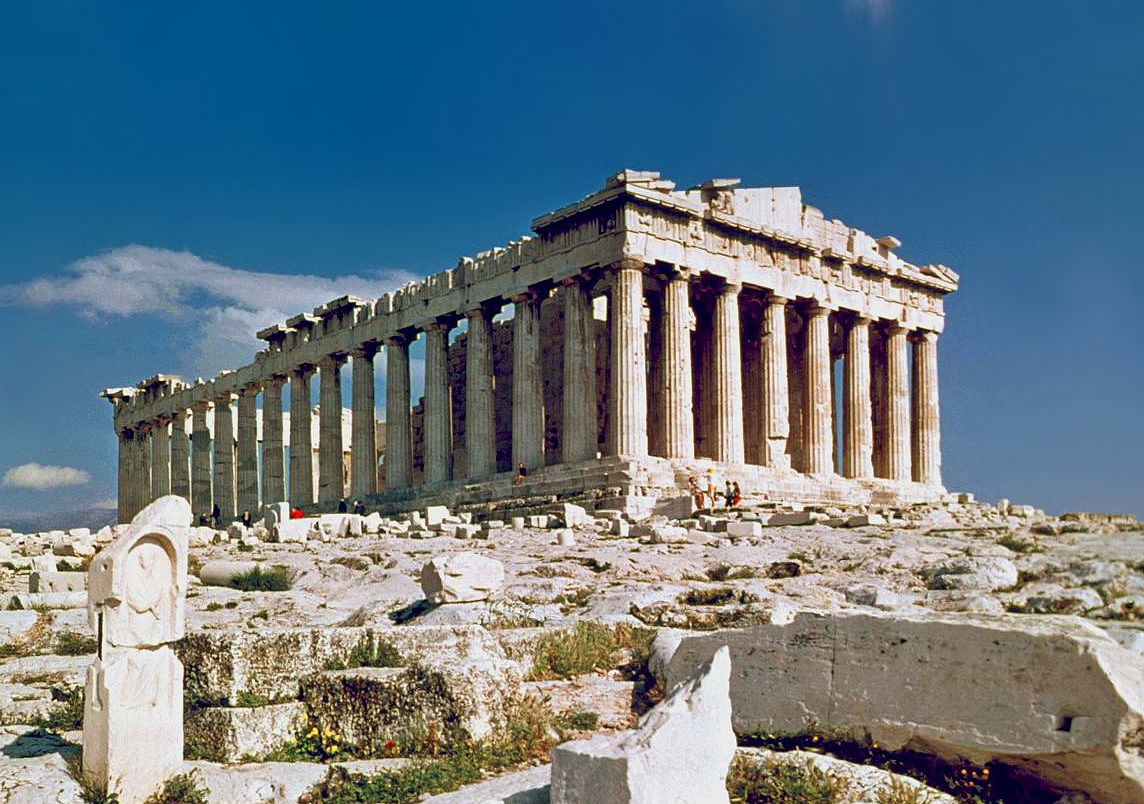
Photo: Fcgsccac · CC BY-SA 4.0 · Wikimedia Commons
Old Temple of Athena is an ancient temple on the Athenian Acropolis. It is in Athens, Greece. Built in the late sixth century BCE. The free Lokali audio guide runs 6 minutes.
✓ Published October 2026 · how we write these guides
Visitor facts
| Lokali audio guide | 6 min · free |
|---|---|
| Type | Archaeological Site |
| Location | Athens, Greece |
| Coordinates | 37.9719, 23.7264 |
| Languages | 50+, in the Lokali app |
The story
Look down at your feet for a moment. Between the Parthenon and the Erechtheion, the bare rock gives way to a low, rectangular outline of pale and grey stone blocks. There is no roof here and no column, only foundations set into the summit. The sun lands on them without shade, and the wind moves across the hilltop. This plain-looking patch of ground is where one of the most important temples in Athens once stood.
Archaeologists usually call it the Old Temple of Athena. Ancient writers may have called it the archaios naos, which simply means the old temple. It was built in the late sixth century BCE, before the Parthenon existed. At that time, Athens was ruled by tyrants, single powerful men who held authority outside the normal laws. Many scholars link this temple to that family of rulers, although the exact date and patron are still debated.
Try to picture it rising above you. It was a Doric temple. Doric is the plainest of the Greek column styles, with sturdy shafts and simple, cushion-shaped tops. A row of columns ran around all four sides. Inside, the building was divided into separate rooms. The temple was large and important, but it was smaller and heavier in feeling than the elegant Parthenon you can see just to the south.
Now for the first surprise. Look closely at the foundation blocks and you may notice that they are not all the same stone. Some are a darker, bluish-grey limestone from the Acropolis rock itself. Others are lighter. Archaeologists have long argued about this. Some think parts of the inner foundation are older than the temple, perhaps from an even earlier sacred building on this same spot. The ground here held holy buildings again and again, layer upon layer.
This was the heart of Athena's cult on the hill. Many scholars believe the temple was connected to Athena Polias, Athena as protector of the city. Her most sacred image was an ancient statue carved from olive wood. Ancient Athenians believed it was very old and very holy. Every few years, they dressed it in a new woven robe during a great festival. Whether this exact building held that statue is still discussed by historians.
The temple's end came in 480 BCE. A Persian army invaded Greece, reached Athens, and captured the Acropolis. The Persians burned and damaged the buildings on the summit, and this temple was among them. Imagine the smoke rising from this hilltop, visible from the plains and the sea. For the Athenians, it was a deep wound. Many of their gods' homes lay broken and blackened.
What happened next is the second puzzle. Some historians think part of the damaged temple was patched up and used again for years, perhaps as a treasury. Others think it was left as a ruin. Ancient sources are not clear, and scholars still disagree. What we do know is that the Athenians eventually built new temples nearby, the Parthenon and the Erechtheion. The old temple slowly disappeared from the skyline.
Here is a detail most visitors miss. Pieces of this temple did not vanish. After the Persian Wars, the Athenians rebuilt the north wall of the Acropolis. Into that wall, they set column drums and parts of the stone beams from the destroyed temples. You can see them from below, from the streets of the Plaka or the Ancient Agora. Look up at the north wall and you may spot a row of round drums built sideways into the masonry. Many see this as a deliberate memorial to what was lost.
Now turn toward the Erechtheion, the temple with the famous porch of standing maidens. These female figures, called Caryatids, carry the roof on their heads. Notice how close that porch is to the foundations at your feet. In fact, it sits right up against the edge of the old temple's outline. The newer building respects the old sacred ground. It almost seems to stand guard over it.
For a long time, nobody knew these foundations were here. In the 1880s, excavations on the Acropolis cleared away later layers. The German archaeologist Wilhelm Dörpfeld studied the remains and identified them as an older temple. Because of him, these stones are sometimes called the Dörpfeld foundations. His work started debates that continue today, about dates, about rebuilding, and about which rituals happened where.
Some of the temple's sculpture survives. Its triangular gable, called a pediment, once held marble figures. One famous scene shows the gods fighting the giants, a battle Greeks used to represent order defeating chaos. Athena herself appears, striding forward against a fallen enemy. These figures are now in the Acropolis Museum at the foot of the hill. If you visit, you can stand face to face with sculptures that once looked down from this very spot.
Pause and listen to the hilltop around you. You will hear voices in many languages, the scrape of shoes on worn marble, perhaps the cry of a swift overhead. Crowds flow toward the Parthenon and the Caryatids, and most people walk straight past this flat outline. That is part of its quiet power. It asks you to use your imagination, to raise walls and columns in your mind where now there is only stone and sky.
Before you move on, stand at one corner of the foundations and trace the long side with your eyes. Picture smoke and Persian soldiers, then picture builders carrying old column drums down to the wall. Then look across at the Parthenon, the temple that rose after all of this. The story of the Acropolis is a story of loss and rebuilding. As you walk away, glance back once at these low stones. They were here first.
Key facts
What to look for
Practical tips
Common questions
Is there a free audio guide to Old Temple of Athena?
Yes — the Lokali app narrates Old Temple of Athena free of charge in 50+ languages. The guide runs about 6 minutes, covers the history, what to look for on site and practical tips, and works offline once downloaded.
Where is Old Temple of Athena?
Old Temple of Athena is in Athens, Greece, at 37.9719, 23.7264. Tap the map link on this page for directions from where you are.
What is Old Temple of Athena known for?
Built in the late sixth century BCE. Destroyed by the Persian army in 480 BCE.
What should you look for at Old Temple of Athena?
Two colours of limestone in the foundation blocks. Caryatid porch pressed against the old foundation edge. Column drums set sideways into the north wall.
What should you know before visiting Old Temple of Athena?
Come early to see the foundations without crowds. View the north wall later from the Plaka streets.
When is the best time to visit Old Temple of Athena?
Come early to see the foundations without crowds.
On the map
Opens directions to Old Temple of Athena from your location.
More to see in Athens



Hear Old Temple of Athena in your language
The full story, narrated, in 50+ languages. Download it before you go and it plays offline, at your own pace, with no ticket and no tour group.