
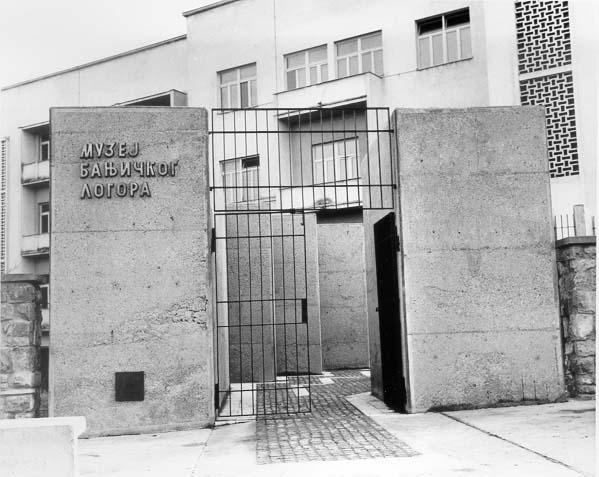
Photo: Kenzavi (Cvetanović Igor) · CC BY-SA 3.0 · Wikimedia Commons
House of Flowers is a mausoleum in Serbia. Built in the 1970s as Tito's private winter garden. The free Lokali audio guide runs 6 minutes.
✓ Published October 2026 · how we write these guides
Visitor facts
| Lokali audio guide | 6 min · free |
|---|---|
| Type | Memorial |
| Location | Belgrade, Serbia |
| Coordinates | 44.7867, 20.4517 |
| Official website | mij.rs |
| Languages | 50+, in the Lokali app |
The story
Listen for a moment. Gravel crunches underfoot, and somewhere in the trees a bird calls. The noise of the city fades behind you on this green hill. Ahead, a low building of glass and pale stone sits among lawns and leafy paths. Inside, the air is still and cool. The light falls softly from above onto a single block of white marble. This is the House of Flowers, the resting place of Josip Broz Tito.
For most of the twentieth century, Tito's name and the idea of Yugoslavia were almost the same thing. He was born in 1892 in a small village in what is now Croatia. He led the Partisan resistance during the Second World War. Afterwards, he governed the socialist federation of Yugoslavia for decades. That country brought together Serbs, Croats, Slovenes, Bosnians, Macedonians, Montenegrins and many others under one flag. Belgrade was its capital.
Here is the first surprise. This building was never designed as a tomb. It was built in the 1970s as a winter garden, a quiet place close to Tito's residence in this neighbourhood. He came here to rest, to read and to work among his plants. That is where the gentle name comes from. Only after his death did the building take on its solemn new role. The flowers came first. The grave came later.
Tito died in May 1980, in a hospital in Ljubljana, the capital of Slovenia. His body travelled to Belgrade by train. Crowds gathered along the route and at the stations. His funeral was held in this city a few days later. It became one of the largest state funerals of the century. Kings, presidents, prime ministers and party leaders arrived from East and West alike. Few other events of the Cold War brought so many rivals to the same place.
Now look at the tomb itself. It is a plain slab of white marble, with no statue and no large sculpture. The inscription gives only his name and the years of his birth and death. Many visitors expect something grander for such a powerful figure. Instead, the design is restrained and almost quiet. Around it, low green plants soften the edges of the room. The effect is calm rather than triumphant.
You are not alone here with Tito. Beside him lies his widow, Jovanka Broz. She was a familiar figure at his side for many years. After his death, she lived largely out of public view, and her life was difficult. She died in 2013 and was buried next to her husband. Her presence turns the room into something a little more personal, the grave of a couple as well as a leader.
The House of Flowers is part of a larger site called the Museum of Yugoslavia. The museum looks at the whole story of that vanished country. It covers its art, its politics, its daily life and its ending. Walking between the buildings, you move from the private world of one man to the public world of millions. The grounds feel like a park. People stroll here, sit on benches, and talk in low voices.
Now for the second surprise. Look for the long display of wooden and metal batons near the tomb. These come from the Relay of Youth. Every spring, young people carried a baton across every republic of Yugoslavia. It passed from hand to hand, through villages and cities, over mountains and rivers. At the end, it was presented to Tito in a great ceremony in Belgrade. The event marked his official birthday.
Each baton is different. Some are carved, some are cast, some are shaped like torches or abstract sculptures. Workers, students and craftsmen designed them over many years. Together they form a strange and moving record of a country's devotion. Spend a little time with them. Notice how the styles change from decade to decade. You can almost follow the changing taste of Yugoslavia from one glass case to the next.
It is worth remembering that Yugoslavia broke apart in the 1990s, in a series of terrible wars. So people bring very different feelings into this room. For some, Tito stands for peace, unity and a sense of pride. For others, he represents a one-party state and painful silences. The museum does not ask you to choose one view. Watch the other visitors. Some stand very still. Some leave a flower. Others simply look and move on.
Pay attention to the people around you. You may hear Serbian, Croatian, Slovenian or Macedonian spoken quietly near the tomb. Older visitors sometimes come from across the former republics. For them, this is a visit to their own youth. Younger visitors often come with curiosity, trying to understand a country they never knew. Foreign travellers come to see a chapter of European history. The room holds all of them at once.
Outside again, take a moment in the gardens. The hill gives the site a sense of distance from the busy streets below. Tall trees shade the paths, and the lawns are kept neat and green. In warm months the air smells of cut grass and leaves. In winter, the bare branches let more light into the open spaces. Either way, the pace here is slower than in the city centre.
As you walk away, look back once at the low glass building. Think of it as it first was — a man's private garden, full of plants and light. Then think of the crowds, the leaders and the long trains of mourners that turned it into a monument. Both stories are still here. Listen again to the gravel under your feet, and carry that quiet with you back into Belgrade.
Key facts
What to look for
Practical tips
Common questions
Is there a free audio guide to House of Flowers?
Yes — the Lokali app narrates House of Flowers free of charge in 50+ languages. The guide runs about 6 minutes, covers the history, what to look for on site and practical tips, and works offline once downloaded.
Where is House of Flowers?
House of Flowers is near Belgrade, Serbia, at 44.7867, 20.4517. Tap the map link on this page for directions from where you are.
What is House of Flowers known for?
Built in the 1970s as Tito's private winter garden. Tito was born in 1892 in present-day Croatia.
What should you look for at House of Flowers?
The plain white marble slab with simple inscription. Jovanka Broz's grave beside her husband's tomb. The display of Relay of Youth batons.
What should you know before visiting House of Flowers?
Allow time to visit the other Museum of Yugoslavia buildings. Keep your voice low inside the mausoleum hall.
On the map
Opens directions to House of Flowers from your location.
More to see in Belgrade



Hear House of Flowers in your language
The full story, narrated, in 50+ languages. Download it before you go and it plays offline, at your own pace, with no ticket and no tour group.