
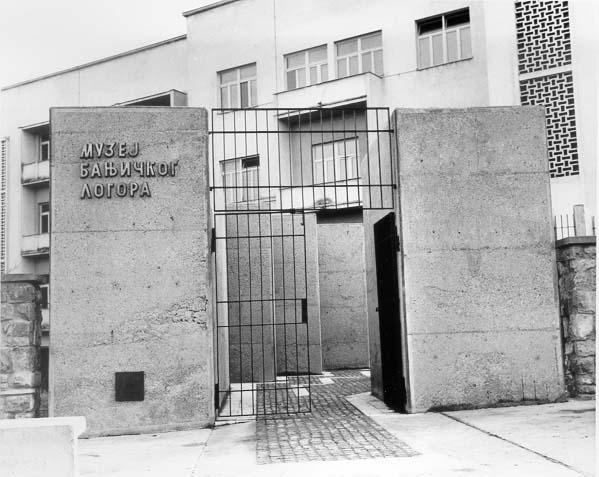
Photo: kallerna · CC BY-SA 4.0 · Wikimedia Commons
Museum of Yugoslavia is a history museum in Belgrade, Serbia. Tito ruled socialist Yugoslavia until his death in 1980. The free Lokali audio guide runs 8 minutes.
✓ Published October 2026 · how we write these guides
Visitor facts
| Lokali audio guide | 8 min · free |
|---|---|
| Type | Museum |
| Location | Belgrade, Serbia |
| Coordinates | 44.7867, 20.4517 |
| Official website | mij.rs |
| Languages | 50+, in the Lokali app |
The story
Listen first. Under your feet, gravel crunches softly on the paths. Around you, tall trees move in the wind on this green hillside. The sounds of the city feel far away, even though central Belgrade is only a short ride north. This is Dedinje, a quiet residential district of villas, embassies and gardens. For decades it was the home of power in Yugoslavia. Today it holds a museum about a country that no longer exists.
The Museum of Yugoslavia is not one building. It is a small complex spread across the slope. Each part tells a different piece of the same story. There is a modernist exhibition hall, an older museum building full of gifts, and a low, glass-walled pavilion called the House of Flowers. Walking between them, you move through the political memory of a whole federation. You move from celebration, to diplomacy, and finally to a grave.
First, some context, because the country at the centre of this place can be hard to picture. Yugoslavia, which means the land of the South Slavs, was first created after the First World War as a kingdom. After the Second World War, it was rebuilt as a socialist federation of six republics. These included Serbia, Croatia, Slovenia, Bosnia and Herzegovina, Montenegro and North Macedonia. Belgrade was its capital. In the 1990s, the federation broke apart in a series of wars. The museum holds what remained of its official memory.
That memory centres on one man — Josip Broz, known to the world as Tito. He led the Partisan resistance against the Axis occupation during the Second World War. After the war, he ruled Yugoslavia for decades, until his death in 1980. He was a complicated figure. To some, he was a liberator and a builder of unity. To others, he was an authoritarian leader. The museum does not ask you to choose. It shows you the objects and the rituals, and it lets you think.
Start with the white modernist building, the Museum of 25 May. It opened in 1962 as a gift to Tito from the city of Belgrade for his seventieth birthday. Notice the clean lines and the large panes of glass. Notice the way the building sits lightly on its terrace. This was the confident architecture of the postwar decades. It belonged to a socialist state that wanted to look modern and open to the world, not heavy and monumental.
The name, 25 May, needs an explanation. That date was celebrated as Tito's official birthday, and it became a national holiday called Youth Day. Every year, a relay baton was carried across the whole country. It passed from hand to hand through villages, factories and cities in every republic. Then it was presented to Tito at a mass stadium celebration in Belgrade. Many of these batons survive here. Some are carved wood, some are polished metal, some are strange and sculptural. Each one was designed to carry a message of loyalty from the people.
Here is a detail that surprises many visitors. The relay continued for several years after Tito's death. The country kept the ritual going without the man it was made for. For people who grew up in Yugoslavia, these batons are not just museum pieces. Many older visitors remember running a stretch of the route as schoolchildren. Some remember waving flags by the roadside. If you hear quiet conversations in Serbian or Croatian near the display cases, they may be personal memories.
Next, walk to the Old Museum. This building is full of gifts that Tito received from foreign leaders, from Yugoslav citizens and from organisations. Yugoslavia had an unusual place in the Cold War. It broke with Stalin's Soviet Union in 1948, and it never joined the Western alliance either. Instead, it became a founder of the Non-Aligned Movement. This was a group of countries that refused to take sides between the two superpowers. Belgrade hosted the movement's first summit in 1961. The gifts here come from across Asia, Africa, Latin America and Europe, and they show those connections.
Take your time with the objects. Look at the textiles, the weapons, the ceremonial pieces and the folk art. Some gifts are very grand. Others are simple and handmade, sent by ordinary people. That contrast is part of the story. It shows how the state presented its leader — as a world statesman, but also as a father figure for the people. Ask yourself who chose each gift, and what they hoped it would say.
Now follow the path to the House of Flowers. It was built in the mid-1970s as a winter garden and a place where Tito could work and rest near his residence. He used it in his later years. After his death, it became his resting place. Inside, under the light from the glass walls, you will find a plain white marble tomb. It carries his name and his years. Next to it is the grave of his wife, Jovanka Broz, who was buried here after her death decades later.
The funeral in 1980 was one of the largest gatherings of world leaders of its time. Presidents, prime ministers, kings and party chiefs came from both sides of the Cold War. They came to the same city, in the same week. That fact tells you a lot about the balancing act that Yugoslavia played. Today, the room is calm. Many visitors stand quietly. Some leave flowers. Others simply look, read the inscription, and move on.
The House of Flowers also displays relay batons, so the story comes full circle. The objects made to celebrate the leader's birthday now stand near his grave. Within a few years of the funeral, the economy struggled and tensions between the republics grew. A decade later, the federation was gone. Standing here, many people feel the weight of that change. For some, it is nostalgia. For others, it is grief, anger or plain curiosity. The museum has room for all of these feelings.
In recent years, the museum has also tried to look at Yugoslavia in a wider way. It has held temporary exhibitions about design, everyday life, popular culture and the ideas behind the state. So check what is on during your visit. You may find a show about furniture, music or posters, alongside the permanent collections. It is a reminder that a country is not only its leaders. It is also its kitchens, factories, films and songs.
Before you leave, pause on the terrace and look back at the buildings among the trees. Listen again to the gravel, the birds and the distant traffic. This hillside was designed for ceremony, for crowds and flags and speeches. Now it is mostly quiet. As you walk back down toward the city, notice the old villas of Dedinje around you. Notice, too, the ordinary life of Belgrade continuing — in a country that has changed its name and its borders more than once, but still remembers.
Key facts
What to look for
Practical tips
Common questions
Is there a free audio guide to Museum of Yugoslavia?
Yes — the Lokali app narrates Museum of Yugoslavia free of charge in 50+ languages. The guide runs about 8 minutes, covers the history, what to look for on site and practical tips, and works offline once downloaded.
Where is Museum of Yugoslavia?
Museum of Yugoslavia is in Belgrade, Serbia, at 44.7867, 20.4517. Tap the map link on this page for directions from where you are.
What is Museum of Yugoslavia known for?
Tito ruled socialist Yugoslavia until his death in 1980. Museum of 25 May opened in 1962 as a birthday gift.
What should you look for at Museum of Yugoslavia?
Plain white marble tomb lit by glass walls. Carved and metal relay batons in the display cases. Large glass panes of the 1962 modernist hall.
What should you know before visiting Museum of Yugoslavia?
Visit all three buildings; one ticket usually covers the complex. Allow at least two hours to explore without rushing.
On the map
Opens directions to Museum of Yugoslavia from your location.
More to see in Belgrade



Hear Museum of Yugoslavia in your language
The full story, narrated, in 50+ languages. Download it before you go and it plays offline, at your own pace, with no ticket and no tour group.